First Apartment resources
Plain-English explanations, worked math, and what it means for you.
You can start with the basics.
Learn the words, follow the numbers, and understand what a choice could mean for your life. Start with the first action. Open examples and explanations when you need them, then continue in the related tool.
Your first useful action
Write down the total move-in cash and monthly costs before applying. Ask which charges are required and which are optional.
A worked example
Rent $900 + utilities $140 + parking $60 = $1,100/month. First rent $900 + deposit $900 + moving $150 + essentials $200 = $2,150 upfront. These invented amounts exclude any other fees.
What people often mix up
Advertised rent is not necessarily the whole monthly cost. A refundable deposit still needs cash now. An application does not mean you have a signed lease.
What to ask when you are stuck
“Can you give me the total move-in amount, recurring charges, required documents, and utility responsibilities in writing?”
Ask the organization or person responsible for the decision. Write down the answer, date, and any next action. If their answer uses an unfamiliar word, find it in Words explained below.
How to know this first action is finished
You have the written costs, a chosen spending limit, and a list of unanswered questions.
Compare two places before applying
- Make two columns with the same categories: rent, utilities, parking, deposit, fees and moving costs.
- Keep monthly costs separate from the cash needed before move-in. Mark any unconfirmed figure as an estimate.
- Write the one missing answer that could change your choice and ask the property manager for it.
Check your result: Both places use the same cost categories and time periods; unknown amounts remain visible.
If something changes
If a required charge changes, revise both the move-in total and ongoing budget before making a commitment.
Practical how-to guides
Start with one useful skill. Clear instructions and a checklist help you through it.
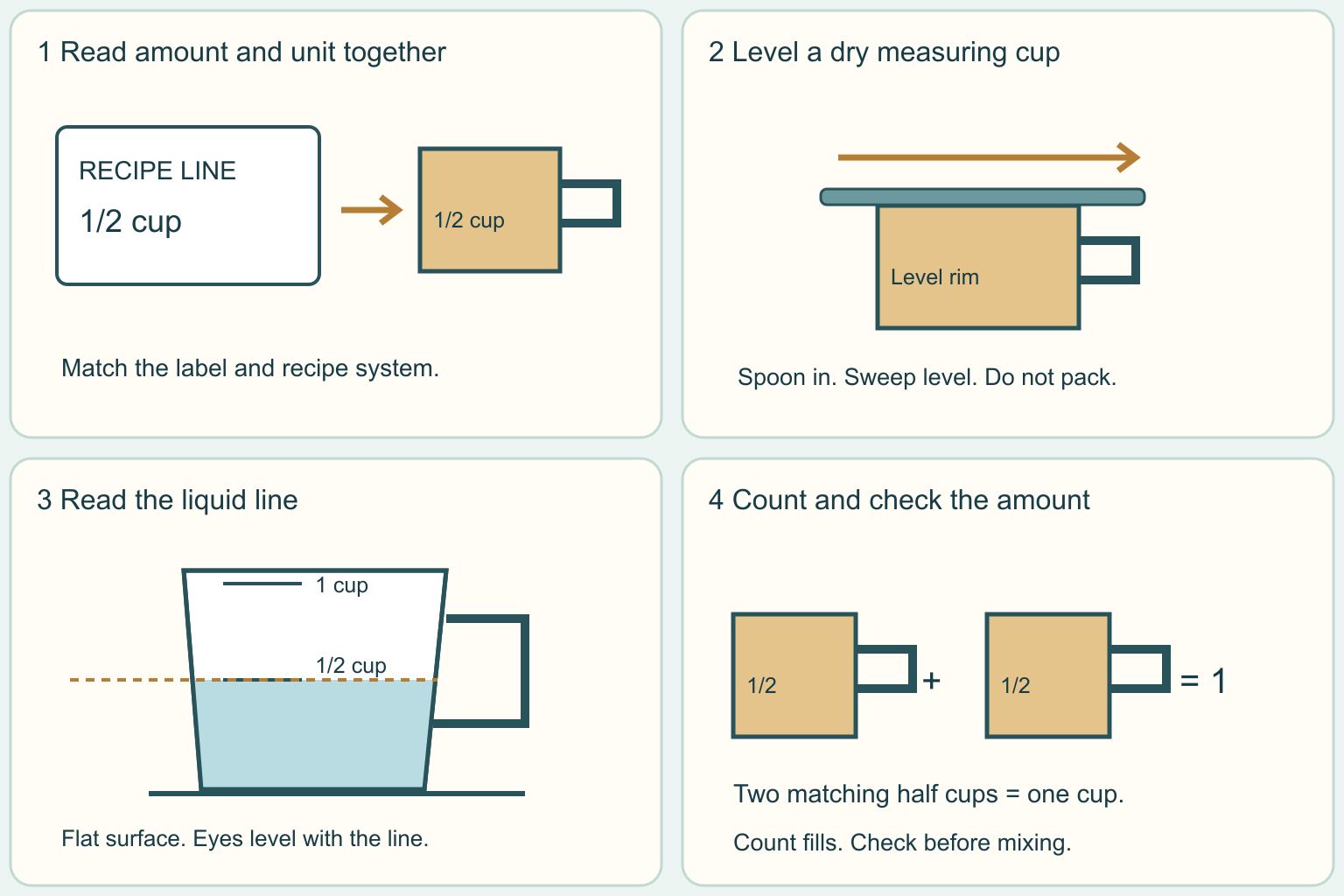
Read recipe amounts and measure dry and liquid ingredients
Learn which measuring tool to pick, what the little labels mean, and how to check an amount before mixing. Start with room-temperature water for liquid practice.
4 clear steps · checklist & download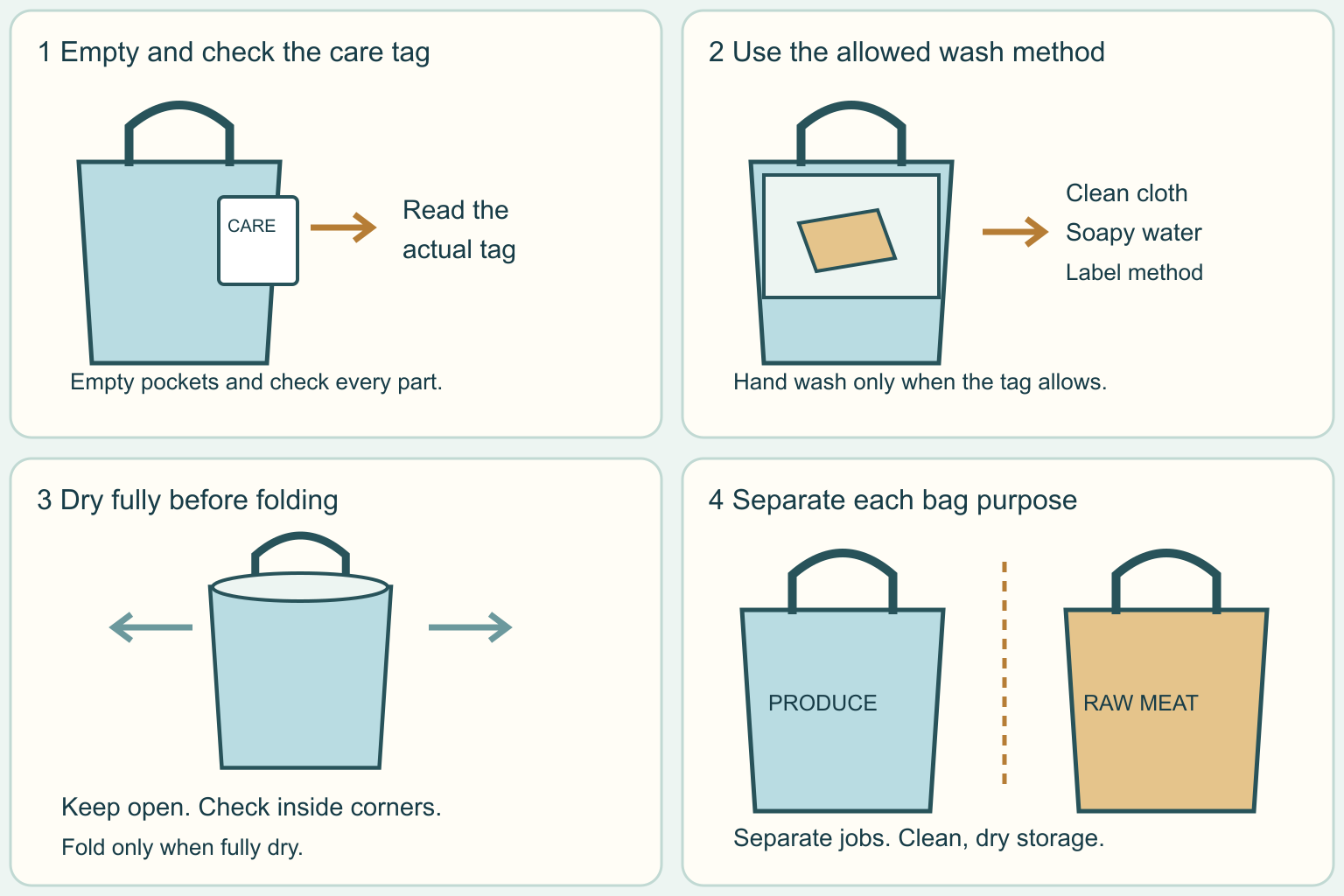
Clean, dry and sort your reusable grocery bags
Start with one ordinary reusable shopping bag. Read its care label, clean it the allowed way, and keep food bags separate from other uses.
4 clear steps · checklist & download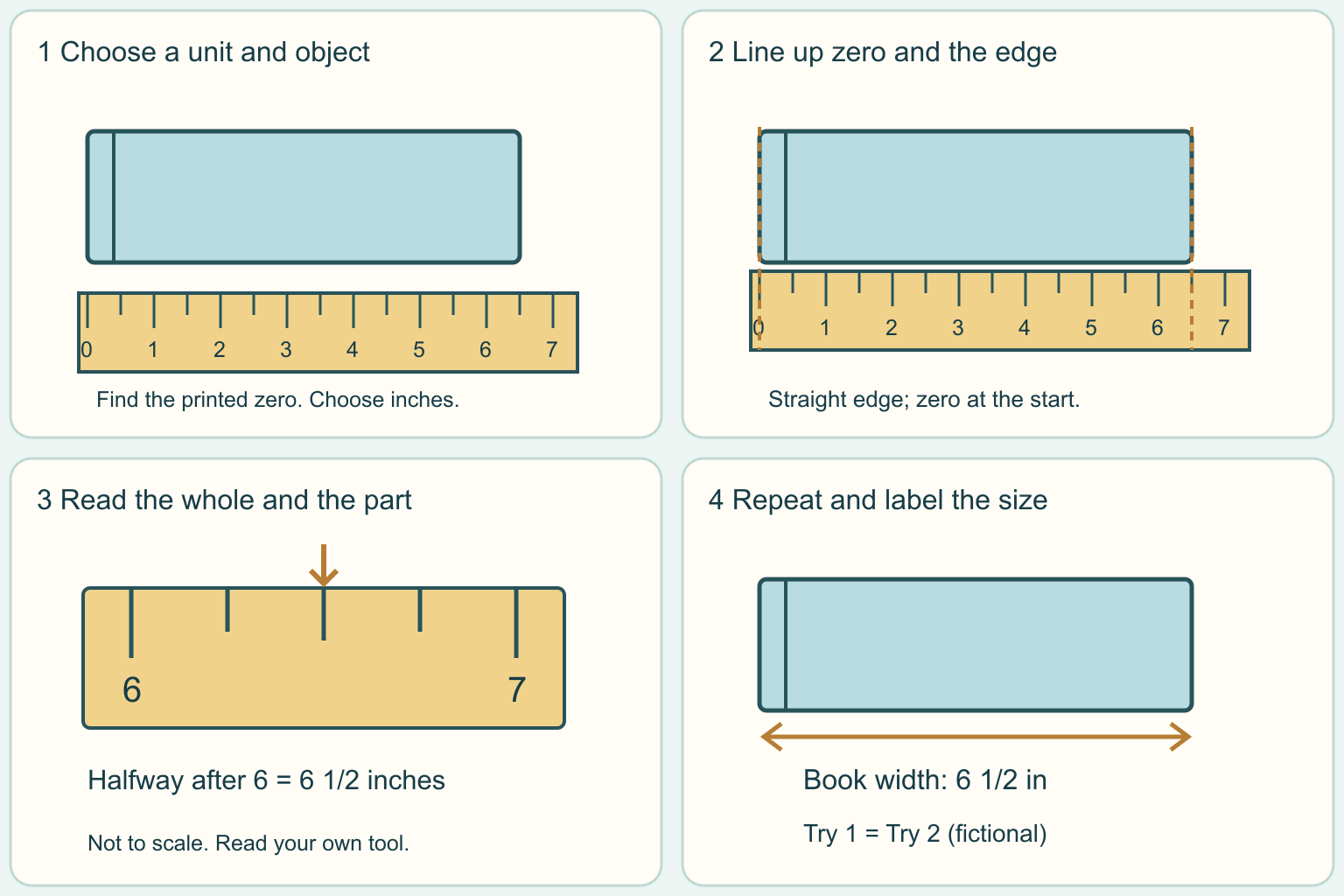
Measure a small object and write the size clearly
Practice on a book or empty box before measuring for storage or a move. Learn where to start, how to read the line, and why the unit matters.
4 clear steps · checklist & download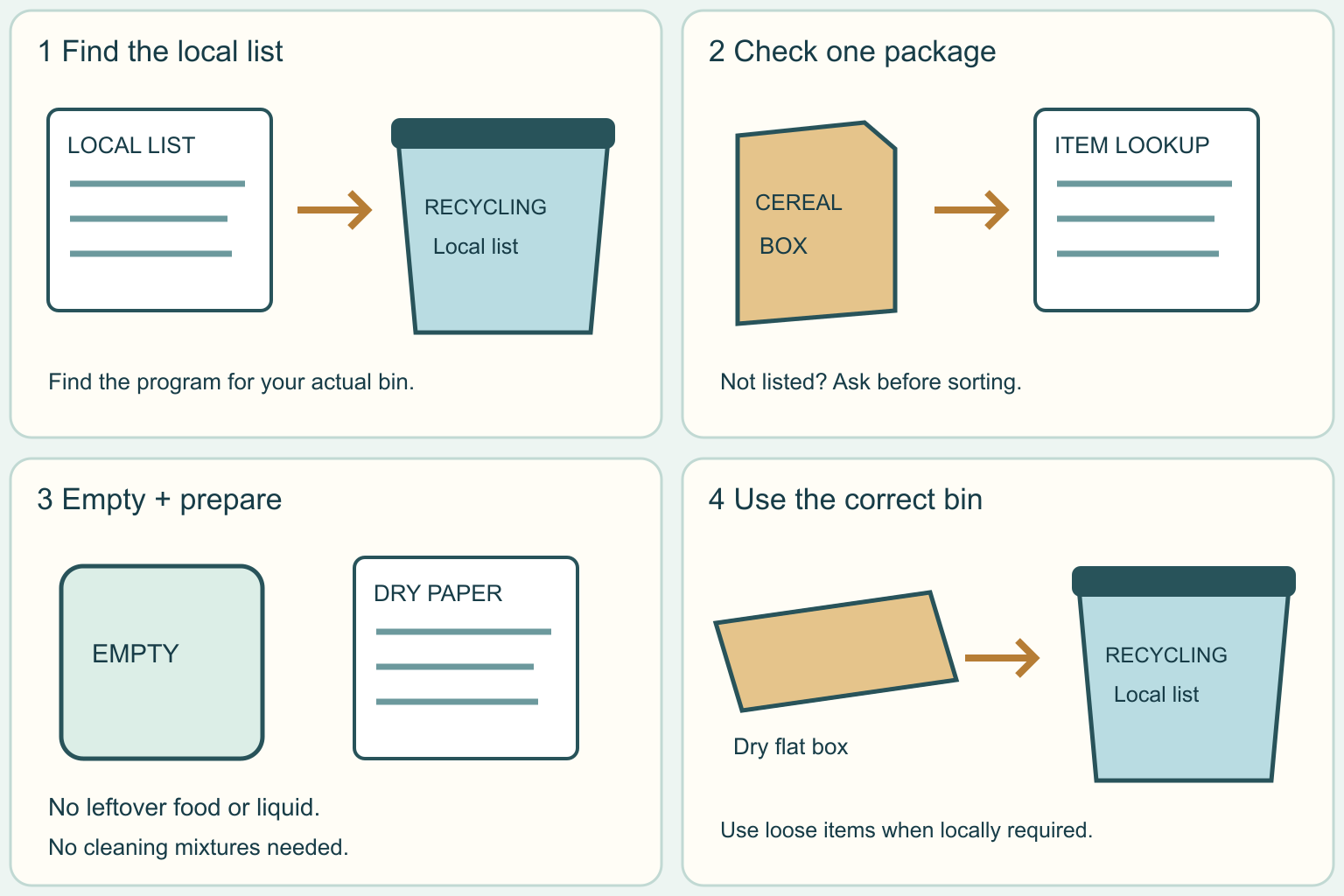
Sort everyday recycling using your local rules
Start with a few ordinary empty packages. Find the right local list, prepare accepted items, and use the correct collection bin.
4 clear steps · checklist & downloadWhat to bring
You can research areas and prices without handing over sensitive documents. A verified landlord may request these later for an application or move-in.
Prepare the items that apply to your task. For an appointment or application, confirm the receiving organization’s exact requirements. “Ready” means you have reviewed and prepared the item.
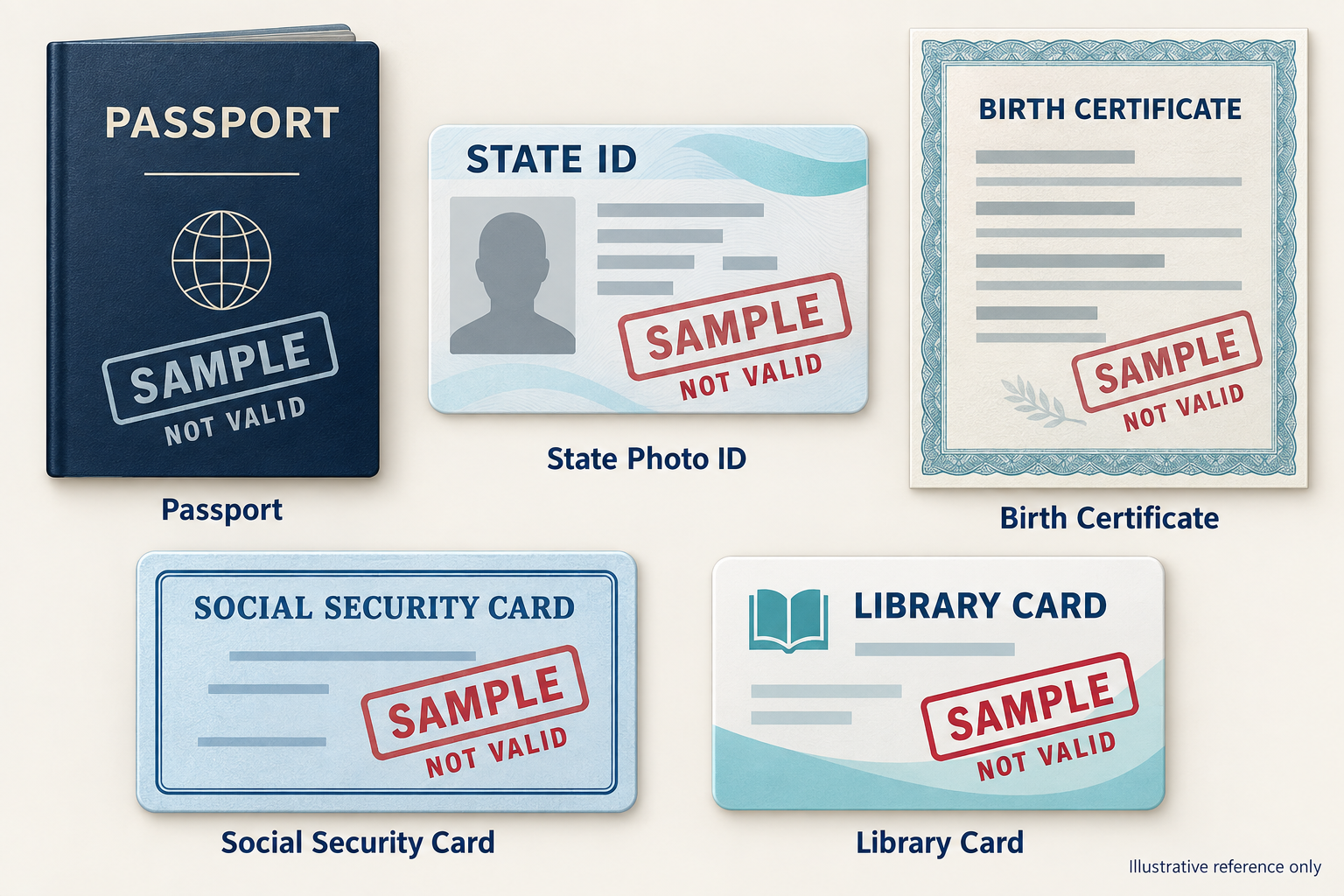
Accepted identification
Why you may need it
Shows who you are. The accepted list depends on the service.
Where to get it
Use a current document you already have, or apply through the state ID agency or other issuing office.
Check before you go
Ask for the exact ID list. A school card, membership card, expired ID, or phone photo may not count.
Proof of income or available money
Why you may need it
Helps an organization check your ability to pay or eligibility for help.
Where to get it
Ask payroll for recent pay stubs; get requested bank statements from your bank or benefit/aid letters from the issuer.
Check before you go
Ask which months and sources count. An offer letter or family support may need a different form. Do not send unrelated records.
Rental history and references, if requested
Why you may need it
Helps the landlord verify past housing information.
Where to get it
Use accurate addresses, dates, and prior landlord contacts; ask references before naming them.
Check before you go
If this is your first rental, say so and ask what alternative evidence they accept.
Application, agreement, and appointment confirmation
Why you may need it
Shows which service you requested and what was agreed.
Where to get it
Save the official form, confirmation number, written quote, and signed agreement from the provider.
Check before you go
Check the correct version and date. Leave signature fields blank when instructions require signing in front of someone.
Accepted payment method and fee amount
Why you may need it
Pays the required application, service, or appointment fee.
Where to get it
Check the official fee page or call the office; ask whether it accepts a card, check, money order, or cash.
Check before you go
Verify the total and who it is payable to. Government offices and different fees may use different payment rules.
Co-signer or guarantor paperwork, only if part of your application
Why you may need it
Documents a separate person’s agreed responsibility.
Where to get it
The landlord supplies the exact agreement and that person provides their own requested evidence securely.
Check before you go
A person who helps you look for apartments is not automatically agreeing to pay your rent.
Insurance card or policy details
Why you may need it
Shows coverage details and helps locate your account.
Where to get it
Get current documents from the insurer’s verified app, website, or agent.
Check before you go
Check effective dates and the correct person, address, or vehicle. Ask whether electronic proof is accepted.
0 of 7 reviewed and prepared. These ticks save in this browser only.
A question you can read aloud
“Before I pay or apply, can you send the full required-document list, total move-in cost, fee refund rules, and secure submission method?”
Keep actual documents in a secure place. Do not put Social Security numbers, full account or ID numbers, passwords, or document images into My Vault notes.
See how DMV and Post Office address rules differ →Picture guideSee labeled examples of the things you are learning about.
Words, in plain English
21 terms in First Apartment · Open any word to learn more.
Air filter and filter sizeA removable part that catches particles as air passes through it.
How it works
A home HVAC filter may be at a return grille or inside a user-accessible slot. Its printed size is often a rounded size, such as 20 × 25 × 1 inches. Actual measurements may differ.
A small example
The example size means roughly 20 inches long, 25 wide, and 1 thick. Your system may need a different size or filter type.
Start here, one step at a time
- Turn the system off at its normal control before using the manual’s filter-access steps.
- Read and photograph the old filter’s size and airflow arrow. Check the manual; do not assume a wrong old filter is correct.
- Get the specified replacement, install with the arrow pointing in the required airflow direction, close the access, and record the date. Stop if access is unsafe.
Try explaining this word yourself
Before looking back, explain “Air filter and filter size” in your own words. Which part of the example shows it?
Then compare your explanation with “A removable part that catches particles as air passes through it.” and the example above. If it is still unclear, use the question below with the relevant office or provider.
A question you can ask
“Which exact size, type, airflow direction, and replacement schedule does this system require?”
Department of Energy: home energy checklist (opens a new tab)See a labeled picture
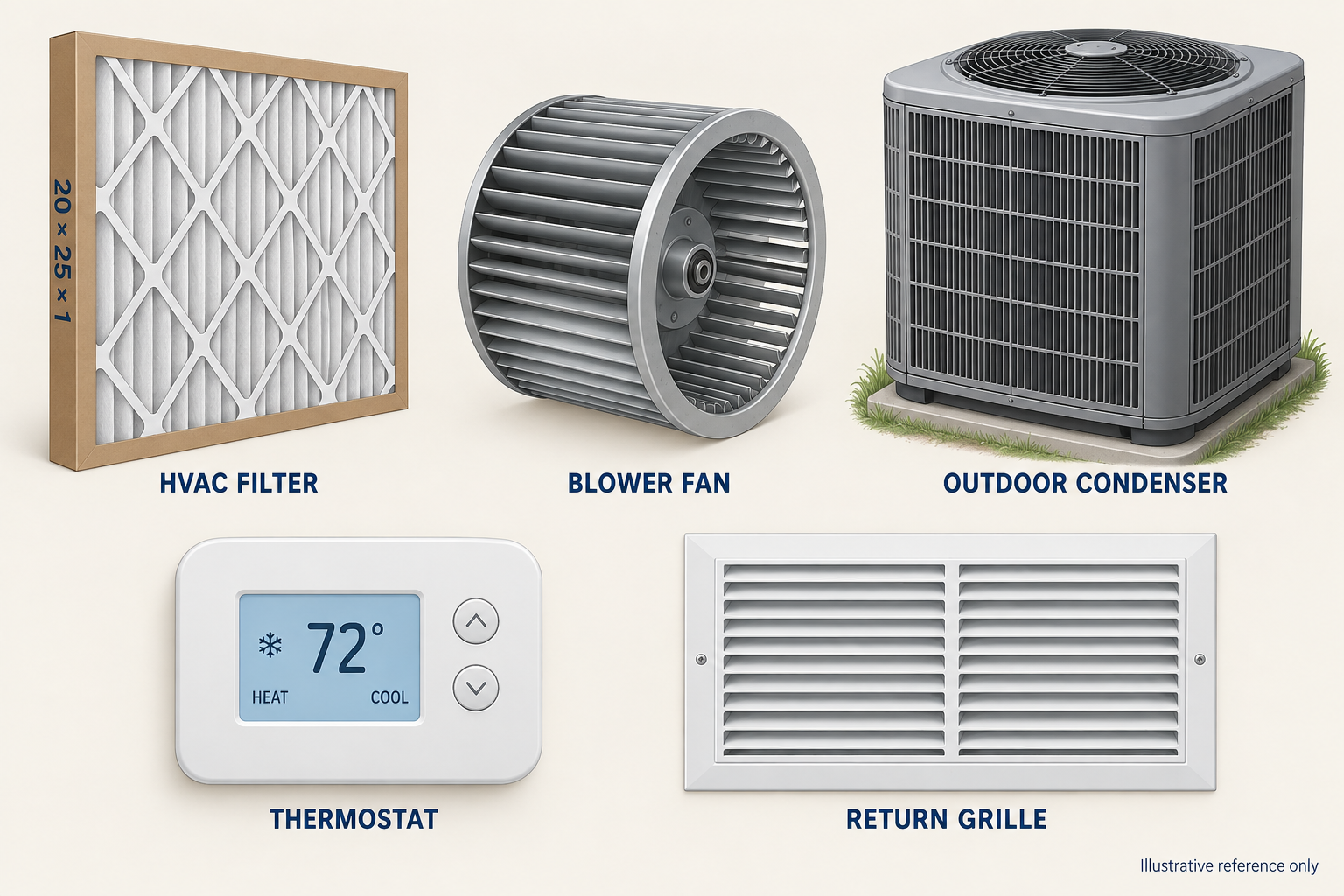
BlowerThe fan that pushes air through parts of a heating or cooling system.
How it works
It is often inside the indoor equipment. It moves air; the outdoor condenser does a different job. Filters protect airflow and equipment.
A small example
If air is weak, a dirty filter is one possible cause—not proof that the blower is broken.
Start here, one step at a time
- Locate the equipment from outside its closed case.
- Check only the user-accessible items described in your manual.
- Ask a qualified HVAC technician to handle internal parts or electrical work.
Try explaining this word yourself
Before looking back, explain “Blower” in your own words. Which part of the example shows it?
Then compare your explanation with “The fan that pushes air through parts of a heating or cooling system.” and the example above. If it is still unclear, use the question below with the relevant office or provider.
A question you can ask
“Which filter serves this blower, and who should check unusual sounds?”
Department of Energy: home cooling explained (PDF) (opens a new tab)See a labeled picture
BudgetA plan that gives your expected money specific jobs.
How it works
Add the money you expect to receive, subtract planned costs, then check the dates. A positive monthly total does not guarantee enough cash on an earlier bill date.
A small example
Income $1,000 minus costs $850 leaves $150 to assign or keep available.
Start here, one step at a time
- Write the money you can count on receiving, with dates.
- List bills, food, transport, savings, and due dates. Subtract costs and adjust until the plan fits.
Try explaining this word yourself
Before looking back, explain “Budget” in your own words. Which part of the example shows it?
Then compare your explanation with “A plan that gives your expected money specific jobs.” and the example above. If it is still unclear, use the question below with the relevant office or provider.
A question you can ask
“Are these numbers confirmed, estimated, or just hoped for?”
CommuteThe regular trip between where you live and school or work.
How it works
Compare travel time, reliability, fares, parking, and fuel. Visit or check the route during the hours you would actually travel.
A small example
An apartment $80 cheaper but requiring $140 more transportation costs $60 more overall.
Start here, one step at a time
- Map the trip at the time you would actually travel.
- Check return trips, weekend service, parking, and the full monthly cost.
Try explaining this word yourself
Before looking back, explain “Commute” in your own words. Which part of the example shows it?
Then compare your explanation with “The regular trip between where you live and school or work.” and the example above. If it is still unclear, use the question below with the relevant office or provider.
A question you can ask
“What would this trip cost each month, and can I get home after a late shift?”
Condenser and condensationA condenser is a part of a cooling system that releases heat. Condensation is water formed when moist air meets a cold surface.
How it works
In a common split air conditioner, the outdoor unit releases heat. Indoors, moisture can collect on the cold coil and flow through a drain. A heat pump can reverse the heat flow.
A small example
Water from a cold glass is condensation. The outdoor metal AC unit is not called a “condensation unit.”
Start here, one step at a time
- Use the picture to recognize the outdoor unit without touching its parts.
- Keep normal access clear as your manual directs.
- Report damaged wires, persistent leaks, or unusual sounds; do not open the cabinet.
Try explaining this word yourself
Before looking back, explain “Condenser and condensation” in your own words. Which part of the example shows it?
Then compare your explanation with “A condenser is a part of a cooling system that releases heat. Condensation is water formed when moist air meets a cold surface.” and the example above. If it is still unclear, use the question below with the relevant office or provider.
A question you can ask
“Is this a normal drain, a leak, or a problem needing an HVAC technician?”
Department of Energy: home cooling explained (PDF) (opens a new tab)See a labeled picture
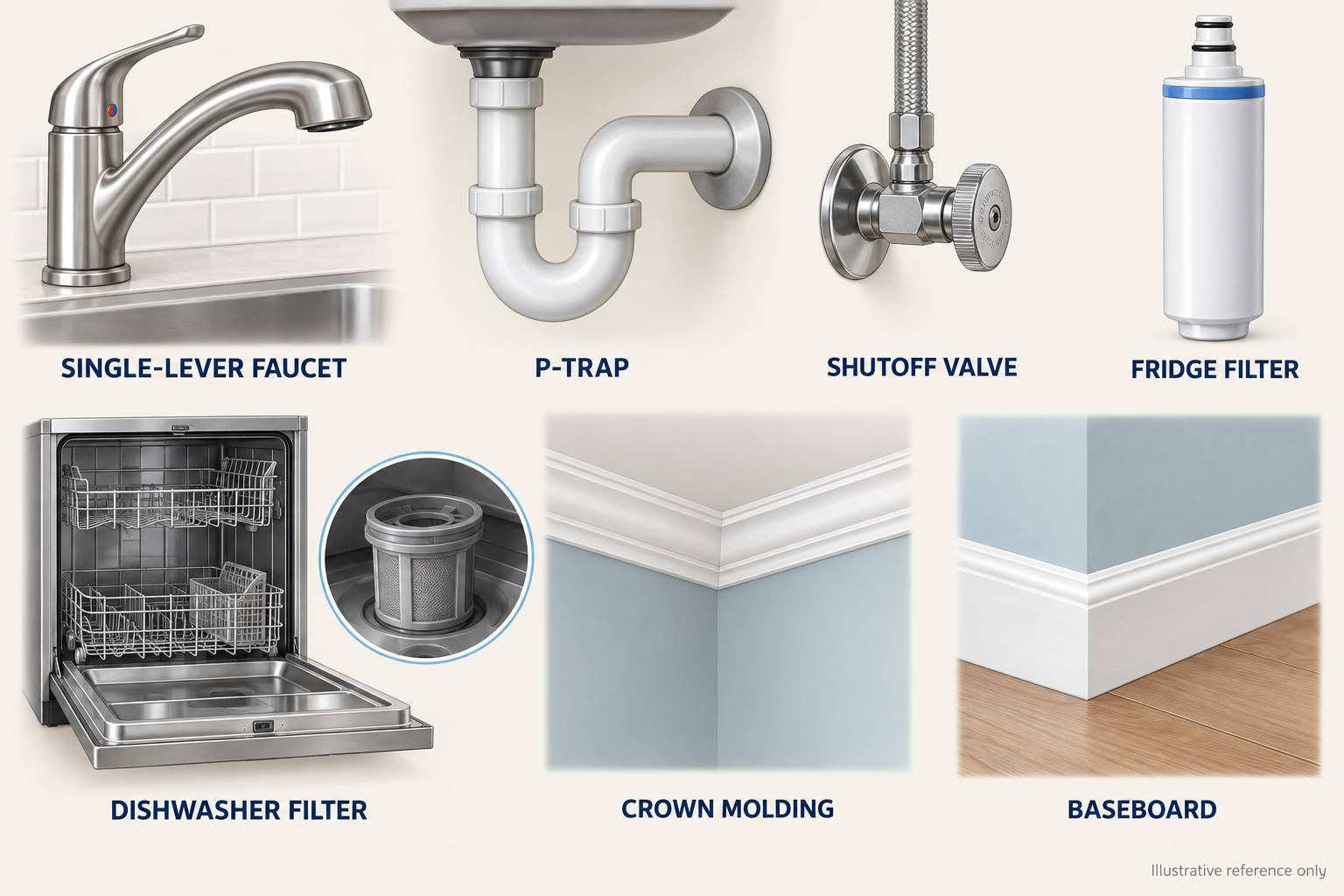
Crown molding and baseboardDecorative trim covers or finishes edges in a room. Crown molding is near the ceiling; baseboard is near the floor.
How it works
These parts are different from the main wall. Materials vary. Swelling, soft areas, or stains may be clues to a moisture problem.
A small example
A strip where the wall meets the ceiling is crown molding. A strip along the floor is baseboard.
Start here, one step at a time
- Use the picture to name the part when reporting a problem.
- Photograph damage and note whether it is spreading or damp.
- Ask the owner before painting or removing trim; older coatings and hidden wiring need care.
Try explaining this word yourself
Before looking back, explain “Crown molding and baseboard” in your own words. Which part of the example shows it?
Then compare your explanation with “Decorative trim covers or finishes edges in a room. Crown molding is near the ceiling; baseboard is near the floor.” and the example above. If it is still unclear, use the question below with the relevant office or provider.
A question you can ask
“Is this just surface damage, or should someone check for a leak?”
FTC: check a home-repair contractor (opens a new tab)See a labeled picture
Dishwasher filter and drainingA dishwasher pumps used water out. Some models have a removable filter that catches food.
How it works
A little water in a filter well can be normal. Water standing across the tub after a finished cycle needs checking. Controls and user-cleanable filters vary.
A small example
“Cancel/Drain” may run a drain cycle on one model; another uses a different button sequence.
Start here, one step at a time
- Read the manual and try only its normal cancel/drain instructions. Stop if it leaks or smells electrical.
- Before removing a user-cleanable filter, switch off power as the manual instructs. Do not reach blindly into debris or broken glass.
- Clean and refit only approved parts. For persistent water, call maintenance or an appliance technician; do not disconnect hoses or pour in drain cleaner.
Try explaining this word yourself
Before looking back, explain “Dishwasher filter and draining” in your own words. Which part of the example shows it?
Then compare your explanation with “A dishwasher pumps used water out. Some models have a removable filter that catches food.” and the example above. If it is still unclear, use the question below with the relevant office or provider.
A question you can ask
“Which draining and filter-cleaning steps are approved for this model?”
Whirlpool: water remaining after a cycle (opens a new tab)See a labeled picture
Faucet / tapThe fixture you use to let water flow into a sink, tub, or other place.
How it works
Handles differ. A single lever may lift for flow and move sideways for temperature. Two-handle taps often turn separately. Red often means hot and blue cold; do not rely only on color.
A small example
Start with a little cool water. Add hot water slowly so you do not get burned.
Start here, one step at a time
- Make sure the basin can drain and no electrical items are in it.
- Move the handle gently a small amount. If it resists, do not force it.
- Adjust slowly, then close gently and check that water stops. Ask the owner about drips or unusual controls.
Try explaining this word yourself
Before looking back, explain “Faucet / tap” in your own words. Which part of the example shows it?
Then compare your explanation with “The fixture you use to let water flow into a sink, tub, or other place.” and the example above. If it is still unclear, use the question below with the relevant office or provider.
A question you can ask
“Can you show me how this handle works and which direction is cold?”
FTC: check a home-repair contractor (opens a new tab)See a labeled picture
LeaseThe agreement that sets the rules for renting.
How it works
Read who is responsible, the start and end dates, payment rules, repairs, guests, and how to leave. Ask about anything unclear before signing; local rules matter.
A small example
A 12-month lease may create obligations even if you want to move after six months.
Start here, one step at a time
- Read one section at a time and mark unclear words.
- Ask for written answers before signing and keep your signed copy.
Try explaining this word yourself
Before looking back, explain “Lease” in your own words. Which part of the example shows it?
Then compare your explanation with “The agreement that sets the rules for renting.” and the example above. If it is still unclear, use the question below with the relevant office or provider.
A question you can ask
“What happens if I need to leave early or a roommate moves out?”
USAGov: state tenant-rights resources (opens a new tab)Off-campus living and apartment livingOff-campus means outside school-managed housing. An apartment is one type of home you can rent.
How it works
An off-campus home can be an apartment, a room, or a house. You may sign a lease with a private owner and pay utilities yourself. A school listing does not always mean the school owns or guarantees the home.
A small example
A 12-month lease can require summer rent even if your classes last only nine months.
Start here, one step at a time
- Compare school housing and private rentals over the same number of months.
- Include travel, utilities, furniture, food, and deposits.
- Follow the First Apartment path before signing a private lease.
Try explaining this word yourself
Before looking back, explain “Off-campus living and apartment living” in your own words. Which part of the example shows it?
Then compare your explanation with “Off-campus means outside school-managed housing. An apartment is one type of home you can rent.” and the example above. If it is still unclear, use the question below with the relevant office or provider.
A question you can ask
“Who manages this home, how long is the lease, and what is the total cost?”
USAGov: state tenant-rights resources (opens a new tab)See a labeled picture
Plumber, electrician, and HVAC technicianA plumber works on water and drain systems. An electrician works on electrical systems. An HVAC technician works on heating and cooling.
How it works
Find candidates through the property manager, trusted local referrals, and official license searches where licensing applies. Reviews alone do not prove a license or insurance.
A small example
A broken outlet calls for an electrician; a leaking sink pipe usually calls for a plumber.
Start here, one step at a time
- If renting, contact your landlord’s repair service first unless an emergency requires immediate help.
- For owned property, check your state or local licensing agency and ask about insurance and relevant experience.
- Compare written scope, fees, timing, and payment terms. Agree before work begins; do not open electrical panels yourself.
Try explaining this word yourself
Before looking back, explain “Plumber, electrician, and HVAC technician” in your own words. Which part of the example shows it?
Then compare your explanation with “A plumber works on water and drain systems. An electrician works on electrical systems. An HVAC technician works on heating and cooling.” and the example above. If it is still unclear, use the question below with the relevant office or provider.
A question you can ask
“Are you qualified and insured for this exact job, and can I have a written estimate?”
FTC: check a home-repair contractor (opens a new tab)See a labeled picture
Plumbing and P-trapPlumbing brings water in and carries used water away. A P-trap is the curved drain pipe under many sinks.
How it works
The curve holds water that helps block sewer gases. Supply pipes and drains do different jobs. A leak may come from either side.
A small example
The curved pipe under a sink is a drain part, not the handle that turns water off.
Start here, one step at a time
- Look from a safe, dry position and note where water appears.
- Report leaks early with a photo and location.
- Do not take pipes apart or mix drain chemicals; ask a plumber when unsure.
Try explaining this word yourself
Before looking back, explain “Plumbing and P-trap” in your own words. Which part of the example shows it?
Then compare your explanation with “Plumbing brings water in and carries used water away. A P-trap is the curved drain pipe under many sinks.” and the example above. If it is still unclear, use the question below with the relevant office or provider.
A question you can ask
“Is the leak on the clean-water supply or the drain, and who handles repairs?”
FTC: check a home-repair contractor (opens a new tab)See a labeled picture
Proof of address / proof of residencyEvidence that you live at the address you give an organization.
How it works
It is different from proving who you are. Accepted documents, dates, names, and formats vary by service. An envelope with your name on it is not automatically enough.
A small example
A DMV may accept a utility bill that is not on the USPS PO Box identification list.
Start here, one step at a time
- Find the specific office’s current document list.
- Match the name, physical address, date, and format requirements.
- If you live with someone else or have no fixed address, ask for its approved alternative process.
Try explaining this word yourself
Before looking back, explain “Proof of address / proof of residency” in your own words. Which part of the example shows it?
Then compare your explanation with “Evidence that you live at the address you give an organization.” and the example above. If it is still unclear, use the question below with the relevant office or provider.
A question you can ask
“Which documents count for this exact service, how recent, and how many do you need?”
USPS: ID accepted for each postal service (opens a new tab)See a labeled picture
Prorated rentRent calculated for only part of a rental period.
How it works
The lease or local rules determine the calculation. Ask which daily-rate method is used instead of assuming every month has 30 days.
A small example
If the agreed method uses a 30-day month: $900 ÷ 30 = $30 per day. Ten days cost $300.
Start here, one step at a time
- Ask which dates you will pay for.
- Have the landlord show the daily-rate calculation in writing.
Try explaining this word yourself
Before looking back, explain “Prorated rent” in your own words. Which part of the example shows it?
Then compare your explanation with “Rent calculated for only part of a rental period.” and the example above. If it is still unclear, use the question below with the relevant office or provider.
A question you can ask
“How many days are you charging for, and how is the daily rate calculated?”
USAGov: state tenant-rights resources (opens a new tab)Refrigerator water filterA replaceable part that filters water sent to some refrigerators’ dispensers or ice makers.
How it works
Not every refrigerator has one. Location, part number, release method, flushing, and replacement timing depend on the model. A water filter is different from an air or odor filter.
A small example
A filter that looks similar may still be the wrong part. Match the model and approved part number.
Start here, one step at a time
- Find the model label and official manual. Locate the user-serviceable filter if there is one.
- Follow its water shutoff and removal directions with a towel ready; never force the fitting.
- Fit the correct part, run the specified flushing amount, inspect for leaks, and reset the indicator if instructed.
Try explaining this word yourself
Before looking back, explain “Refrigerator water filter” in your own words. Which part of the example shows it?
Then compare your explanation with “A replaceable part that filters water sent to some refrigerators’ dispensers or ice makers.” and the example above. If it is still unclear, use the question below with the relevant office or provider.
A question you can ask
“Does this model have a water filter, and what replacement and flush steps does it require?”
Whirlpool: model-specific water-filter instructions (opens a new tab)See a labeled picture
RentThe amount paid to use someone else’s property for an agreed time.
How it works
The advertised rent may leave out utilities, parking, pets, or other charges. Ask for the full recurring price in writing.
A small example
An $850 apartment with $120 utilities and $30 parking costs $1,000 each month before other living expenses.
Start here, one step at a time
- Ask for the rent plus every required monthly charge.
- Add utilities and travel costs before deciding the apartment fits your budget.
Try explaining this word yourself
Before looking back, explain “Rent” in your own words. Which part of the example shows it?
Then compare your explanation with “The amount paid to use someone else’s property for an agreed time.” and the example above. If it is still unclear, use the question below with the relevant office or provider.
A question you can ask
“What is included in rent, and what would I pay separately?”
USAGov: state tenant-rights resources (opens a new tab)Roommate agreementA written plan between the people sharing a home.
How it works
Set out each person’s bill share, chores, guests, and what happens if someone leaves. This does not replace the lease or change what the landlord can require under it.
A small example
Splitting $1,200 three ways gives $400 each if you agree on equal shares. Other bills still need a plan.
Start here, one step at a time
- Discuss bills, chores, guests, and leaving early before moving in.
- Write and share the agreement, then compare it with everyone’s lease duties.
Try explaining this word yourself
Before looking back, explain “Roommate agreement” in your own words. Which part of the example shows it?
Then compare your explanation with “A written plan between the people sharing a home.” and the example above. If it is still unclear, use the question below with the relevant office or provider.
A question you can ask
“Whose name is on each bill, and how will we prove it was paid?”
USAGov: state tenant-rights resources (opens a new tab)Security depositMoney held under stated conditions, often to cover certain unpaid charges or damage.
How it works
Ask what can be deducted, how return works, and which separate fees are nonrefundable. Keep the receipt and photos of the condition at move-in.
A small example
An $850 deposit is separate from $850 first-month rent: that is $1,700 before other charges.
Start here, one step at a time
- Request a list separating refundable deposits from nonrefundable fees.
- Save payment proof and dated move-in condition photos.
Try explaining this word yourself
Before looking back, explain “Security deposit” in your own words. Which part of the example shows it?
Then compare your explanation with “Money held under stated conditions, often to cover certain unpaid charges or damage.” and the example above. If it is still unclear, use the question below with the relevant office or provider.
A question you can ask
“Which payments are refundable, under what conditions, and when?”
USAGov: state tenant-rights resources (opens a new tab)Thermostat and return grilleA thermostat controls the heating or cooling request. A return grille is an opening through which air goes back to the system.
How it works
Supply vents send conditioned air into a room; returns bring air back. Keep furniture from blocking airflow. A return may hold a filter, but not every grille does.
A small example
Setting cooling to 60°F does not usually cool the house faster than setting the temperature you actually want.
Start here, one step at a time
- Find the thermostat and identify heat, cool, off, and fan settings using its manual.
- Ask the owner which openings are returns and which are supply vents.
- Avoid opening unknown equipment or covering vents.
Try explaining this word yourself
Before looking back, explain “Thermostat and return grille” in your own words. Which part of the example shows it?
Then compare your explanation with “A thermostat controls the heating or cooling request. A return grille is an opening through which air goes back to the system.” and the example above. If it is still unclear, use the question below with the relevant office or provider.
A question you can ask
“Which controls and filter locations belong to my system?”
Department of Energy: home cooling explained (PDF) (opens a new tab)See a labeled picture
Utility and service providerA company or local organization supplying services such as electricity, water, or internet.
How it works
The address determines which providers are available. Ask the property manager or local government, then verify the provider’s official website.
A small example
Two apartments in nearby towns may use different electric companies.
Start here, one step at a time
- Ask the landlord or local government which providers serve the address.
- Confirm the provider’s official site, start date, deposit, and installation appointment.
Try explaining this word yourself
Before looking back, explain “Utility and service provider” in your own words. Which part of the example shows it?
Then compare your explanation with “A company or local organization supplying services such as electricity, water, or internet.” and the example above. If it is still unclear, use the question below with the relevant office or provider.
A question you can ask
“Who provides service at this exact address, and what is already included?”
Water shutoff valveA control that stops water flowing to a fixture or part of a home.
How it works
A sink or toilet may have a nearby valve. A main shutoff controls more of the home. Designs differ; some turn a quarter turn and others take several turns.
A small example
Knowing the correct sink valve can limit a small leak while help is arranged.
Start here, one step at a time
- Have the owner or plumber identify and label the correct valve before a problem.
- Keep the route clear and the emergency plumber number handy.
- Never force a stuck valve. If water is near electricity, stay clear and call for help.
Try explaining this word yourself
Before looking back, explain “Water shutoff valve” in your own words. Which part of the example shows it?
Then compare your explanation with “A control that stops water flowing to a fixture or part of a home.” and the example above. If it is still unclear, use the question below with the relevant office or provider.
A question you can ask
“Which valve is mine to use, and can you show me safely?”
FTC: check a home-repair contractor (opens a new tab)See a labeled picture
What this means for you
Your housing choice affects how much time and money remain for school, work, food, and rest.
What can make it harder
Rent that uses all your available money can turn a small surprise into a missed bill. A long or unreliable commute can make school and work harder.
What can help
A realistic full-cost limit and a workable location give you more room to handle changes.
One next stepCompare two addresses using rent plus utilities plus transportation. Try the trip at the time you would actually travel.
Find a rent limit that leaves room to live
Start with money you reliably bring home in one month. These are invented amounts, not a recommended budget for everyone.
Write down take-home income
$2,000 is the amount received after payroll deductions. Do not use a larger before-tax salary.
Reserve money for the rest of life
$400 food + $180 travel + $60 phone + $160 other needs + $200 savings or breathing room = $1,000. Use your own complete list.
Find the total housing allowance
$2,000 income − $1,000 other needs = $1,000 left for all housing costs.
Subtract housing extras
$1,000 − $120 utilities − $30 parking = $850 maximum rent in this example.
Check the money needed before moving
$850 first rent + $850 deposit + $150 moving = $1,850 upfront, before any other required fees. This is separate from having enough monthly income.
What the answer tells youCompare the full monthly cost and the upfront total. If the numbers do not fit, adjust the area, room arrangement, timing, or price before committing.
Reporting a repair clearly
A precise report helps maintenance understand where a problem is and how it affects you.
What can make it harder
Vague descriptions and missing dates can lead to repeated questions and delay.
What can help
Name the room, symptom, start date, and safe observations; keep the report confirmation.
One next stepReplace “it is broken” with one specific description in your repair list.
Divide a shared housing bill
Assume two people agree to split the following costs equally.
- 1
Add agreed shared bills
$1,000 rent + $120 utilities = $1,120.
- 2
Divide by two
$1,120 ÷ 2 = $560 per person.
- 3
Keep personal costs separate
$560 + $35 personal phone bill = $595 for one person’s listed bills.
What the answer tells youAgreement on a split does not change anyone’s legal responsibility under the lease.
Go a little deeper
Open a lesson when you need the full explanation. You can return to it at any time.
Prove where you live: DMV, Post Office, and no bills in your nameA bill accepted in one place may be refused somewhere else. Start with the exact service.
1. Name the job before gathering papers
Say what you are doing: “I am applying for my first state ID,” “I want a REAL ID,” “I need a PO Box,” or “I am forwarding mail.” These are different services with different lists. Identity means who you are. Residency means where you live. A passport may prove identity without proving your current street address.
2. For a license or state ID, use your state’s list
Open the official state motor-vehicle site using the directory below. Choose the exact service and your age. Look for “documents,” “residency,” or “proof of address.” Common categories on some state lists include utility bills, leases, bank statements, and government mail. No category is accepted everywhere.
California REAL ID is one example: its checklist calls for two different residency documents and lists several categories, including certain bills and financial records. California’s rule is an example, not a rule for every state. Read the current list for names, dates, address, and printed-document requirements.
A standard ID application may have different rules.
3. At the Post Office, use the postal service’s list
For a PO Box, USPS Form 1093 calls for two acceptable current IDs: one photo identification and one qualifying non-photo address document. The non-photo examples on that form include a lease, mortgage or deed of trust, voter or vehicle registration, and home or vehicle insurance.
Utility bills are not on that PO Box form’s accepted-ID list. A Social Security card, birth certificate, or credit card is not a substitute for the listed postal IDs. For a different service, such as collecting mail or identity verification, check USPS’s service-specific rules instead of reusing the DMV list.
4. If you are moving, forwarding is only one step
Start on USPS.com, choose the real change-of-address service, and follow its identity-verification instructions. If directed to visit a Post Office, bring the barcode or instructions and the exact IDs requested. An extra address document may be needed when your primary ID does not show the required address.
Forwarding eligible mail does not update your driver’s license, bank, school, voter record, or insurance automatically. Update those organizations separately through their own official processes.
5. If no bills show your name, ask about the approved alternative
Do not put your name on someone else’s bill yourself. Ask: “I live with my parent/relative/roommate and have no bills in my name. What is your approved residency process?” A state or organization may allow a relationship record, signed residency form, school/housing letter, or other evidence. Some offer a separate route for people without fixed housing.
Acceptance is specific to that service.
Before leaving home, check: correct name, physical address, required date range, enough different documents, and the right format. Ask whether a downloaded statement must be printed, whether originals are needed, and how any name difference is handled. Save the official list with your appointment details.
Prepare for the exact office
Write the name of the receiving office and the specific transaction, such as renewing an ID or opening a PO Box. Read that office’s current list and note acceptable document types, required dates, whose name must appear, and whether a physical address is required. A mailing address and a residence address may serve different purposes.
If a bill is in someone else’s name, explain that situation before the visit and ask which alternatives the office accepts. Do not alter a bill or assume a handwritten note qualifies. Keep the official answer with the appointment information.
Check the whole packet before leaving
Compare your documents against the list one by one. Make sure names, dates, and addresses are readable and that the required originals or copies are available. If you plan to use a digital statement, confirm whether the office needs a printed version.
If a document is rejected, ask which requirement it failed and what would satisfy it. Record that explanation rather than ordering several replacements at random. This turns a frustrating return visit into a specific correction and helps avoid paying for an unnecessary certified copy.
Check your understanding
- Explain the main idea of “Prove where you live: DMV, Post Office, and no bills in your name” without looking back.
- Choose one example above and identify its assumptions or requirements.
- Write the next question you would ask about your own situation.
Official sources & next places to go
USAGov: state motor-vehicle services (opens a new tab)California DMV: example of a state document checklist (opens a new tab)USPS: PO Box application and ID list (PDF) (opens a new tab)USPS: ID accepted for each postal service (opens a new tab)USPS: mail forwarding and identity checks (opens a new tab)USPS: find a Post Office and its services (opens a new tab)Find your campus, parking, classes, and place to livePractice the trip before your first day so every location is not new at once.
1. Find the right campus map
Search the school’s official website for “campus map.” Make sure it is the correct campus—one college may have several. If there is a printable map or PDF, download it from that school. If not, save the building names and official map link; ask the visitor or student-services office for a paper map.
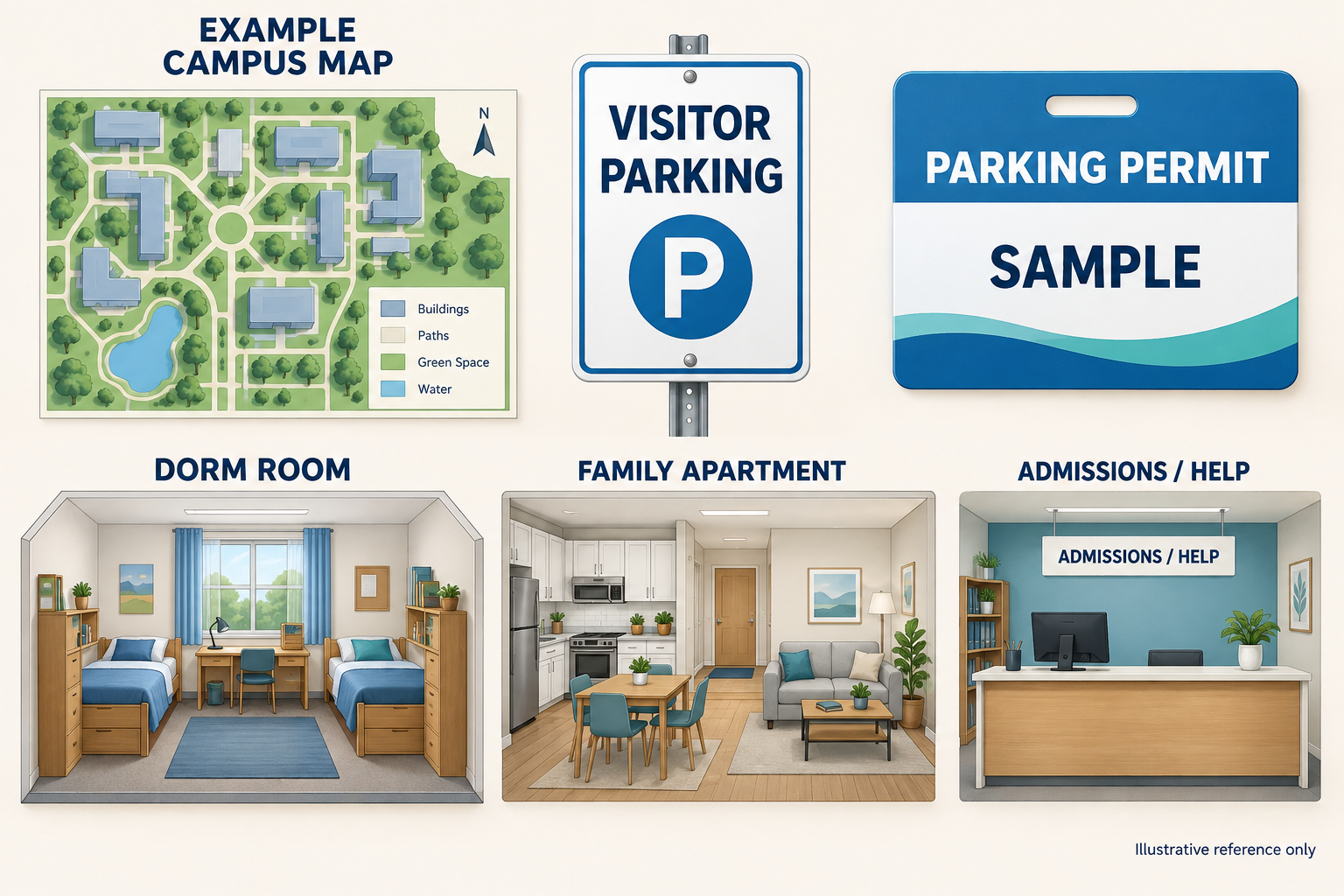
Use your actual class schedule to find each building and room. A building abbreviation is not necessarily its street address. Walk the route before classes if possible and locate accessible entrances, bathrooms, the library, and student services. The illustration here is only an example, not a map of your school.
2. Find the parking office and its number
On the school’s site, search “parking services” or “transportation.” Open the Contact page or official staff directory for the phone number. Ask: “I am a new commuting/resident student at this campus. Which permit do I need, where does it work, and where may I park while buying it?”
Student, resident, visitor, accessible, timed, and reserved areas can have different rules. A permit may cover only specific lots and times and may not guarantee a space. Read posted signs, register the correct vehicle if required, and check event or overnight restrictions. If using transit, practice the route and check the last return trip.
3. Match housing to your household and budget
A dorm or residence hall is usually school-managed housing with room, roommate, meal-plan, and break-period rules. Family housing is housing designed for eligible students with partners or dependents; eligibility and availability vary.
Off-campus means outside school-managed housing and may be a private apartment, house, or room. “Apartment” describes a type of home and can be on or off campus.
Ask about full yearly cost, utilities, deposits, move-in dates, summer/break access, cooking, transport, and who handles repairs. Do not assume a dorm contract ends whenever a student leaves school. Read the cancellation terms. Contact the school housing office before paying an unfamiliar private listing.
4. Turn course credits into a weekly plan
Use the degree plan with an academic adviser. Check prerequisites, which credits count toward your program, and the school’s full-time and aid rules. Make time for class, study, work, travel, food, and rest.
If a course is difficult, use tutoring or office hours early. Before dropping a class, ask both the adviser and financial-aid office about grades, aid, housing, and graduation effects. Do not assume dropping one course affects only that course.
Rehearse one complete day
Choose a real class day and trace the journey from home to the first room, between classes, and back home. Include parking or transit, walking time, meals, accessibility requirements, and any job shift. A schedule that works on paper can fail if two buildings are farther apart than expected.
Identify one help location you can reach in person and one official contact you can use remotely. Save the correct campus map offline if possible. If a room changes, update your route instead of relying on an old screenshot indefinitely.
Make a fallback before it is needed
Write what you would do if the usual bus is missed, a parking lot is full, or a building entrance is inaccessible. Check which offices can help with those specific problems. Do not assume a friend’s permit, building access, or housing permission transfers to you.
At the end of the first week, revise the plan using actual travel and study time. Move unrealistic chores or work blocks before they become repeated conflicts. Ask an adviser about academic changes and the relevant offices about financial or housing effects before dropping or switching a class.
Check your understanding
- Explain the main idea of “Find your campus, parking, classes, and place to live” without looking back.
- Choose one example above and identify its assumptions or requirements.
- Write the next question you would ask about your own situation.
Find the right filter and handle simple home-care tasksIdentify the item and its manual first. Renting? Ask which jobs the landlord handles.
1. Start a home information list
Write the appliance or system name, accessible model number, manual link, filter part number, and repair contact. The model number identifies the design; the serial number identifies one unit. Use the manufacturer’s website and search that model. Do not open an electrical cabinet to find a label.
Use the pictures to tell a blower from an outdoor condenser, or a water filter from an air filter. The pictures identify examples, not instructions for taking your equipment apart.
2. Replace a user-accessible air filter
Ask where the filter is and read the manual’s instructions. Turn the system off at its normal control. Photograph the current filter size and direction before removal. Verify the required type, thickness, and size with the manual; the old filter might be wrong.
Fit the correct replacement with its airflow arrow pointing as the system requires, close the access, and record the date. Do not bend a filter to make it fit or assume the strongest filter is suitable. Ask the owner or technician for a replacement schedule based on the system and home.
3. Check for a refrigerator water filter
A refrigerator without filtered water or ice may have no water filter. Find your model’s manual and the listed location and part number. Some filters twist out, others use a release; follow that model’s water-supply and removal instructions.
Install the correct part without force, flush exactly as the manufacturer directs, check for leaks, and reset the reminder if instructed. A reset light does not physically replace or clean a filter.
4. Use a faucet and check a dishwasher calmly
For an unfamiliar faucet, start with a small flow of cool water and adjust gently. Ask the owner to demonstrate unusual handles. Do not force a stuck handle or valve. For leaks, know whom to contact and which water shutoff you have been shown to use safely.
For a dishwasher that did not drain, check the manual’s normal cancel/drain control. A little water in the filter well can be normal; standing water across the tub is different. Switch off power as instructed before cleaning any user-serviceable filter. Avoid sharp debris, drain chemicals, and hose disassembly.
Call maintenance for persistent problems, leaks, or electrical smells.
5. Know when to call a professional
Describe the room, part, symptom, and when it began. A plumber handles water/drains; an electrician handles electrical systems; an HVAC technician handles heating/cooling. Your landlord may require its own repair team.
For work you authorize, verify licensing where required, ask about insurance, and get scope and price in writing. Never open live electrical equipment or refrigerant systems. Gas smell, smoke, or water near electricity calls for leaving the danger area and following emergency or utility instructions.
Match the object, tool, and action
Identify the exact part before collecting supplies. A return-air filter, refrigerator water cartridge, and dishwasher filter have different jobs and removal methods. Write the model and part number from accessible labels and compare them with the manual. A picture of a similar appliance is useful for recognition but does not establish compatibility.
For cleaning, identify the material and finish as well as the object. A soft cloth on a permitted surface is different from an abrasive pad on a delicate coating. Keep floor tools separate from dishwashing tools and do not assume a household chemical is safe on every nearby surface.
Finish by checking the result
After an allowed task, confirm that covers, filters, and removable parts are seated correctly and the area is dry where required. Restore normal operation only as instructed. Watch for leaks, unusual sounds, or error indicators without opening electrical or mechanical compartments.
If the result is unclear, stop and describe what changed to maintenance or the appropriate professional. Keep a simple record of the model, symptom, date, and safe observations. A task is complete when the intended condition is verified, not merely when the checklist boxes have been ticked.
Check your understanding
- Explain the main idea of “Find the right filter and handle simple home-care tasks” without looking back.
- Choose one example above and identify its assumptions or requirements.
- Write the next question you would ask about your own situation.
Official sources & next places to go
Department of Energy: home cooling explained (PDF) (opens a new tab)Department of Energy: home energy checklist (opens a new tab)Whirlpool: model-specific water-filter instructions (opens a new tab)Whirlpool: dishwasher draining and basic troubleshooting (opens a new tab)Whirlpool: water remaining after a cycle (opens a new tab)FTC: check a home-repair contractor (opens a new tab)Useful places to start
- Check rental listings for scam warning signs (U.S. FTC) (opens a new tab)
Read this before sending a fee, deposit, or identity document.
- Find tenant help in your state (USAGov) (opens a new tab)
Use the state resources to ask about rental rules where the apartment is located.
- Find a housing counselor (U.S. CFPB) (opens a new tab)
Enter a ZIP code, then ask an agency whether it offers rental counseling and what it costs.
Ready for one small action?
Go back to your path. Each stage has instructions, questions to ask, and a checklist.
U.S. starting points · Foundation references reviewed September 17, 2026; expanded content added September 19, 2026. Examples use invented amounts unless stated otherwise. Requirements, rates, and policies vary; use the linked official sources and the terms that apply to you.
Use notes for plans and reminders. Keep passwords, account numbers, and sensitive documents in a secure storage service.