First Home resources
Plain-English explanations, worked math, and what it means for you.
You can start with the basics.
Learn the words, follow the numbers, and understand what a choice could mean for your life. Start with the first action. Open examples and explanations when you need them, then continue in the related tool.
Your first useful action
Collect the handover records and identify the home systems using the owner manuals. Start with one system or one unresolved handover item.
A worked example
An appliance record can say: kitchen refrigerator, model from the label, manual location, warranty end date, and who to call. You do not need a full inventory before starting.
What people often mix up
A warranty and an insurance policy cover different situations. Knowing where a shutoff is does not mean every repair is safe to do yourself.
What to ask when you are stuck
“What maintenance does this exact model need, and which jobs should be done by a qualified professional?”
Ask the organization or person responsible for the decision. Write down the answer, date, and any next action. If their answer uses an unfamiliar word, find it in Words explained below.
How to know this first action is finished
One system has a usable record, a next inspection date where appropriate, and a verified contact.
Create one appliance record
- Choose one appliance and read the label for its exact model.
- Find the matching manual and the user-care instructions, then record where the manual is saved.
- Separate a routine user task from a fault needing qualified service; keep a verified contact.
Check your result: Someone else could find the same manual from your record without guessing the model.
If something changes
If the appliance is replaced, archive the old details and record the new model and instructions.
Practical how-to guides
Start with one useful skill. Clear instructions and a checklist help you through it.
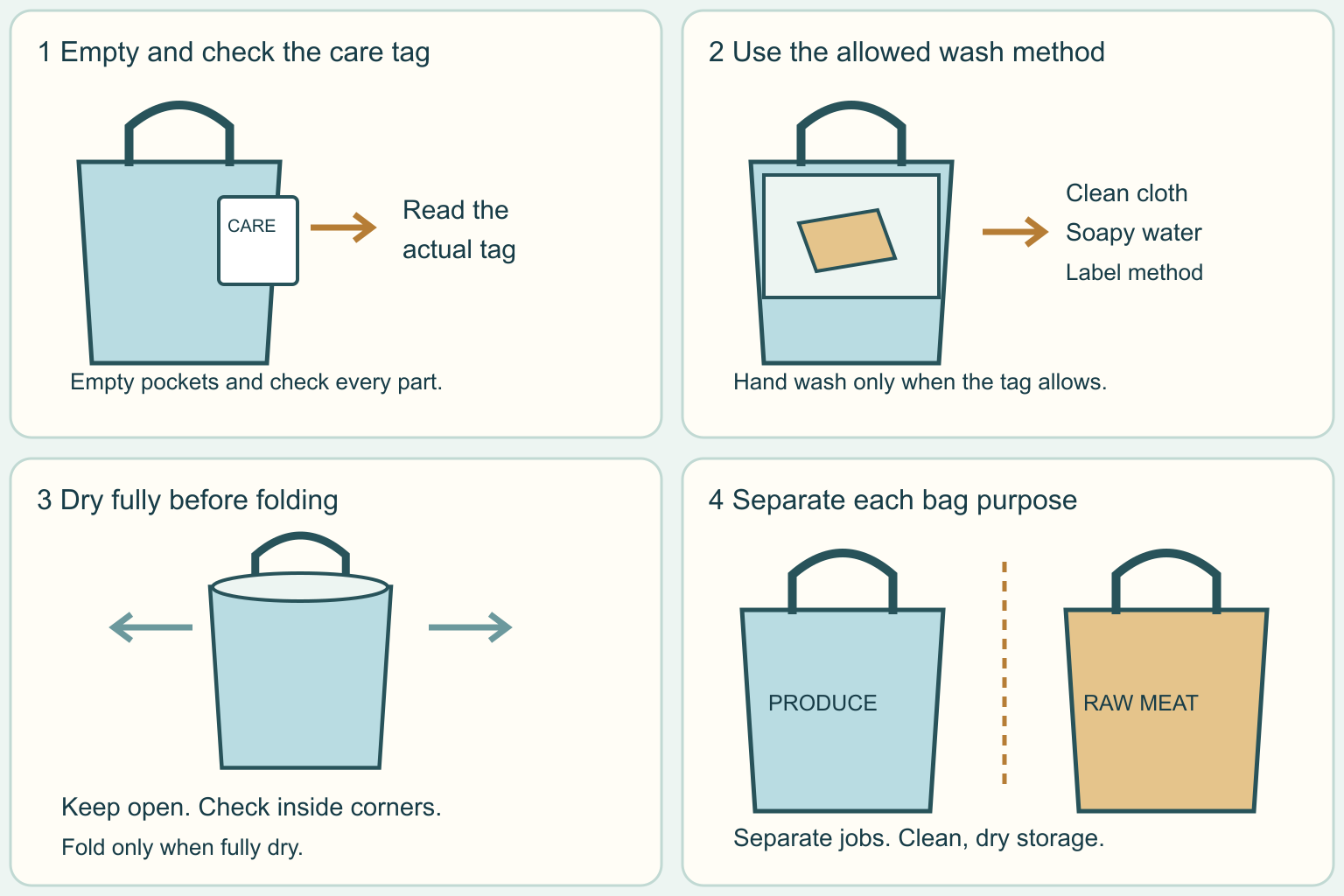
Clean, dry and sort your reusable grocery bags
Start with one ordinary reusable shopping bag. Read its care label, clean it the allowed way, and keep food bags separate from other uses.
4 clear steps · checklist & download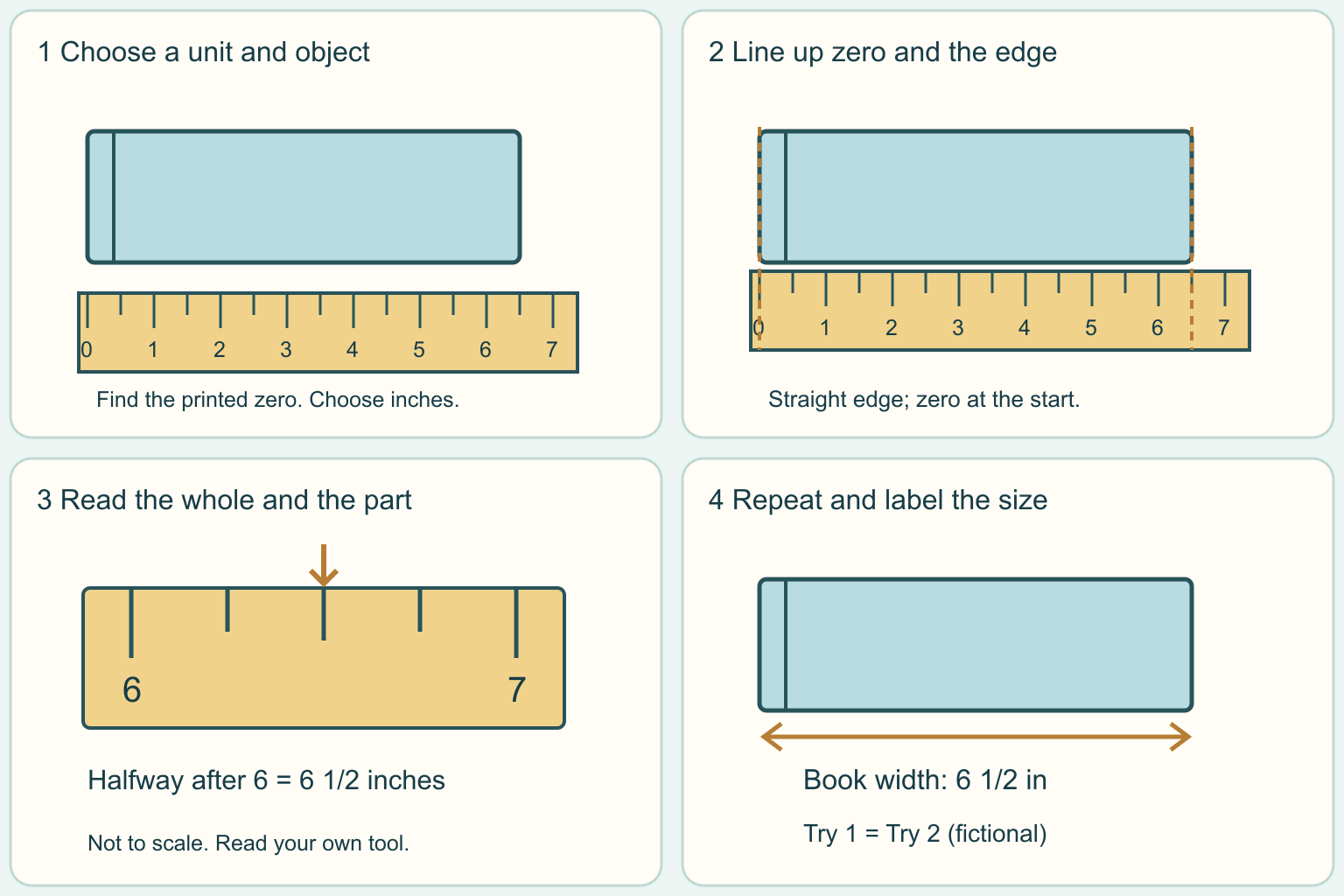
Measure a small object and write the size clearly
Practice on a book or empty box before measuring for storage or a move. Learn where to start, how to read the line, and why the unit matters.
4 clear steps · checklist & download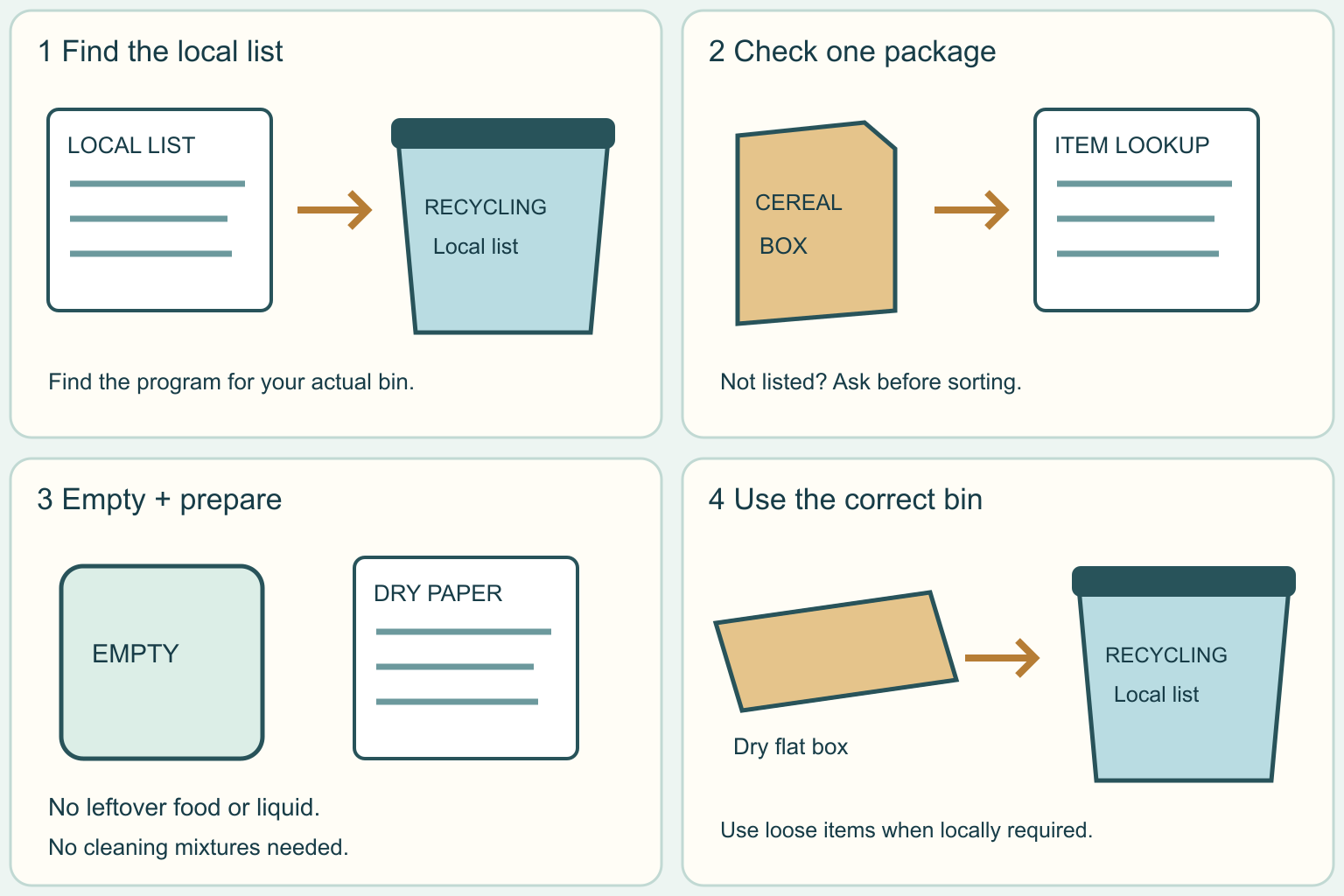
Sort everyday recycling using your local rules
Start with a few ordinary empty packages. Find the right local list, prepare accepted items, and use the correct collection bin.
4 clear steps · checklist & downloadOrganize your first year of home records
Keep responsibilities, warranties and contacts in a usable record.
4 clear steps · checklist & downloadWhat to bring
Touring homes, applying for a mortgage, and closing are different steps. The lender and closing office each give a specific list.
Prepare the items that apply to your task. For an appointment or application, confirm the receiving organization’s exact requirements. “Ready” means you have reviewed and prepared the item.
Accepted identification
Why you may need it
Shows who you are. The accepted list depends on the service.
Where to get it
Use a current document you already have, or apply through the state ID agency or other issuing office.
Check before you go
Ask for the exact ID list. A school card, membership card, expired ID, or phone photo may not count.
Proof of income or available money
Why you may need it
Helps an organization check your ability to pay or eligibility for help.
Where to get it
Ask payroll for recent pay stubs; get requested bank statements from your bank or benefit/aid letters from the issuer.
Check before you go
Ask which months and sources count. An offer letter or family support may need a different form. Do not send unrelated records.
Proof of your home address
Why you may need it
Shows where you live. It is a separate check from identity.
Where to get it
Download an eligible bill or statement from the provider, obtain your lease, or ask about an approved residency letter.
Check before you go
Confirm document type, how recent it must be, whose name must appear, physical address, and whether a printed copy is needed.
Social Security or other tax-ID information, only if required
Why you may need it
Some official financial, school, or employment processes need an identifier.
Where to get it
Use your secure records or the issuing agency’s official process. A replacement Social Security card is free through SSA.
Check before you go
Ask whether only the number is needed and which alternatives apply. Never put full ID numbers or card images into My Vault notes.
Name-change or relationship evidence, if needed
Why you may need it
Connects records that show different names or proves a required relationship.
Where to get it
Request certified marriage, court, adoption, or birth records from the correct issuing office.
Check before you go
Ask which chain of documents is needed and whether certified copies are required. A social-media name is not legal evidence.
Requested tax returns, bank records, and debt details
Why you may need it
Helps the lender review income, funds, and existing payments.
Where to get it
Get tax records from your files or the tax authority, statements from banks, and balances from lenders.
Check before you go
Ask for the exact years and months. Explain large transfers honestly; the lender may need gift or source-of-funds evidence.
Purchase agreement, Loan Estimate, and closing documents
Why you may need it
Records the property deal and the proposed/final loan costs.
Where to get it
Get these from your agent, lender, and closing professional.
Check before you go
Compare names, address, cash to close, rate, and dates. Confirm payment instructions through a known phone number.
Insurance card or policy details
Why you may need it
Shows coverage details and helps locate your account.
Where to get it
Get current documents from the insurer’s verified app, website, or agent.
Check before you go
Check effective dates and the correct person, address, or vehicle. Ask whether electronic proof is accepted.
0 of 8 reviewed and prepared. These ticks save in this browser only.
A question you can read aloud
“Which documents do you need now, which come at closing, who signs, and how should I deliver them securely?”
Keep actual documents in a secure place. Do not put Social Security numbers, full account or ID numbers, passwords, or document images into My Vault notes.
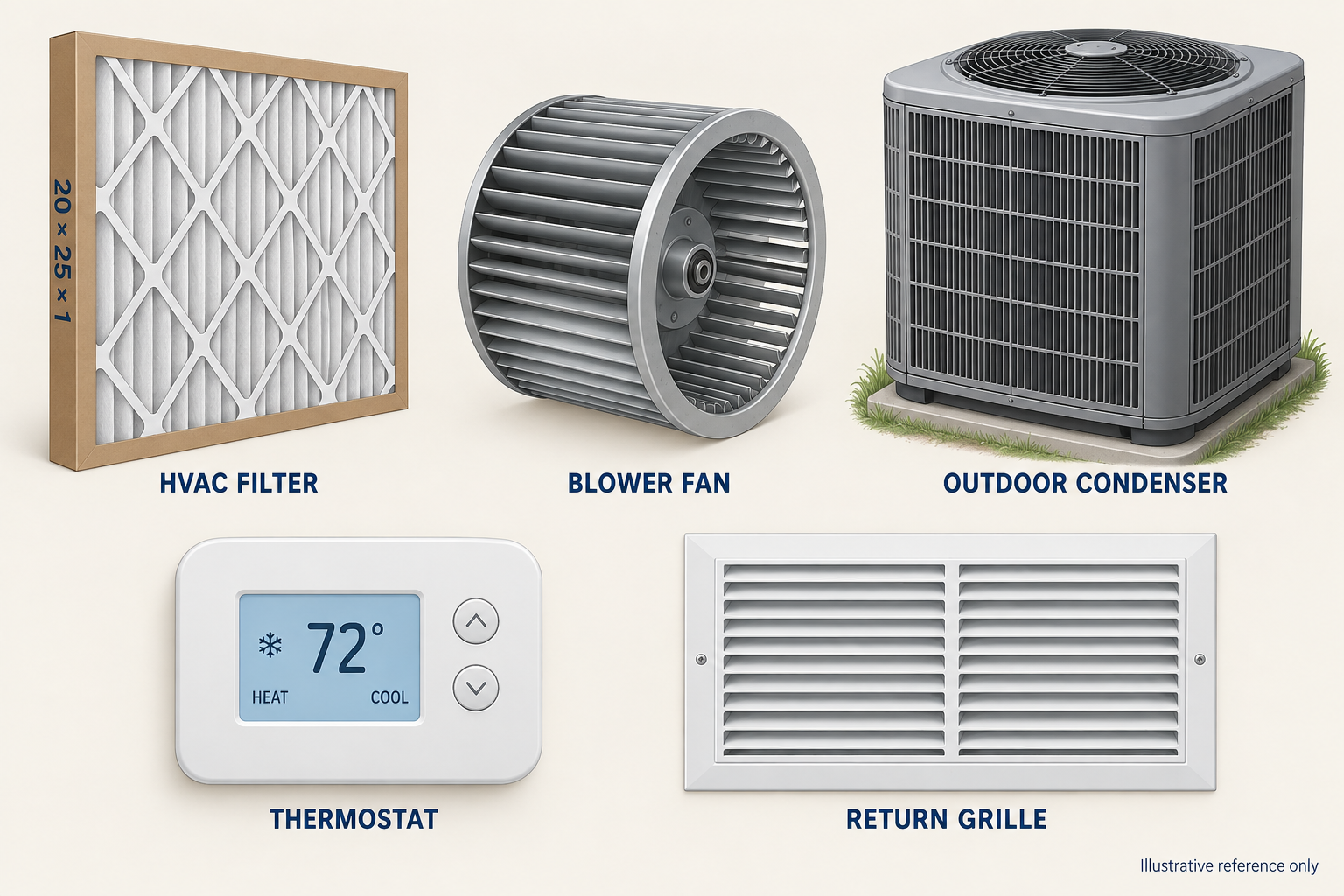
See how DMV and Post Office address rules differ →Picture guideSee labeled examples of the things you are learning about.
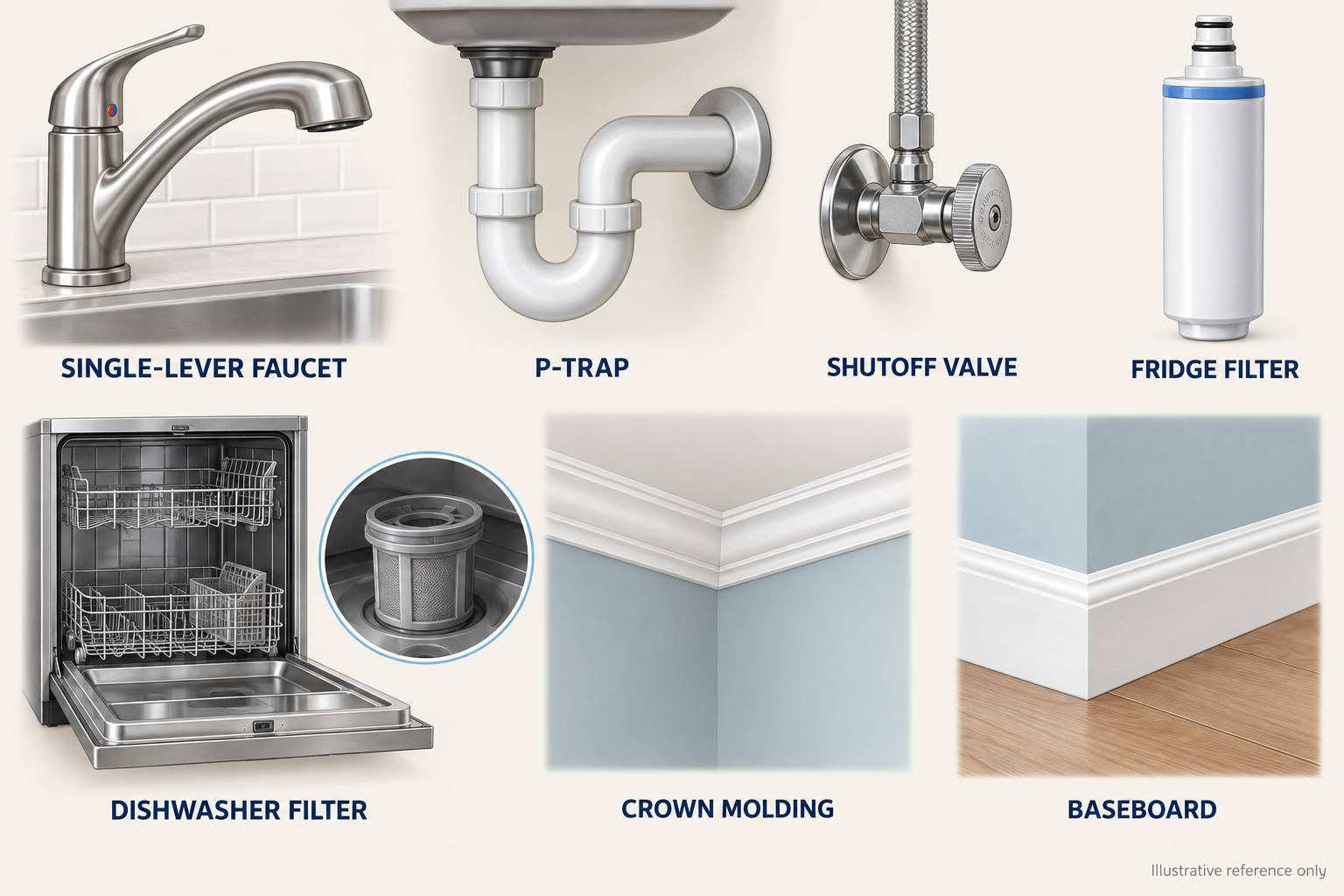
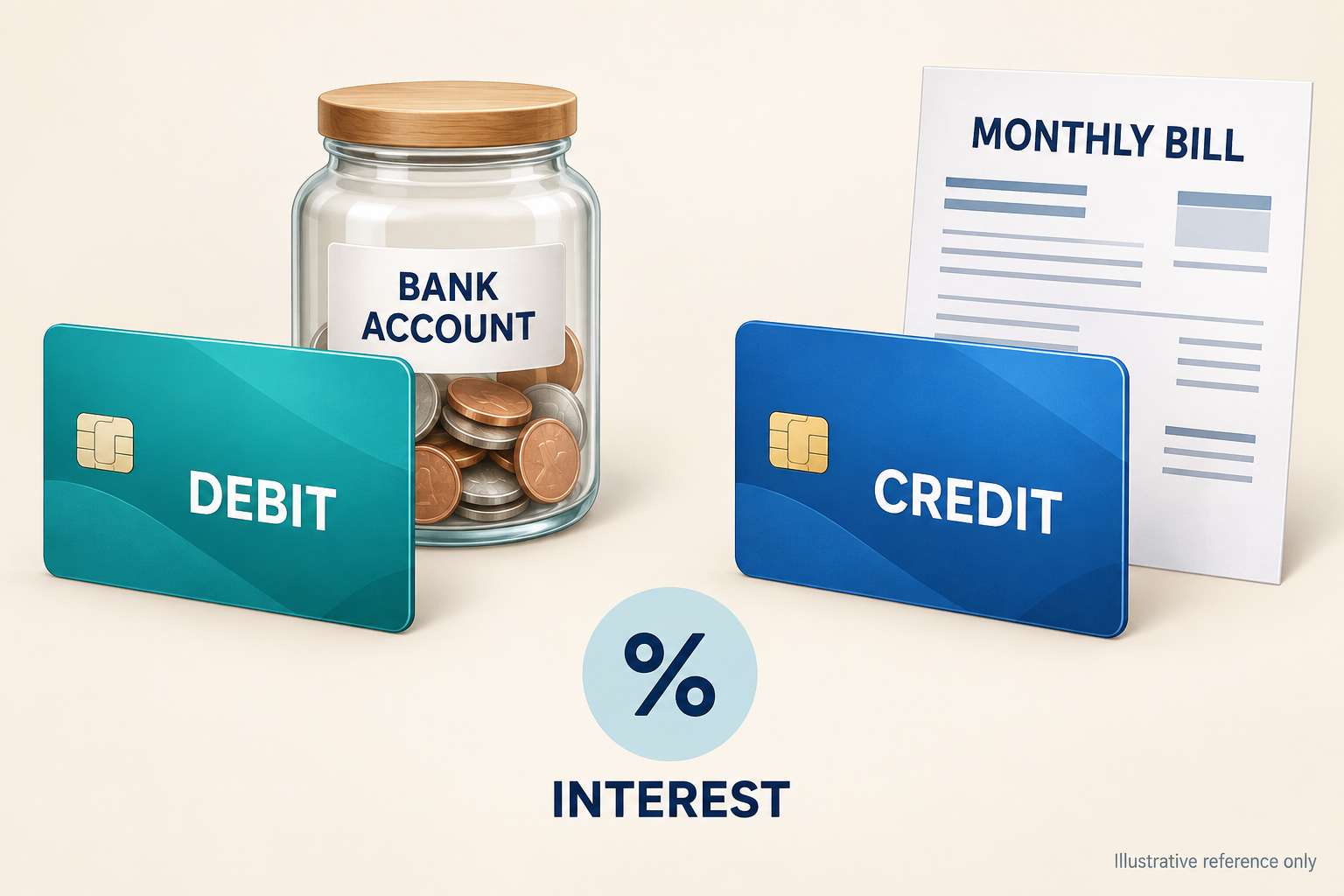
Words, in plain English
58 terms in First Home · Open any word to learn more.
Accrued interest and capitalizationAccrued interest is interest that has built up. Capitalization means adding unpaid interest to the loan’s principal when the rules allow it.
How it works
After capitalization, interest may be calculated on a larger principal balance. Not every loan adds interest the same way or at the same time.
A small example
A $1,000 principal plus $40 capitalized interest becomes $1,040 principal. Future interest can then be based on $1,040.
Start here, one step at a time
- Read the interest section for your exact loan type.
- Ask for an example covering school, pauses, and repayment.
- Do not assume no payment due means no interest.
Try explaining this word yourself
Before looking back, explain “Accrued interest and capitalization” in your own words. Which part of the example shows it?
Then compare your explanation with “Accrued interest is interest that has built up. Capitalization means adding unpaid interest to the loan’s principal when the rules allow it.” and the example above. If it is still unclear, use the question below with the relevant office or provider.
A question you can ask
“When does interest build up, and when could it be added to principal?”
Federal Student Aid: subsidized and unsubsidized loans (opens a new tab)See a labeled picture
Air filter and filter sizeA removable part that catches particles as air passes through it.
How it works
A home HVAC filter may be at a return grille or inside a user-accessible slot. Its printed size is often a rounded size, such as 20 × 25 × 1 inches. Actual measurements may differ.
A small example
The example size means roughly 20 inches long, 25 wide, and 1 thick. Your system may need a different size or filter type.
Start here, one step at a time
- Turn the system off at its normal control before using the manual’s filter-access steps.
- Read and photograph the old filter’s size and airflow arrow. Check the manual; do not assume a wrong old filter is correct.
- Get the specified replacement, install with the arrow pointing in the required airflow direction, close the access, and record the date. Stop if access is unsafe.
Try explaining this word yourself
Before looking back, explain “Air filter and filter size” in your own words. Which part of the example shows it?
Then compare your explanation with “A removable part that catches particles as air passes through it.” and the example above. If it is still unclear, use the question below with the relevant office or provider.
A question you can ask
“Which exact size, type, airflow direction, and replacement schedule does this system require?”
Department of Energy: home energy checklist (opens a new tab)See a labeled picture
AmortizationA plan showing how each payment gradually pays off a loan.
How it works
For a standard fixed-rate, fully amortizing loan, the principal-and-interest payment stays level. Early payments usually contain more interest; later payments reduce more principal.
A small example
A $1,199.10 first payment might include $1,000 interest and $199.10 principal in the example lesson below.
Start here, one step at a time
- Ask for a schedule listing each payment.
- Compare the first and last rows to see how the interest and principal portions change.
Try explaining this word yourself
Before looking back, explain “Amortization” in your own words. Which part of the example shows it?
Then compare your explanation with “A plan showing how each payment gradually pays off a loan.” and the example above. If it is still unclear, use the question below with the relevant office or provider.
A question you can ask
“May I see the amortization schedule for this exact offer?”
CFPB: buying a home (opens a new tab)APR — annual percentage rateAPR means annual percentage rate. It helps describe the yearly cost of borrowing.
How it works
Annual means “for one year.” A percentage is a part out of 100. For a mortgage, APR includes interest and certain loan charges. For a credit card, APR usually describes an interest rate, while some fees are separate. There can be different APRs for purchases, cash advances, and late-payment situations. Compare the same kind of borrowing and read all fees.
A small example
A loan with a lower advertised interest rate can still cost more after fees. Compare the actual disclosures.
Start here, one step at a time
- Find the APR and the interest rate in the written offer.
- Compare offers for the same amount and length, including fees and total payments.
Try explaining this word yourself
Before looking back, explain “APR — annual percentage rate” in your own words. Which part of the example shows it?
Then compare your explanation with “APR means annual percentage rate. It helps describe the yearly cost of borrowing.” and the example above. If it is still unclear, use the question below with the relevant office or provider.
A question you can ask
“Which fees are included in this APR, and which costs are separate?”
CFPB: mortgage interest rate and APR (opens a new tab)BlowerThe fan that pushes air through parts of a heating or cooling system.
How it works
It is often inside the indoor equipment. It moves air; the outdoor condenser does a different job. Filters protect airflow and equipment.
A small example
If air is weak, a dirty filter is one possible cause—not proof that the blower is broken.
Start here, one step at a time
- Locate the equipment from outside its closed case.
- Check only the user-accessible items described in your manual.
- Ask a qualified HVAC technician to handle internal parts or electrical work.
Try explaining this word yourself
Before looking back, explain “Blower” in your own words. Which part of the example shows it?
Then compare your explanation with “The fan that pushes air through parts of a heating or cooling system.” and the example above. If it is still unclear, use the question below with the relevant office or provider.
A question you can ask
“Which filter serves this blower, and who should check unusual sounds?”
Department of Energy: home cooling explained (PDF) (opens a new tab)See a labeled picture
Borrower and lenderThe borrower takes a loan. The lender gives the loan and expects repayment.
How it works
A loan servicer may be a different company that sends bills and handles payments. An adviser or salesperson is not automatically the lender.
A small example
If a bank lends you $500, you are the borrower and the bank is the lender.
Start here, one step at a time
- Find both names on the agreement.
- Use verified contact details on official statements.
- Keep any notice of a servicer change.
Try explaining this word yourself
Before looking back, explain “Borrower and lender” in your own words. Which part of the example shows it?
Then compare your explanation with “The borrower takes a loan. The lender gives the loan and expects repayment.” and the example above. If it is still unclear, use the question below with the relevant office or provider.
A question you can ask
“Who lends the money, who sends the bill, and who do I contact about a problem?”
FTC: understanding your credit (opens a new tab)See a labeled picture
Cash to closeThe estimated or final amount you still need to provide to complete the transaction.
How it works
It accounts for relevant down payment, costs, credits, and money already paid. Use the current written disclosure and verify payment instructions independently.
A small example
If the required total is $32,000 and an applicable $2,000 deposit has already been paid, the remaining amount could be $30,000.
Start here, one step at a time
- Find the latest written cash-to-close amount.
- Call your known closing contact to verify payment instructions before sending money.
Try explaining this word yourself
Before looking back, explain “Cash to close” in your own words. Which part of the example shows it?
Then compare your explanation with “The estimated or final amount you still need to provide to complete the transaction.” and the example above. If it is still unclear, use the question below with the relevant office or provider.
A question you can ask
“How did you calculate this total, and what could still change?”
CFPB: read a Loan Estimate (opens a new tab)Closing costsCharges involved in completing the property purchase and loan.
How it works
These can include lender and settlement services. Read the itemized disclosures. They are not the same as your down payment, moving budget, or repairs.
A small example
A $25,000 down payment plus $7,000 of other required cash would mean $32,000 before adjustments for amounts already paid or credits.
Start here, one step at a time
- Ask for an item-by-item list of charges.
- Mark which are already paid and which remain due; ask about anything you cannot name.
Try explaining this word yourself
Before looking back, explain “Closing costs” in your own words. Which part of the example shows it?
Then compare your explanation with “Charges involved in completing the property purchase and loan.” and the example above. If it is still unclear, use the question below with the relevant office or provider.
A question you can ask
“Which costs are included in the cash I must bring?”
CFPB: read a Loan Estimate (opens a new tab)Collateral and secured loanCollateral is property a lender can claim through the applicable process if the borrower does not repay a secured loan.
How it works
A car can secure an auto loan. A home can secure a mortgage. An unsecured loan has no named collateral but is still a debt you must repay.
A small example
Missing payments on a car loan can put the car at risk. It is not just a late-fee issue.
Start here, one step at a time
- Look for “security interest” or “collateral” in the agreement.
- Ask what happens after a missed payment.
- Do not pledge property you do not understand you are risking.
Try explaining this word yourself
Before looking back, explain “Collateral and secured loan” in your own words. Which part of the example shows it?
Then compare your explanation with “Collateral is property a lender can claim through the applicable process if the borrower does not repay a secured loan.” and the example above. If it is still unclear, use the question below with the relevant office or provider.
A question you can ask
“Which property secures this loan, and what can happen if I miss payments?”
FTC: understanding your credit (opens a new tab)See a labeled picture
Condenser and condensationA condenser is a part of a cooling system that releases heat. Condensation is water formed when moist air meets a cold surface.
How it works
In a common split air conditioner, the outdoor unit releases heat. Indoors, moisture can collect on the cold coil and flow through a drain. A heat pump can reverse the heat flow.
A small example
Water from a cold glass is condensation. The outdoor metal AC unit is not called a “condensation unit.”
Start here, one step at a time
- Use the picture to recognize the outdoor unit without touching its parts.
- Keep normal access clear as your manual directs.
- Report damaged wires, persistent leaks, or unusual sounds; do not open the cabinet.
Try explaining this word yourself
Before looking back, explain “Condenser and condensation” in your own words. Which part of the example shows it?
Then compare your explanation with “A condenser is a part of a cooling system that releases heat. Condensation is water formed when moist air meets a cold surface.” and the example above. If it is still unclear, use the question below with the relevant office or provider.
A question you can ask
“Is this a normal drain, a leak, or a problem needing an HVAC technician?”
Department of Energy: home cooling explained (PDF) (opens a new tab)See a labeled picture
Coverage limit and exclusionA limit caps a benefit; an exclusion describes something the policy does not cover.
How it works
A low premium alone does not tell you what protection you have. Read the declarations and coverage wording, and ask about special limits.
A small example
A covered item worth $2,000 may not receive $2,000 if a smaller special limit applies.
Start here, one step at a time
- Read the policy summary and full coverage wording.
- Ask about your actual items and situations, including special limits and exclusions.
Try explaining this word yourself
Before looking back, explain “Coverage limit and exclusion” in your own words. Which part of the example shows it?
Then compare your explanation with “A limit caps a benefit; an exclusion describes something the policy does not cover.” and the example above. If it is still unclear, use the question below with the relevant office or provider.
A question you can ask
“Is this situation covered, and what limit or exclusion applies?”
NAIC: understand a home or renters policy (opens a new tab)CreditAn agreement to borrow money or receive something now and pay later.
How it works
Credit is not extra income. A credit limit is permission to borrow up to an amount, subject to terms. Your borrowing and repayment history can be recorded and used by businesses evaluating applications.
A small example
A $1,000 card limit does not add $1,000 to your earnings. A $100 purchase creates a repayment obligation.
Start here, one step at a time
- List anything you borrow and must repay.
- Before borrowing more, write the due dates, costs, and money available to pay.
Try explaining this word yourself
Before looking back, explain “Credit” in your own words. Which part of the example shows it?
Then compare your explanation with “An agreement to borrow money or receive something now and pay later.” and the example above. If it is still unclear, use the question below with the relevant office or provider.
A question you can ask
“What must I repay, when, and with which fees or interest?”
FTC: understanding your credit (opens a new tab)Credit bureauA company that collects and supplies credit-report information.
How it works
The three major U.S. nationwide bureaus are Equifax, Experian, and TransUnion. Reports may differ because not every business supplies the same data to each company.
A small example
A correction at one bureau does not mean you should assume every other report already changed.
Start here, one step at a time
- Note which bureau supplied the report you are reading.
- Check the other major reports too; information may differ.
Try explaining this word yourself
Before looking back, explain “Credit bureau” in your own words. Which part of the example shows it?
Then compare your explanation with “A company that collects and supplies credit-report information.” and the example above. If it is still unclear, use the question below with the relevant office or provider.
A question you can ask
“Which bureau’s report contains this item?”
FTC: understanding your credit (opens a new tab)Credit freeze and fraud alertA freeze restricts access to your credit file for many new-credit checks. A fraud alert asks creditors to take identity-verification steps.
How it works
They are different protections. A freeze does not fix existing fraud or stop every kind of account misuse. Use the bureaus’ official processes and keep recovery information secure.
A small example
You may need to temporarily lift a freeze when applying for a legitimate new account.
Start here, one step at a time
- Follow each bureau’s official freeze instructions when you choose to freeze.
- Keep access details secure and plan a temporary lift when a legitimate application needs it.
Try explaining this word yourself
Before looking back, explain “Credit freeze and fraud alert” in your own words. Which part of the example shows it?
Then compare your explanation with “A freeze restricts access to your credit file for many new-credit checks. A fraud alert asks creditors to take identity-verification steps.” and the example above. If it is still unclear, use the question below with the relevant office or provider.
A question you can ask
“Which bureaus must I contact, and how will I lift the freeze when needed?”
FTC: credit freezes and fraud alerts (opens a new tab)Credit report and credit scoreA report contains credit-history information. A score is a number calculated from information in a report.
How it works
They are different products. You can have different scores because the data, scoring model, and date differ. A score is a risk estimate, not a rating of your worth or intelligence.
A small example
A score shown in one app may differ from the score a mortgage lender uses.
Start here, one step at a time
- Use the official free-report route linked by the FTC.
- Check names, accounts, and payment history; report a specific error through the official dispute process.
Try explaining this word yourself
Before looking back, explain “Credit report and credit score” in your own words. Which part of the example shows it?
Then compare your explanation with “A report contains credit-history information. A score is a number calculated from information in a report.” and the example above. If it is still unclear, use the question below with the relevant office or provider.
A question you can ask
“Which report and scoring model are you using?”
CFPB: understand your credit score (opens a new tab)Credit utilizationHow much of your available revolving credit is being used, often expressed as a percentage.
How it works
Calculate balance ÷ limit × 100. Scoring can look at individual accounts and totals, using reported balances that may differ from today’s app balance. There is no magic percentage that guarantees approval.
A small example
A $200 reported balance ÷ a $1,000 limit × 100 = 20%.
Start here, one step at a time
- Find the reported balance and credit limit.
- Divide balance by limit, then multiply by 100; do not borrow just to create a percentage.
Try explaining this word yourself
Before looking back, explain “Credit utilization” in your own words. Which part of the example shows it?
Then compare your explanation with “How much of your available revolving credit is being used, often expressed as a percentage.” and the example above. If it is still unclear, use the question below with the relevant office or provider.
A question you can ask
“Which balance and reporting date produced this percentage?”
CFPB: understand your credit score (opens a new tab)Credit-report disputeA request to investigate information you believe is wrong or incomplete.
How it works
Identify the exact item, explain the error, and follow the bureau’s and reporting company’s processes with supporting copies. Keep records of submissions and results.
A small example
If a report shows a late payment you made on time, include evidence of the payment in the official dispute.
Start here, one step at a time
- Identify the exact account and error, then collect supporting records.
- Submit through the bureau and company’s verified process; save copies and follow the response.
Try explaining this word yourself
Before looking back, explain “Credit-report dispute” in your own words. Which part of the example shows it?
Then compare your explanation with “A request to investigate information you believe is wrong or incomplete.” and the example above. If it is still unclear, use the question below with the relevant office or provider.
A question you can ask
“Where should I submit this dispute and how will I receive the result?”
CFPB: dispute a credit-report error (opens a new tab)Crown molding and baseboardDecorative trim covers or finishes edges in a room. Crown molding is near the ceiling; baseboard is near the floor.
How it works
These parts are different from the main wall. Materials vary. Swelling, soft areas, or stains may be clues to a moisture problem.
A small example
A strip where the wall meets the ceiling is crown molding. A strip along the floor is baseboard.
Start here, one step at a time
- Use the picture to name the part when reporting a problem.
- Photograph damage and note whether it is spreading or damp.
- Ask the owner before painting or removing trim; older coatings and hidden wiring need care.
Try explaining this word yourself
Before looking back, explain “Crown molding and baseboard” in your own words. Which part of the example shows it?
Then compare your explanation with “Decorative trim covers or finishes edges in a room. Crown molding is near the ceiling; baseboard is near the floor.” and the example above. If it is still unclear, use the question below with the relevant office or provider.
A question you can ask
“Is this just surface damage, or should someone check for a leak?”
FTC: check a home-repair contractor (opens a new tab)See a labeled picture
DeductibleThe part of certain covered costs you are responsible for under your insurance policy.
How it works
For a simple property claim, the insurer may subtract the deductible from the covered payment instead of asking you to pay the insurer first. Health plans often use a yearly deductible for certain services, followed by other cost sharing; some services are covered before it. Other policies can use per-claim or percentage deductibles. Always ask which rule applies to this coverage.
A small example
For a covered $1,500 car repair with a $500 deductible and no other adjustments, the insurer’s share is $1,000 and your share is $500. This is separate from the premium you already paid.
Start here, one step at a time
- Find the deductible for the particular coverage, not just the first number on the page.
- Ask the insurer to show how it would apply to a small example claim.
Try explaining this word yourself
Before looking back, explain “Deductible” in your own words. Which part of the example shows it?
Then compare your explanation with “The part of certain covered costs you are responsible for under your insurance policy.” and the example above. If it is still unclear, use the question below with the relevant office or provider.
A question you can ask
“Which deductible applies to this exact loss?”
NAIC: understand a home or renters policy (opens a new tab)Deferment and forbearanceApproved ways to pause or reduce payments under certain loan rules.
How it works
A pause is not forgiveness. Interest may continue. Eligibility, duration, and consequences differ, so get the servicer’s written terms before relying on a pause.
A small example
If payments stop for a month but interest continues, the debt may still grow.
Start here, one step at a time
- Contact the actual servicer before you stop paying.
- Ask about the options available for your loan.
- Keep the approval and restart date.
Try explaining this word yourself
Before looking back, explain “Deferment and forbearance” in your own words. Which part of the example shows it?
Then compare your explanation with “Approved ways to pause or reduce payments under certain loan rules.” and the example above. If it is still unclear, use the question below with the relevant office or provider.
A question you can ask
“Would interest continue, and what happens when the pause ends?”
Federal Student Aid: financial-aid words (opens a new tab)See a labeled picture
Dishwasher filter and drainingA dishwasher pumps used water out. Some models have a removable filter that catches food.
How it works
A little water in a filter well can be normal. Water standing across the tub after a finished cycle needs checking. Controls and user-cleanable filters vary.
A small example
“Cancel/Drain” may run a drain cycle on one model; another uses a different button sequence.
Start here, one step at a time
- Read the manual and try only its normal cancel/drain instructions. Stop if it leaks or smells electrical.
- Before removing a user-cleanable filter, switch off power as the manual instructs. Do not reach blindly into debris or broken glass.
- Clean and refit only approved parts. For persistent water, call maintenance or an appliance technician; do not disconnect hoses or pour in drain cleaner.
Try explaining this word yourself
Before looking back, explain “Dishwasher filter and draining” in your own words. Which part of the example shows it?
Then compare your explanation with “A dishwasher pumps used water out. Some models have a removable filter that catches food.” and the example above. If it is still unclear, use the question below with the relevant office or provider.
A question you can ask
“Which draining and filter-cleaning steps are approved for this model?”
Whirlpool: water remaining after a cycle (opens a new tab)See a labeled picture
Down paymentThe part of the purchase price you pay upfront from your own funds or other permitted sources, instead of financing it.
How it works
It is separate from many closing costs. Required amounts depend on the program, lender, and situation; there is no universal 20% requirement for every mortgage.
A small example
10% of a $250,000 price is $25,000. Price minus that down payment leaves $225,000 before financed costs.
Start here, one step at a time
- Multiply the price by the down-payment percentage written as a decimal.
- Add closing costs and money needed after the move; do not spend your entire savings on the down payment.
Try explaining this word yourself
Before looking back, explain “Down payment” in your own words. Which part of the example shows it?
Then compare your explanation with “The part of the purchase price you pay upfront from your own funds or other permitted sources, instead of financing it.” and the example above. If it is still unclear, use the question below with the relevant office or provider.
A question you can ask
“What down-payment options apply, and how would each affect the other costs?”
CFPB: understand down payments (opens a new tab)Earnest money and contingenciesEarnest money is a deposit connected to an offer. A contingency is a written condition in the purchase agreement.
How it works
Whether you can recover a deposit can depend on the contract, deadlines, and local law. Have a qualified local professional explain the terms before signing.
A small example
An inspection condition is only useful if you understand its deadline and required notice.
Start here, one step at a time
- Have your agent or qualified local adviser explain refund conditions in your actual contract.
- Write down every deadline and how any required notice must be delivered.
Try explaining this word yourself
Before looking back, explain “Earnest money and contingencies” in your own words. Which part of the example shows it?
Then compare your explanation with “Earnest money is a deposit connected to an offer. A contingency is a written condition in the purchase agreement.” and the example above. If it is still unclear, use the question below with the relevant office or provider.
A question you can ask
“Under exactly which conditions could I withdraw, and what happens to my deposit?”
CFPB: buying a home (opens a new tab)EscrowAn arrangement in which another party holds money for a stated purpose.
How it works
During a purchase, escrow may hold transaction funds. After purchase, a mortgage escrow account may collect money for taxes and insurance. These are related uses of the word, not the same stage.
A small example
An estimated $3,600 yearly tax bill would require about $300 a month set aside, before any cushion or adjustment.
Start here, one step at a time
- Ask which bills the account will pay.
- Keep track of bills you must still pay yourself and review annual changes.
Try explaining this word yourself
Before looking back, explain “Escrow” in your own words. Which part of the example shows it?
Then compare your explanation with “An arrangement in which another party holds money for a stated purpose.” and the example above. If it is still unclear, use the question below with the relevant office or provider.
A question you can ask
“Which bills will this escrow account pay, and which must I pay directly?”
CFPB: buying a home (opens a new tab)Extra principal payment / prepaymentPaying some or all of a loan earlier than scheduled.
How it works
Extra money may reduce principal, but you need to know how the servicer applies it. Check for restrictions or penalties. Paying ahead on a due date is not always the same as reducing principal as intended.
A small example
An extra $50 meant for principal should be checked on the next statement to see where it went.
Start here, one step at a time
- Read the agreement’s early-payment rules.
- Use the servicer’s designated instructions.
- Confirm the new balance and keep your normal payment obligations clear.
Try explaining this word yourself
Before looking back, explain “Extra principal payment / prepayment” in your own words. Which part of the example shows it?
Then compare your explanation with “Paying some or all of a loan earlier than scheduled.” and the example above. If it is still unclear, use the question below with the relevant office or provider.
A question you can ask
“How do I direct extra money to principal, and is there any penalty?”
CFPB: buying a home (opens a new tab)See a labeled picture
Faucet / tapThe fixture you use to let water flow into a sink, tub, or other place.
How it works
Handles differ. A single lever may lift for flow and move sideways for temperature. Two-handle taps often turn separately. Red often means hot and blue cold; do not rely only on color.
A small example
Start with a little cool water. Add hot water slowly so you do not get burned.
Start here, one step at a time
- Make sure the basin can drain and no electrical items are in it.
- Move the handle gently a small amount. If it resists, do not force it.
- Adjust slowly, then close gently and check that water stops. Ask the owner about drips or unusual controls.
Try explaining this word yourself
Before looking back, explain “Faucet / tap” in your own words. Which part of the example shows it?
Then compare your explanation with “The fixture you use to let water flow into a sink, tub, or other place.” and the example above. If it is still unclear, use the question below with the relevant office or provider.
A question you can ask
“Can you show me how this handle works and which direction is cold?”
FTC: check a home-repair contractor (opens a new tab)See a labeled picture
Finance charge and total of paymentsFinance charge describes certain dollar costs of credit. Total of payments is the total of scheduled payments shown in a disclosure.
How it works
Neither term means just the cash borrowed. Read what the disclosure includes and excludes. A late fee or future rate change may affect what you actually pay.
A small example
If scheduled payments total $1,200 for $1,000 financed, the difference is $200 in this simplified example.
Start here, one step at a time
- Find both dollar amounts on the offer.
- Compare offers using the same borrowed amount and term.
- Ask about variable rates and extra fees.
Try explaining this word yourself
Before looking back, explain “Finance charge and total of payments” in your own words. Which part of the example shows it?
Then compare your explanation with “Finance charge describes certain dollar costs of credit. Total of payments is the total of scheduled payments shown in a disclosure.” and the example above. If it is still unclear, use the question below with the relevant office or provider.
A question you can ask
“What is included in these totals, and what could make the actual cost different?”
CFPB: read a Loan Estimate (opens a new tab)See a labeled picture
Fixed rate and adjustable rateA fixed rate stays the same under the loan terms. An adjustable rate can change under stated rules.
How it works
An adjustable loan may have an introductory period followed by adjustments tied to an index and margin. Ask about the adjustment dates and limits. Even a fixed-rate loan can have a changing total bill if taxes or insurance change.
A small example
A fixed principal-and-interest amount does not freeze your property-tax bill.
Start here, one step at a time
- Find the rate type on your written loan offer.
- For a changing rate, ask when it can change and what the highest permitted payment could be.
Try explaining this word yourself
Before looking back, explain “Fixed rate and adjustable rate” in your own words. Which part of the example shows it?
Then compare your explanation with “A fixed rate stays the same under the loan terms. An adjustable rate can change under stated rules.” and the example above. If it is still unclear, use the question below with the relevant office or provider.
A question you can ask
“What can change, when, and how high could the payment go?”
CFPB: read a Loan Estimate (opens a new tab)Hard and soft credit inquiriesAn inquiry is a request to view a credit report. Hard and soft inquiries have different effects.
How it works
A hard inquiry associated with a credit application may affect a score. Checking your own report is a soft inquiry and does not lower it. Ask a provider what it will do before applying.
A small example
Viewing your own report is different from submitting several loan applications.
Start here, one step at a time
- Ask what type of credit inquiry occurs before submitting an application.
- Read your own report without treating that as a new borrowing application.
Try explaining this word yourself
Before looking back, explain “Hard and soft credit inquiries” in your own words. Which part of the example shows it?
Then compare your explanation with “An inquiry is a request to view a credit report. Hard and soft inquiries have different effects.” and the example above. If it is still unclear, use the question below with the relevant office or provider.
A question you can ask
“Will this be a hard or soft inquiry, and at what point does it happen?”
CFPB: credit inquiries (opens a new tab)Home equityThe estimated part of your home’s value left after subtracting debts secured by it.
How it works
Equity is not cash sitting in a bank. The value can rise or fall, and selling or borrowing against the home can involve fees and risks.
A small example
A home estimated at $250,000 with $190,000 owed has about $60,000 equity before selling costs or other liens.
Start here, one step at a time
- Start with a realistic current home-value estimate.
- Subtract all debts secured by the home; remember selling costs would further reduce available money.
Try explaining this word yourself
Before looking back, explain “Home equity” in your own words. Which part of the example shows it?
Then compare your explanation with “The estimated part of your home’s value left after subtracting debts secured by it.” and the example above. If it is still unclear, use the question below with the relevant office or provider.
A question you can ask
“What assumptions are being used for the property value and debts?”
CFPB: buying a home (opens a new tab)HVACShort for heating, ventilation, and air conditioning: systems that heat, move, and cool air.
How it works
A thermostat asks the system to heat or cool. A fan moves air. Some homes use ducts; other systems work differently. Identify your system before buying parts.
A small example
A heat pump can provide both cooling and heating; an outdoor unit is not always cooling-only.
Start here, one step at a time
- Ask the owner or technician to name the system.
- Photograph the accessible model label without opening equipment.
- Use the manufacturer’s manual for that exact model.
Try explaining this word yourself
Before looking back, explain “HVAC” in your own words. Which part of the example shows it?
Then compare your explanation with “Short for heating, ventilation, and air conditioning: systems that heat, move, and cool air.” and the example above. If it is still unclear, use the question below with the relevant office or provider.
A question you can ask
“What kind of system is this, and where is its model number and manual?”
Department of Energy: home cooling explained (PDF) (opens a new tab)See a labeled picture
Inspection and appraisalAn inspection examines aspects of a home’s condition. An appraisal estimates its value for a stated purpose.
How it works
An appraisal is not a complete safety or condition inspection. Ask the inspector about scope, exclusions, and the report; ask the lender about its appraisal requirements.
A small example
A home can appraise at the purchase price and still need a costly repair.
Start here, one step at a time
- Ask the lender about the appraisal and separately choose a qualified home inspector.
- Read what the inspection does not cover and ask about follow-up checks before your contract deadline.
Try explaining this word yourself
Before looking back, explain “Inspection and appraisal” in your own words. Which part of the example shows it?
Then compare your explanation with “An inspection examines aspects of a home’s condition. An appraisal estimates its value for a stated purpose.” and the example above. If it is still unclear, use the question below with the relevant office or provider.
A question you can ask
“What does this assessment include, and what remains unchecked?”
CFPB: buying a home (opens a new tab)Installment and payment scheduleAn installment is one of a series of payments. The schedule says when each payment is due.
How it works
A payment may cover interest, principal, or fees. Weekly and monthly schedules are different. Check the first and final payments, which may differ from the others.
A small example
Twelve monthly $50 payments add up to $600. That is different from twelve weekly payments.
Start here, one step at a time
- Count the scheduled payments.
- Add fees that are not included in them.
- Put due dates beside your paydays.
Try explaining this word yourself
Before looking back, explain “Installment and payment schedule” in your own words. Which part of the example shows it?
Then compare your explanation with “An installment is one of a series of payments. The schedule says when each payment is due.” and the example above. If it is still unclear, use the question below with the relevant office or provider.
A question you can ask
“How many payments are there, on which dates, and is the last one larger?”
CFPB: credit-card contract terms (opens a new tab)See a labeled picture
Insurance claimA request asking an insurer to cover a loss or service under your policy.
How it works
You or a provider submit details. The insurer checks coverage, dates, cause, limits, deductible, and evidence. It may approve, partially pay, ask for more information, or deny with reasons. A claim is not the regular bill that keeps your policy active—that bill is the premium.
A small example
Photos, receipts, a date, and a written description may help document a damaged item.
Start here, one step at a time
- Use the insurer’s verified claims number or official portal.
- Get a claim number, evidence list, deadlines, and contact; keep copies of what you submit.
Try explaining this word yourself
Before looking back, explain “Insurance claim” in your own words. Which part of the example shows it?
Then compare your explanation with “A request asking an insurer to cover a loss or service under your policy.” and the example above. If it is still unclear, use the question below with the relevant office or provider.
A question you can ask
“What do I submit, who handles this, and how do I track it?”
NAIC: find your state insurance department (opens a new tab)Interest rateThe percentage used to calculate the charge for borrowing money.
How it works
The stated annual rate is not usually charged all at once. The balance, time, calculation method, and payment schedule affect the dollars charged. It excludes some other costs of borrowing.
A small example
With simple interest for one full year, $1,000 × 6% = $60. A shrinking balance changes the result.
Start here, one step at a time
- Turn a percent into a decimal by dividing by 100: 6% is 0.06.
- Ask which balance and time period the lender uses before calculating the charge.
Try explaining this word yourself
Before looking back, explain “Interest rate” in your own words. Which part of the example shows it?
Then compare your explanation with “The percentage used to calculate the charge for borrowing money.” and the example above. If it is still unclear, use the question below with the relevant office or provider.
A question you can ask
“Is this rate fixed or variable, and how is interest calculated?”
CFPB: mortgage interest rate and APR (opens a new tab)Late fee and missed paymentA late fee is a charge that may apply when a required payment is late.
How it works
A missed payment can also lead to interest, collection steps, or credit-report effects. The timing is not identical for each consequence. A late-fee grace period is not permission to ignore the due date.
A small example
A bill due on the 10th is still due on the 10th even if a fee is not charged immediately.
Start here, one step at a time
- Check the due date and payment-processing time.
- Contact the lender early through a verified number if you may miss it.
- Keep any written payment arrangement.
Try explaining this word yourself
Before looking back, explain “Late fee and missed payment” in your own words. Which part of the example shows it?
Then compare your explanation with “A late fee is a charge that may apply when a required payment is late.” and the example above. If it is still unclear, use the question below with the relevant office or provider.
A question you can ask
“When is a payment considered received, and what help is available if I cannot pay?”
CFPB: credit-card contract terms (opens a new tab)See a labeled picture
Lender, mortgage broker, and servicerA lender provides the loan. A mortgage broker helps arrange loan options. A servicer manages the payments and account.
How it works
These can be different companies. Ask who charges which fees, who makes the decision, and where to send payments if servicing changes.
A small example
Your loan could be originated by one company and later managed by another.
Start here, one step at a time
- Ask each company which role it performs.
- Save the verified contact for the company that receives your payments.
Try explaining this word yourself
Before looking back, explain “Lender, mortgage broker, and servicer” in your own words. Which part of the example shows it?
Then compare your explanation with “A lender provides the loan. A mortgage broker helps arrange loan options. A servicer manages the payments and account.” and the example above. If it is still unclear, use the question below with the relevant office or provider.
A question you can ask
“Which role do you have, and what do I pay for your service?”
CFPB: build a network of homebuying advisers (opens a new tab)Liability coverageCoverage for certain legal responsibilities to other people, subject to the policy.
How it works
It is different from coverage for damage to your own property. Ask which people, activities, costs, and limits are covered.
A small example
Vehicle liability coverage and coverage to repair your own car serve different purposes.
Start here, one step at a time
- Ask which people and events your policy covers.
- Compare liability protection with separate coverage for your own property.
Try explaining this word yourself
Before looking back, explain “Liability coverage” in your own words. Which part of the example shows it?
Then compare your explanation with “Coverage for certain legal responsibilities to other people, subject to the policy.” and the example above. If it is still unclear, use the question below with the relevant office or provider.
A question you can ask
“What happens if I injure someone or damage their property?”
NAIC: find your state insurance department (opens a new tab)LoanMoney you borrow and agree to pay back.
How it works
The borrower receives the money. The lender provides it. Interest is a charge for borrowing. Fees are other charges. A loan can cost more than the amount you receive.
A small example
Borrow $100 and agree to repay $110. The extra $10 is a borrowing cost. This is a simple made-up example, not a loan offer.
Start here, one step at a time
- Write down the amount you receive.
- Find every payment and fee in the written offer.
- Compare the repayment dates with your own budget before signing.
Try explaining this word yourself
Before looking back, explain “Loan” in your own words. Which part of the example shows it?
Then compare your explanation with “Money you borrow and agree to pay back.” and the example above. If it is still unclear, use the question below with the relevant office or provider.
A question you can ask
“How much will I receive, and how much will I repay in total?”
FTC: understanding your credit (opens a new tab)See a labeled picture
Loan termThe length of time the loan is scheduled to last.
How it works
A longer term may reduce the required payment but can increase total interest. Compare the total repaid, not just the monthly amount.
A small example
30 years × 12 months = 360 monthly payments. Fifteen years means 180.
Start here, one step at a time
- Convert years to months by multiplying by 12.
- Compare the monthly payment and total repayment at each offered length.
Try explaining this word yourself
Before looking back, explain “Loan term” in your own words. Which part of the example shows it?
Then compare your explanation with “The length of time the loan is scheduled to last.” and the example above. If it is still unclear, use the question below with the relevant office or provider.
A question you can ask
“What is the payment and total repayment at each term?”
CFPB: buying a home (opens a new tab)MortgageMoney you borrow to buy a home, with the home used to secure the debt.
How it works
You pay the lender back over time, usually each month. The payment includes some borrowed money and interest—the charge for borrowing. Taxes and insurance may be added. If you do not repay, the lender can take steps to take and sell the home through foreclosure. A mortgage is the loan, not the house itself.
A small example
A $250,000 home with $50,000 down could mean a $200,000 loan, before any financed costs.
Start here, one step at a time
- Write the home price and the amount you can pay upfront. Subtract to estimate borrowing.
- Ask a lender for the full monthly cost, then compare it with your take-home pay and other bills.
Try explaining this word yourself
Before looking back, explain “Mortgage” in your own words. Which part of the example shows it?
Then compare your explanation with “Money you borrow to buy a home, with the home used to secure the debt.” and the example above. If it is still unclear, use the question below with the relevant office or provider.
A question you can ask
“What would the total payment include, and what happens if I cannot pay?”
CFPB: buying a home (opens a new tab)Mortgage insurance / PMIInsurance that generally protects the lender against certain losses if the borrower fails to repay.
How it works
It is different from homeowners insurance that covers specified property risks. Requirements, cost, duration, and cancellation rules depend on the loan type and terms.
A small example
A mortgage payment can include mortgage insurance as an additional charge beyond principal and interest.
Start here, one step at a time
- Ask whether mortgage insurance is part of this offer.
- Write its price and any rules for ending it beside the other monthly costs.
Try explaining this word yourself
Before looking back, explain “Mortgage insurance / PMI” in your own words. Which part of the example shows it?
Then compare your explanation with “Insurance that generally protects the lender against certain losses if the borrower fails to repay.” and the example above. If it is still unclear, use the question below with the relevant office or provider.
A question you can ask
“Is mortgage insurance required, what does it cost, and when can it end?”
CFPB: buying a home (opens a new tab)Mortgage pointsUpfront charges calculated as a percentage of the loan; discount points may be paid to obtain a lower interest rate.
How it works
Compare the upfront price with the monthly saving and how long you expect to keep the loan. The rate reduction is not a universal amount for each point.
A small example
One point on a $200,000 loan equals $2,000. A $40 monthly saving would take 50 months to match that amount, ignoring other effects.
Start here, one step at a time
- Ask for otherwise comparable offers with and without points.
- Divide the extra upfront price by the monthly saving to estimate a simple break-even time.
Try explaining this word yourself
Before looking back, explain “Mortgage points” in your own words. Which part of the example shows it?
Then compare your explanation with “Upfront charges calculated as a percentage of the loan; discount points may be paid to obtain a lower interest rate.” and the example above. If it is still unclear, use the question below with the relevant office or provider.
A question you can ask
“What rate do I get with zero discount points, and what changes if I pay points?”
CFPB: mortgage interest rate and APR (opens a new tab)Notary publicA person authorized to perform certain acts involving signatures, identity, and sometimes oaths.
How it works
A notary does not make a document’s promises true or give it automatic legal approval. The document’s instructions and state rules decide the act, ID, witnesses, and signer requirements.
A small example
A notary may verify that you acknowledged your signature. That does not mean the notary wrote or approved your contract.
Start here, one step at a time
- Ask the receiving office exactly what needs notarizing.
- Call your bank, a local notary, or a participating UPS Store; confirm appointment, ID, witnesses, and fees.
- Bring the complete document and follow the notary’s instructions about signing. FedEx Office advertises an online service, not a notary at every store.
Try explaining this word yourself
Before looking back, explain “Notary public” in your own words. Which part of the example shows it?
Then compare your explanation with “A person authorized to perform certain acts involving signatures, identity, and sometimes oaths.” and the example above. If it is still unclear, use the question below with the relevant office or provider.
A question you can ask
“Which notarial act and witnesses are required, and what is the full fee?”
The UPS Store: participating notary locations (opens a new tab)See a labeled picture

Origination fee and amount financedAn origination fee is a charge for making a loan. Amount financed is a disclosure figure for credit provided, calculated under the applicable rules.
How it works
A fee may be paid upfront, taken from the amount sent to you, or added to the loan. These arrangements change the cash you get and what you owe.
A small example
A $1,000 loan with a $50 fee taken out sends you $950, but you may still owe $1,000 plus interest.
Start here, one step at a time
- Compare cash received with the loan balance.
- Ask whether a fee is included in APR.
- Do not count a withheld fee as money available to spend.
Try explaining this word yourself
Before looking back, explain “Origination fee and amount financed” in your own words. Which part of the example shows it?
Then compare your explanation with “An origination fee is a charge for making a loan. Amount financed is a disclosure figure for credit provided, calculated under the applicable rules.” and the example above. If it is still unclear, use the question below with the relevant office or provider.
A question you can ask
“How much reaches me after fees, and what balance will I repay?”
CFPB: read a Loan Estimate (opens a new tab)See a labeled picture
Plumber, electrician, and HVAC technicianA plumber works on water and drain systems. An electrician works on electrical systems. An HVAC technician works on heating and cooling.
How it works
Find candidates through the property manager, trusted local referrals, and official license searches where licensing applies. Reviews alone do not prove a license or insurance.
A small example
A broken outlet calls for an electrician; a leaking sink pipe usually calls for a plumber.
Start here, one step at a time
- If renting, contact your landlord’s repair service first unless an emergency requires immediate help.
- For owned property, check your state or local licensing agency and ask about insurance and relevant experience.
- Compare written scope, fees, timing, and payment terms. Agree before work begins; do not open electrical panels yourself.
Try explaining this word yourself
Before looking back, explain “Plumber, electrician, and HVAC technician” in your own words. Which part of the example shows it?
Then compare your explanation with “A plumber works on water and drain systems. An electrician works on electrical systems. An HVAC technician works on heating and cooling.” and the example above. If it is still unclear, use the question below with the relevant office or provider.
A question you can ask
“Are you qualified and insured for this exact job, and can I have a written estimate?”
FTC: check a home-repair contractor (opens a new tab)See a labeled picture
Plumbing and P-trapPlumbing brings water in and carries used water away. A P-trap is the curved drain pipe under many sinks.
How it works
The curve holds water that helps block sewer gases. Supply pipes and drains do different jobs. A leak may come from either side.
A small example
The curved pipe under a sink is a drain part, not the handle that turns water off.
Start here, one step at a time
- Look from a safe, dry position and note where water appears.
- Report leaks early with a photo and location.
- Do not take pipes apart or mix drain chemicals; ask a plumber when unsure.
Try explaining this word yourself
Before looking back, explain “Plumbing and P-trap” in your own words. Which part of the example shows it?
Then compare your explanation with “Plumbing brings water in and carries used water away. A P-trap is the curved drain pipe under many sinks.” and the example above. If it is still unclear, use the question below with the relevant office or provider.
A question you can ask
“Is the leak on the clean-water supply or the drain, and who handles repairs?”
FTC: check a home-repair contractor (opens a new tab)See a labeled picture
Preventive maintenanceRoutine care done before something fails.
How it works
Use the actual product manual or professional service instructions. Record dates and reminders. If you do not know how to do a task safely, get qualified help.
A small example
Changing a filter on the maker’s schedule is planned care; fixing a failed system is a repair.
Start here, one step at a time
- Find the exact product or vehicle manual.
- Record required tasks, dates, parts, and who can do them safely.
Try explaining this word yourself
Before looking back, explain “Preventive maintenance” in your own words. Which part of the example shows it?
Then compare your explanation with “Routine care done before something fails.” and the example above. If it is still unclear, use the question below with the relevant office or provider.
A question you can ask
“What maintenance does this model require, and who should perform it?”
PrincipalThe part of a loan balance that is borrowed money, before interest and other charges.
How it works
A payment may be split between interest and reducing principal. Paying $1,000 does not necessarily lower the loan balance by $1,000.
A small example
If a $300 payment contains $80 interest and $220 principal, the principal falls by $220.
Start here, one step at a time
- Find “principal balance” on the loan statement.
- Look at the last payment breakdown: interest and fees do not reduce principal.
Try explaining this word yourself
Before looking back, explain “Principal” in your own words. Which part of the example shows it?
Then compare your explanation with “The part of a loan balance that is borrowed money, before interest and other charges.” and the example above. If it is still unclear, use the question below with the relevant office or provider.
A question you can ask
“How much of this payment reduces the balance?”
CFPB: read a Loan Estimate (opens a new tab)Real-estate agentA licensed professional who helps with parts of a property transaction under an agreed role.
How it works
A buyer’s agent may help find homes, arrange visits, discuss comparable sales, prepare offers, negotiate, and coordinate deadlines. A listing agent works for the seller under their agreement. Ask whom an agent represents and how payment works before signing.
A small example
The person showing a house is not automatically your representative.
Start here, one step at a time
- Find licensed local agents and interview them about your needs.
- Read the representation agreement and payment terms before signing.
Try explaining this word yourself
Before looking back, explain “Real-estate agent” in your own words. Which part of the example shows it?
Then compare your explanation with “A licensed professional who helps with parts of a property transaction under an agreed role.” and the example above. If it is still unclear, use the question below with the relevant office or provider.
A question you can ask
“Who do you represent, what will you do for me, how are you paid, and how can this agreement end?”
CFPB: build a network of homebuying advisers (opens a new tab)RefinancingReplacing an existing loan with a new loan.
How it works
A new rate, term, fee, or lender can change the total cost. A lower monthly payment can still cost more over a longer period. Replacing federal student debt with private debt can remove federal benefits.
A small example
A $200 payment for 36 months totals $7,200. A $150 payment for 60 months totals $9,000, before any extra fees.
Start here, one step at a time
- Compare remaining old payments with all new payments and fees.
- Ask what protections would be lost.
- Do not decide using the monthly payment alone.
Try explaining this word yourself
Before looking back, explain “Refinancing” in your own words. Which part of the example shows it?
Then compare your explanation with “Replacing an existing loan with a new loan.” and the example above. If it is still unclear, use the question below with the relevant office or provider.
A question you can ask
“What total cost and benefits change if I replace this loan?”
CFPB: student-loan co-signers (opens a new tab)See a labeled picture
Refrigerator water filterA replaceable part that filters water sent to some refrigerators’ dispensers or ice makers.
How it works
Not every refrigerator has one. Location, part number, release method, flushing, and replacement timing depend on the model. A water filter is different from an air or odor filter.
A small example
A filter that looks similar may still be the wrong part. Match the model and approved part number.
Start here, one step at a time
- Find the model label and official manual. Locate the user-serviceable filter if there is one.
- Follow its water shutoff and removal directions with a towel ready; never force the fitting.
- Fit the correct part, run the specified flushing amount, inspect for leaks, and reset the indicator if instructed.
Try explaining this word yourself
Before looking back, explain “Refrigerator water filter” in your own words. Which part of the example shows it?
Then compare your explanation with “A replaceable part that filters water sent to some refrigerators’ dispensers or ice makers.” and the example above. If it is still unclear, use the question below with the relevant office or provider.
A question you can ask
“Does this model have a water filter, and what replacement and flush steps does it require?”
Whirlpool: model-specific water-filter instructions (opens a new tab)See a labeled picture
Shutoff and breakerControls that stop a utility supply or an electrical circuit.
How it works
Ask a qualified person to identify and label them. Knowing the location does not mean it is safe to operate every control during an emergency. Follow utility and emergency-service instructions.
A small example
You can keep the utility emergency number with a labeled photo of a shutoff location.
Start here, one step at a time
- Have the owner or qualified professional show you the controls before an emergency.
- Record safe instructions and emergency contacts; leave dangerous conditions to trained help.
Try explaining this word yourself
Before looking back, explain “Shutoff and breaker” in your own words. Which part of the example shows it?
Then compare your explanation with “Controls that stop a utility supply or an electrical circuit.” and the example above. If it is still unclear, use the question below with the relevant office or provider.
A question you can ask
“Which controls may I safely use, and when should I leave and call for help?”
Ready.gov: household preparation (opens a new tab)Thermostat and return grilleA thermostat controls the heating or cooling request. A return grille is an opening through which air goes back to the system.
How it works
Supply vents send conditioned air into a room; returns bring air back. Keep furniture from blocking airflow. A return may hold a filter, but not every grille does.
A small example
Setting cooling to 60°F does not usually cool the house faster than setting the temperature you actually want.
Start here, one step at a time
- Find the thermostat and identify heat, cool, off, and fan settings using its manual.
- Ask the owner which openings are returns and which are supply vents.
- Avoid opening unknown equipment or covering vents.
Try explaining this word yourself
Before looking back, explain “Thermostat and return grille” in your own words. Which part of the example shows it?
Then compare your explanation with “A thermostat controls the heating or cooling request. A return grille is an opening through which air goes back to the system.” and the example above. If it is still unclear, use the question below with the relevant office or provider.
A question you can ask
“Which controls and filter locations belong to my system?”
Department of Energy: home cooling explained (PDF) (opens a new tab)See a labeled picture
Utility and service providerA company or local organization supplying services such as electricity, water, or internet.
How it works
The address determines which providers are available. Ask the property manager or local government, then verify the provider’s official website.
A small example
Two apartments in nearby towns may use different electric companies.
Start here, one step at a time
- Ask the landlord or local government which providers serve the address.
- Confirm the provider’s official site, start date, deposit, and installation appointment.
Try explaining this word yourself
Before looking back, explain “Utility and service provider” in your own words. Which part of the example shows it?
Then compare your explanation with “A company or local organization supplying services such as electricity, water, or internet.” and the example above. If it is still unclear, use the question below with the relevant office or provider.
A question you can ask
“Who provides service at this exact address, and what is already included?”
Variable / floating interest rateAn interest rate that can move up or down under the agreement’s rules.
How it works
A common rule is an index plus a margin. The index is a published starting rate. The margin is the added amount named in the agreement. Your loan or card may use different rules.
A small example
An invented 5% index + 12 percentage-point margin = 17%. If the index becomes 6% and the margin stays 12 points, the result is 18%.
Start here, one step at a time
- Find the rate-change section in the agreement.
- Write down the index, margin, and adjustment timing.
- Ask how a higher rate would affect the payment or payoff time.
Try explaining this word yourself
Before looking back, explain “Variable / floating interest rate” in your own words. Which part of the example shows it?
Then compare your explanation with “An interest rate that can move up or down under the agreement’s rules.” and the example above. If it is still unclear, use the question below with the relevant office or provider.
A question you can ask
“Which index is used, when does my rate change, and are there limits?”
CFPB: fixed and variable APR (opens a new tab)See a labeled picture
Water shutoff valveA control that stops water flowing to a fixture or part of a home.
How it works
A sink or toilet may have a nearby valve. A main shutoff controls more of the home. Designs differ; some turn a quarter turn and others take several turns.
A small example
Knowing the correct sink valve can limit a small leak while help is arranged.
Start here, one step at a time
- Have the owner or plumber identify and label the correct valve before a problem.
- Keep the route clear and the emergency plumber number handy.
- Never force a stuck valve. If water is near electricity, stay clear and call for help.
Try explaining this word yourself
Before looking back, explain “Water shutoff valve” in your own words. Which part of the example shows it?
Then compare your explanation with “A control that stops water flowing to a fixture or part of a home.” and the example above. If it is still unclear, use the question below with the relevant office or provider.
A question you can ask
“Which valve is mine to use, and can you show me safely?”
FTC: check a home-repair contractor (opens a new tab)See a labeled picture
What this means for you
A home purchase connects a large upfront commitment with years of payments and upkeep.
What can make it harder
A higher rate raises borrowing costs. A smaller cash reserve can make repairs difficult even when the mortgage payment looks affordable.
What can help
Comparing written loan offers and keeping room for upkeep can protect your monthly budget. A larger down payment may reduce borrowing but also uses savings.
One next stepAsk for the full monthly cost and cash-to-close estimate. Read the mortgage and credit lessons below before comparing offers.
Read how credit can affect approval and costs ↓From purchase price to the money you need
Imagine a $250,000 home and a 10% down payment. The example is arithmetic, not a loan quote or eligibility promise.
Turn a percent into a decimal
10% means 10 out of 100. Divide 10 by 100 to get 0.10.
Calculate the down payment
$250,000 × 0.10 = $25,000 paid toward the purchase price.
Calculate the starting loan
$250,000 − $25,000 = $225,000 borrowed, before any costs added to the loan.
Include other cash required
If other closing cash is $7,000, then $25,000 + $7,000 = $32,000 before credits and deposits already paid. Read the actual Cash to Close disclosure.
Keep the monthly budget separate
The down payment is not the monthly payment. Budget principal, interest, taxes, insurance, any association fees, utilities, and repairs. See the mortgage lesson for the payment math.
What the answer tells youHaving a down payment is only one part of being ready. Compare both the remaining cash needed at closing and the ongoing cost.
Sharing household maintenance responsibility
Owning a home creates coordination work as well as repair bills.
What can make it harder
Assuming someone else called the contractor can leave important work undone.
What can help
Assign one contact and one next date for each issue while sharing relevant records.
One next stepChoose who will follow up on the oldest unresolved maintenance item.
Plan for a quoted repair
Assume a written $900 quote with $300 already set aside.
- 1
Find the gap
$900 − $300 = $600 still needed.
- 2
Divide the planned saving
$600 ÷ 4 months = $150 each month.
- 3
Check the deadline
After three months, $300 + 3 × $150 = $750: still $150 short.
What the answer tells youIf the work cannot wait, discuss timing and affordable options; a savings calculation does not establish repair urgency.
Go a little deeper
Open a lesson when you need the full explanation. You can return to it at any time.
A mortgage payment, explained dollar by dollarA standard fixed-rate, fully amortizing loan spreads repayment across a set number of months. This example assumes $200,000 borrowed, 6% annual interest, and 30 years, with no fees financed.
1. Name the three numbers
Principal P = $200,000. Monthly interest rate r = 6 ÷ 100 ÷ 12 = 0.005, or 0.5% per month. Number of payments n = 30 × 12 = 360. The stated interest rate is used here, not APR.
The monthly principal-and-interest payment uses this formula: P × r ÷ [1 − (1 + r) raised to the power −n]. “Raised to a power” means repeated multiplication; the negative power takes its reciprocal. A financial calculator does this part for you.
2. Calculate the regular payment
For these example inputs: 200,000 × 0.005 ÷ [1 − (1.005)^−360] ≈ $1,199.10 a month in principal and interest. This formula assumes a monthly rate and equal monthly payments. A zero-interest loan instead uses principal ÷ number of payments.
This is not the whole cost of owning the home. If example monthly taxes are $250 and homeowners insurance is $100, the subtotal becomes $1,549.10. Any mortgage insurance, association charges, utilities, and maintenance would add more.
3. See where the first payment goes
First-month interest: $200,000 × 0.005 = $1,000. Principal paid: $1,199.10 − $1,000 = $199.10. Remaining principal is about $199,800.90.
Next month’s interest is based on the smaller balance: about $199,800.90 × 0.005 = $999.00. About $200.10 of the next payment reduces principal. This changing split is amortization. Actual servicing and rounding can change a few cents.
4. Understand the long-term total
Using the unrounded calculated payment, 360 payments total about $431,676.38. Subtract the $200,000 originally borrowed: about $231,676.38 is interest if paid exactly as scheduled. This excludes other home and loan costs.
A shorter term or extra principal payments can change the total. Before paying extra, ask how it will be applied and whether any prepayment restriction applies. Compare real written offers rather than choosing solely by the monthly amount.
5. Know why APR is different
The interest rate determines the borrowing charge on the balance. Mortgage APR also reflects certain loan charges spread over the payment schedule. You cannot reliably get it by adding a fee percentage to the interest rate.
Imagine the same loan with $3,000 in included finance charges paid upfront and no other APR adjustments. The amount financed for this simplified comparison becomes $200,000 − $3,000 = $197,000, but the 360 scheduled principal-and-interest payments remain about $1,199.10.
A financial calculation finds the rate connecting that smaller usable amount to those payments: approximately 6.14% APR. The interest rate is still 6%.
You do not need to solve that rate by hand. The point is that upfront loan charges raise the effective borrowing cost even when the scheduled payment is unchanged. This example assumes equal monthly periods; actual disclosures account for the real timing and applicable charges.
Compare two offers for the same type of loan, term, and assumptions. Read the Loan Estimate’s rate, fees, APR, projected payments, and cash to close together. If you expect to sell or refinance early, ask how upfront charges affect your cost over that shorter time.
Read a payment as several separate commitments
Place the written estimate beside a simple monthly budget. Separate principal and interest from taxes, insurance, association charges, and any other listed housing cost. Then add expenses that may not appear in the lender’s payment figure, such as utilities and repairs.
Use the same time period for every item so an annual bill is not accidentally counted as a monthly charge.
An illustrative $1,300 principal-and-interest amount plus $250 taxes and $100 insurance is $1,650 for those items. That does not include every possible ownership cost. If a tax or insurance estimate changes, the budget changes even when the loan’s fixed interest rate does not.
Check the inputs before trusting the answer
When two calculators disagree, compare the loan amount, rate, term, payment frequency, fees, and rounding. Check whether one result includes escrow and another does not. Save the actual written disclosure; a calculator is a way to understand assumptions, not a replacement for the lender’s terms.
Ask the lender to identify any number you cannot reconcile. A useful question is, “Which parts can change after closing, and what amount will I need outside this payment?” Leave time to review the final documents instead of treating a last-minute difference as too small to ask about.
Check your understanding
- Explain the main idea of “A mortgage payment, explained dollar by dollar” without looking back.
- Choose one example above and identify its assumptions or requirements.
- Write the next question you would ask about your own situation.
Official sources & next places to go
CFPB: mortgage interest rate and APR (opens a new tab)CFPB: read a Loan Estimate (opens a new tab)CFPB: buying a home (opens a new tab)Who does what when you buy a home?Several people can help with a purchase, but their jobs are different. Ask each person to explain their role and who they represent.
An agent helps with the property transaction
A buyer’s real-estate agent may help you find properties, arrange tours, compare homes, prepare an offer, negotiate, and coordinate deadlines within the services you agree to. The seller’s listing agent represents the seller unless another lawful arrangement is disclosed and agreed.
Before signing, ask: “Who do you represent? What work is included? How long does this agreement last? What compensation would I owe, who might pay it, and how can the agreement end?” Compensation and terms are negotiable; read the actual agreement and local rules. An agent does not guarantee a home is defect-free or that you qualify for financing.
A lender or broker helps with financing
A lender evaluates a loan application and provides financing if approved. A mortgage broker helps arrange a loan with lenders. Ask what lenders or products are being considered and how fees work.
A preapproval is a conditional assessment, not a promise that the purchase will close. Keep shopping within your own budget even if a lender offers a larger amount. Ask for written estimates you can compare.
An inspector and an appraiser answer different questions
An inspector examines the home within an agreed inspection scope and reports findings. An appraisal estimates value for a specified purpose, often for the lender. Neither is the same as a guarantee about every hidden problem.
Ask an inspector what is included, what is excluded, and whether a specialist is needed. Ask your agent to explain inspection and financing deadlines before you make decisions under the contract.
The settlement team completes the transaction
Depending on the location, a title company, escrow service, attorney, or other authorized professional handles closing work. Ask who handles title questions, documents, funds, and recording. A HUD-approved housing counselor can help you understand the process and prepare questions.
Verify any payment instructions using a trusted phone number you obtained independently. Before closing, request explanations of unexplained charges and confirm the final amount due. Keep copies of what you sign.
Make each handoff explicit
Create a contact list with each person’s role, verified phone number, and the next item you expect from them. The person arranging inspections may not be the person explaining a loan or preparing title documents. When someone says a task is complete, ask what confirmation you should receive and who needs it next.
For example, a completed inspection report identifies findings; it does not automatically mean a seller agreed to repairs. Keep the findings, any proposed response, and the actual signed agreement separate so a conversation is not mistaken for a commitment.
Resolve uncertainty before transferring money
For a payment or wire, confirm instructions using a phone number independently established with the proper office. An unexpected email changing an account number needs verification even when it appears in a familiar conversation. Do not use the phone number supplied only in the suspicious message.
Before a deadline, review what remains outstanding, who owns the next step, and what happens if it is delayed. Ask for explanations in ordinary language. You can understand each role without pretending that a general checklist replaces the professional handling your actual transaction.
Check your understanding
- Explain the main idea of “Who does what when you buy a home?” without looking back.
- Choose one example above and identify its assumptions or requirements.
- Write the next question you would ask about your own situation.
Official sources & next places to go
CFPB: build a network of homebuying advisers (opens a new tab)CFPB: buying a home (opens a new tab)CFPB: read a Loan Estimate (opens a new tab)Credit from the beginning: a record, a score, and a billCredit lets you use borrowed money or pay under an agreement. It creates an obligation. A credit score summarizes certain information in a credit report; it is not a bank balance or a character grade.
1. Separate the report from the score
A credit report contains information such as reported credit accounts and payment history. A score uses a mathematical model to summarize information from a report. You can have different scores because companies use different data, models, and dates.
Start with the official credit-report route linked by the CFPB or FTC. Reviewing your own report is a soft inquiry and does not hurt your score. Check names, accounts, balances, and payment records for errors or accounts you do not recognize.
2. Understand what is being measured
Common factors include payment history, unpaid balances, how much available credit you use, the age of accounts, account types, and recent applications. A debit card normally spends your own money and is not the same as a credit card.
No single behavior guarantees a certain point increase. Income can matter to a lender’s decision even though a credit score is based on credit-report information. A score is not the complete loan application.
3. Read a credit-card statement
The statement balance is the amount at the end of a billing cycle. The current balance can include newer activity. The minimum payment is the least required for that bill under its terms; it is not a plan for quick repayment.
When an eligible purchase grace period applies, paying the full statement balance by the due date generally avoids interest on those purchases. Carrying a balance can remove that benefit. Cash advances and special offers can work differently. Read the card’s terms rather than assuming every transaction is interest-free until the due date.
4. Calculate utilization without treating a limit as income
Utilization means the share of available revolving credit in use. For one card: reported balance ÷ credit limit × 100. A $200 balance on a $1,000 limit is 20%; an $800 balance is 80%. The lender may report a balance before your payment is reflected.
Higher reported utilization can make a profile look riskier. Lower balances generally help, but there is no universal percentage that guarantees a score. A $1,000 limit is permission to borrow under terms, not $1,000 of extra income.
5. Build habits before adding accounts
Pay required amounts on time, review statements, keep borrowing within a realistic repayment plan, and apply only for credit you need. You do not need to carry interest-bearing debt to build credit.
If you have little history, ask about appropriate options and their fees. A secured card typically requires a deposit; that deposit does not replace monthly payments. An authorized-user arrangement depends on account reporting and someone else’s account behavior. Understand the responsibility and risks before joining one.
6. Handle an error, unfamiliar account, or payment problem
If information is wrong, dispute it with the reporting company and the company that supplied it, following their official process. Keep supporting records. Accurate negative information cannot simply be erased because a business promises a “credit repair” shortcut.
For suspected identity theft, use the FTC’s official guidance and consider freezes with the relevant credit bureaus. A freeze restricts access for new credit; it does not repair a score or cancel existing debt. If a payment may be late, contact the creditor through a verified number before the due date and ask about available help.
Practice reading one statement
Use a real statement with private details covered or a clearly labeled sample. Find the billing period, statement balance, due date, minimum required payment, transactions, fees, and interest. Explain each line aloud. Then compare the statement balance with the current account balance and identify which new activity accounts for a difference.
For example, a $200 statement followed by a new $30 purchase may show $230 current balance before other changes. That does not mean the earlier statement was wrong. Use the issuer’s exact payment and grace-period rules to understand what must be paid and when.
Create a manageable review routine
Pick a regular time to read statements and confirm payments posted. A reminder helps you notice a due date, while a payment confirmation helps establish what actually happened. If you use autopay, confirm the selected amount, linked account, and available funds instead of assuming the setting guarantees success.
When a transaction or report entry is unfamiliar, use verified account support and keep records of your question. Avoid writing full card numbers into ordinary notes. The useful record is the date, issue, secure case reference, and follow-up needed, rather than a copy of sensitive credentials.
Check your understanding
- Explain the main idea of “Credit from the beginning: a record, a score, and a bill” without looking back.
- Choose one example above and identify its assumptions or requirements.
- Write the next question you would ask about your own situation.
Official sources & next places to go
FTC: understanding your credit (opens a new tab)CFPB: understand your credit score (opens a new tab)CFPB: credit inquiries (opens a new tab)CFPB: credit-card contract terms (opens a new tab)CFPB: credit-card grace periods (opens a new tab)CFPB: build or rebuild credit (opens a new tab)CFPB: dispute a credit-report error (opens a new tab)FTC: credit freezes and fraud alerts (opens a new tab)FTC: facts about credit repair (opens a new tab)How credit can change your choices and costsA lower score can make some financial steps harder; a stronger one may improve options. Neither tells the whole story, and neither guarantees an outcome.
With a lower score or very little history
A lender may decline an application, offer a smaller limit, charge a higher interest rate, or require different terms. Having no established score is not the same as having a record of missed payments, although both can make some applications harder.
Some housing, utility, or insurance decisions may use credit information where allowed, with different rules by location and company. A loan score and an insurance score are not interchangeable. Ask the provider what information it uses and what alternatives or explanations it accepts.
With a stronger credit record
You may qualify for more lenders or more favorable rates and terms. That can lower borrowing costs. Income, existing debt, collateral, down payment, lender policy, and the economy still matter.
A large approval does not mean a payment fits your life. Compare the bill with food, housing, savings, and the rest of your budget. Good credit does not make borrowed money free.
See the cost difference in dollars
Imagine the same $10,000 loan over 36 months, with fixed rates and no fees. At an invented 6% annual interest rate, the payment is about $304.22; total interest is about $951.90. At 12%, the payment is about $332.14; total interest is about $1,957.15.
The higher-rate example costs about $27.92 more each month and $1,005.25 more interest overall. Totals use unrounded payments; final-payment rounding may differ. These are comparisons of rates, not promises that any particular score receives either rate.
If an application is declined or the terms are too costly
Read the explanation and ask the lender how to obtain any report or score information used in the decision. Check for errors, compare affordable alternatives, and consider whether waiting while improving your finances fits your needs. Do not repeatedly apply without understanding the problem.
A useful question is: “Which factors led to this decision, what information can I review, and what could make a future application stronger?” Keep paying existing obligations on time where possible, seek help early if struggling, and avoid businesses promising a guaranteed score jump.
Separate affordability from approval
Imagine being offered a monthly payment that fits the lender’s rules but leaves too little for your actual household bills. The approval tells you the lender is willing to offer certain terms; it does not complete your personal budget. List ordinary expenses, irregular bills, and a realistic margin before deciding.
Compare offers for the same amount and repayment length, then compare different lengths separately. Otherwise a lower monthly payment can hide a longer obligation. Record the total repayment and fees alongside the monthly figure so the tradeoff stays visible.
Turn a setback into a specific next step
If an application is declined, read the explanation and request the information you are entitled to receive through the provider’s process. Identify whether the issue concerns incorrect records, limited history, debt, income, or another factor before making another application. Different causes call for different responses.
Keep a dated follow-up list and review progress using the same evidence over time. Do not pay someone for a promised point increase or assume one account change guarantees approval. A useful plan addresses the identified issue while keeping existing obligations manageable.
Check your understanding
- Explain the main idea of “How credit can change your choices and costs” without looking back.
- Choose one example above and identify its assumptions or requirements.
- Write the next question you would ask about your own situation.
Which ID works—and who signs a document?A card’s purpose matters more than whether it has a picture.
1. Match the ID to the purpose
A driver’s license gives driving permission under state rules. A state ID shows identity without driving permission. A learner’s permit allows limited practice. A passport serves specified identity, citizenship, and travel uses. REAL ID is a standard available on certain state cards; it does not turn them into passports.
School, library, voter, store, and gym cards have narrower purposes. They may be valid for their own service and sometimes appear on a specific accepted list, but are not interchangeable with government photo ID. A public library may be a government service; its card still is not general-purpose photo identification. Ask the receiving office what it accepts.
2. Read each signature line
A signature is your agreement or certification for the words attached to it. Read the label: applicant, borrower, co-signer, owner, witness, or notary. Each role is different. A beneficiary receives a benefit; an emergency contact gets a call. Neither label automatically allows that person to sign your contracts.
Ask the organization who must sign and whether a guardian, other owner, spouse’s consent, or legally authorized representative is needed. Do not sign another person’s name or assume a parent can sign every adult child’s document. Keep a copy of the completed agreement.
3. Arrange a notary when one is actually required
Ask the receiving organization what notarial act it needs and whether witnesses are separate. Contact your bank, a local notary, or a participating UPS Store. Ask about total price, appointment, accepted current ID, document type, and witness availability. No store chain is always the cheapest.
FedEx Office advertises an online notarization service using your own compatible device; do not assume a notary is inside every FedEx store. Confirm remote notarization is accepted for your document and location. Bring the complete document and required people, and follow the notary’s signing instructions.
The notary verifies a specified act, not whether your deal is wise.
Ask two separate questions
First ask what evidence establishes identity for this transaction. Then ask who has authority to sign. A person can have acceptable identification without being authorized to sign for somebody else. Being a spouse, parent of an adult, emergency contact, or helpful friend does not answer every signing question.
Before an appointment, describe the actual situation to the office and request its current instructions. If an authorized representative is involved, ask what evidence of that authority is required and who must attend. Avoid filling a signature field merely because another person is unavailable.
Check the form’s sequence
Read whether a signature must be witnessed, notarized, or made in front of the receiving official. Some forms must remain unsigned until that step. Bring the correct version of the form and required identification, with questions marked on a separate sheet.
If you make a mistake, ask how to correct it rather than hiding or overwriting information. Keep a copy of the completed record when permitted. A clear signing process protects the purpose of the document and prevents a preparatory checklist from being confused with permission to act for someone else.
Check your understanding
- Explain the main idea of “Which ID works—and who signs a document?” without looking back.
- Choose one example above and identify its assumptions or requirements.
- Write the next question you would ask about your own situation.
Official sources & next places to go
USAGov: official document replacements (opens a new tab)USAGov: state motor-vehicle services (opens a new tab)TSA: accepted identification (opens a new tab)USAGov: find your public library (opens a new tab)USAGov: state voter-ID rules (opens a new tab)The UPS Store: participating notary locations (opens a new tab)FedEx Office: remote online notary service (opens a new tab)USCIS: Form I-9 instructions and document choices (PDF) (opens a new tab)Read a loan from the amount borrowed to the last paymentUse a written offer and ask someone to show every number before you agree.
1. Identify the people and the money
The borrower owes the money. The lender supplies it. A servicer may collect payments. A co-signer also accepts legal repayment responsibility. Find the amount borrowed and the amount actually received: a fee can be taken out before money reaches you.
Example: a $2,000 loan with a $100 fee taken from the proceeds may deliver $1,900 while you still owe $2,000 principal. Ask for the exact disclosure and what the fee changes.
2. Find the rate, length, and total
Interest is the charge for using borrowed money. APR is a yearly rate or cost measure; included fees depend on the kind of loan. Loan term is how long the scheduled repayment lasts. A longer term can lower a monthly payment while increasing total interest.
Write the payment amount, number of payments, total repayment, fees, and whether the rate can change. For an example loan requiring 24 payments of $100 with no other payments, the scheduled total is $2,400. Compare that with what you receive, and ask about any separate fees.
3. Ask what happens when the plan changes
Find late-payment charges, prepayment rules, collateral, and default consequences. Collateral is property used to secure the debt; failing to repay can put it at risk under the contract and law. A payment pause is not automatically interest-free. Refinancing replaces debt with a new loan and can change fees or protections.
For student loans, distinguish federal and private terms, subsidized and unsubsidized interest, when repayment starts, and when unpaid interest could be added to principal. Do not assume interest vanishes while you attend school.
4. Make each person’s role explicit
A co-signer is not just a reference and is not released merely because the main borrower says they will handle everything. Ask the lender about any release conditions and obtain written confirmation of a release. An authorized card user is a different role; the primary account holder generally owes that card debt.
Keep your signed agreement and payment schedule securely. If a word is unclear, ask: “Please explain it using a small dollar example.” You do not need to sign before understanding.
Put two offers on one comparison sheet
For each offer, record the amount received, amount financed, rate or APR as disclosed, payment amount, number of payments, fees, and total repayment. Compare the same borrowing amount and repayment period first. If an offer uses a different period, mark it clearly so a smaller payment does not look like a cheaper loan by accident.
Use a simple example to check understanding: twenty payments of $120 total $2,400 before any additional required amounts. Then ask what money actually reaches the borrower and whether any fee has already been deducted. The written disclosure determines the real comparison.
Plan the first payment before signing
Locate the servicer’s verified contact, first due date, payment method, and how to confirm a payment posted. Check what happens to interest and fees during any delay or payment arrangement. A verbal assurance should be reconciled with the actual written terms before you rely on it.
If someone will co-sign, give that person time to read their own obligations and ask questions independently. Keep the signed agreement and payment schedule securely. Do not borrow just because a lender approves an amount; fit the commitment to the household budget and foreseeable changes.
Check your understanding
- Explain the main idea of “Read a loan from the amount borrowed to the last payment” without looking back.
- Choose one example above and identify its assumptions or requirements.
- Write the next question you would ask about your own situation.
Official sources & next places to go
CFPB: read a Loan Estimate (opens a new tab)CFPB: credit-card contract terms (opens a new tab)CFPB: a co-signer’s responsibility (opens a new tab)CFPB: student-loan co-signers (opens a new tab)Federal Student Aid: subsidized and unsubsidized loans (opens a new tab)CFPB: fixed and variable APR (opens a new tab)Find the right filter and handle simple home-care tasksIdentify the item and its manual first. Renting? Ask which jobs the landlord handles.
1. Start a home information list
Write the appliance or system name, accessible model number, manual link, filter part number, and repair contact. The model number identifies the design; the serial number identifies one unit. Use the manufacturer’s website and search that model. Do not open an electrical cabinet to find a label.
Use the pictures to tell a blower from an outdoor condenser, or a water filter from an air filter. The pictures identify examples, not instructions for taking your equipment apart.
2. Replace a user-accessible air filter
Ask where the filter is and read the manual’s instructions. Turn the system off at its normal control. Photograph the current filter size and direction before removal. Verify the required type, thickness, and size with the manual; the old filter might be wrong.
Fit the correct replacement with its airflow arrow pointing as the system requires, close the access, and record the date. Do not bend a filter to make it fit or assume the strongest filter is suitable. Ask the owner or technician for a replacement schedule based on the system and home.
3. Check for a refrigerator water filter
A refrigerator without filtered water or ice may have no water filter. Find your model’s manual and the listed location and part number. Some filters twist out, others use a release; follow that model’s water-supply and removal instructions.
Install the correct part without force, flush exactly as the manufacturer directs, check for leaks, and reset the reminder if instructed. A reset light does not physically replace or clean a filter.
4. Use a faucet and check a dishwasher calmly
For an unfamiliar faucet, start with a small flow of cool water and adjust gently. Ask the owner to demonstrate unusual handles. Do not force a stuck handle or valve. For leaks, know whom to contact and which water shutoff you have been shown to use safely.
For a dishwasher that did not drain, check the manual’s normal cancel/drain control. A little water in the filter well can be normal; standing water across the tub is different. Switch off power as instructed before cleaning any user-serviceable filter. Avoid sharp debris, drain chemicals, and hose disassembly.
Call maintenance for persistent problems, leaks, or electrical smells.
5. Know when to call a professional
Describe the room, part, symptom, and when it began. A plumber handles water/drains; an electrician handles electrical systems; an HVAC technician handles heating/cooling. Your landlord may require its own repair team.
For work you authorize, verify licensing where required, ask about insurance, and get scope and price in writing. Never open live electrical equipment or refrigerant systems. Gas smell, smoke, or water near electricity calls for leaving the danger area and following emergency or utility instructions.
Match the object, tool, and action
Identify the exact part before collecting supplies. A return-air filter, refrigerator water cartridge, and dishwasher filter have different jobs and removal methods. Write the model and part number from accessible labels and compare them with the manual. A picture of a similar appliance is useful for recognition but does not establish compatibility.
For cleaning, identify the material and finish as well as the object. A soft cloth on a permitted surface is different from an abrasive pad on a delicate coating. Keep floor tools separate from dishwashing tools and do not assume a household chemical is safe on every nearby surface.
Finish by checking the result
After an allowed task, confirm that covers, filters, and removable parts are seated correctly and the area is dry where required. Restore normal operation only as instructed. Watch for leaks, unusual sounds, or error indicators without opening electrical or mechanical compartments.
If the result is unclear, stop and describe what changed to maintenance or the appropriate professional. Keep a simple record of the model, symptom, date, and safe observations. A task is complete when the intended condition is verified, not merely when the checklist boxes have been ticked.
Check your understanding
- Explain the main idea of “Find the right filter and handle simple home-care tasks” without looking back.
- Choose one example above and identify its assumptions or requirements.
- Write the next question you would ask about your own situation.
Official sources & next places to go
Department of Energy: home cooling explained (PDF) (opens a new tab)Department of Energy: home energy checklist (opens a new tab)Whirlpool: model-specific water-filter instructions (opens a new tab)Whirlpool: dishwasher draining and basic troubleshooting (opens a new tab)Whirlpool: water remaining after a cycle (opens a new tab)FTC: check a home-repair contractor (opens a new tab)Useful places to start
- Buying a house, step by step (U.S. CFPB) (opens a new tab)
Start at “Prepare to shop”; follow later stages when they apply to you.
- Find a HUD-approved housing counselor (opens a new tab)
Search by ZIP code and confirm services and fees before booking.
Ready for one small action?
Go back to your path. Each stage has instructions, questions to ask, and a checklist.
U.S. starting points · Foundation references reviewed September 17, 2026; expanded content added September 19, 2026. Examples use invented amounts unless stated otherwise. Requirements, rates, and policies vary; use the linked official sources and the terms that apply to you.
Use notes for plans and reminders. Keep passwords, account numbers, and sensitive documents in a secure storage service.