Insurance resources
Plain-English explanations, worked math, and what it means for you.
You can start with the basics.
Learn the words, follow the numbers, and understand what a choice could mean for your life. Start with the first action. Open examples and explanations when you need them, then continue in the related tool.
Your first useful action
Find the declarations or coverage summary and identify the policy period, deductible, limits, and contact process. Ask about any unfamiliar exclusion.
A worked example
In a simplified covered-loss example, a $2,000 eligible repair with a $500 deductible could leave $1,500 before other policy conditions. Actual claim payments depend on the policy and assessment.
What people often mix up
Premium is the cost of keeping coverage. Deductible is an amount you may pay when coverage applies. Paying a premium does not mean every incident is covered.
What to ask when you are stuck
“Does my policy cover this situation, what conditions apply, and what records do you need from me?”
Ask the organization or person responsible for the decision. Write down the answer, date, and any next action. If their answer uses an unfamiliar word, find it in Words explained below.
How to know this first action is finished
You have a written explanation or policy reference and a record of the next claim or renewal action.
Prepare a coverage question
- Find the policy summary and the relevant wording for the situation you want to understand.
- Write the deductible, limit and exclusion questions separately from the premium.
- Ask the insurer for the applicable policy reference and required supporting records.
Check your result: Your note distinguishes what the policy says from questions still awaiting an answer.
If something changes
A different renewal quote or changed circumstances may require another review of coverage and terms.
What to bring
Getting a quote, starting coverage, and making a claim need different information. Provide only what the insurer requests for that purpose.
Prepare the items that apply to your task. For an appointment or application, confirm the receiving organization’s exact requirements. “Ready” means you have reviewed and prepared the item.
Accepted identification
Why you may need it
Shows who you are. The accepted list depends on the service.
Where to get it
Use a current document you already have, or apply through the state ID agency or other issuing office.
Check before you go
Ask for the exact ID list. A school card, membership card, expired ID, or phone photo may not count.
Driver’s license and VIN for auto coverage
Why you may need it
Identifies each driver and the actual vehicle.
Where to get it
Read the license-number label on your card; find the VIN at the driver-side windshield, door label, or registration.
Check before you go
Tell the insurer the correct drivers, use, and garaging address. A VIN is not a plate number.
Proof of your home address
Why you may need it
Shows where you live. It is a separate check from identity.
Where to get it
Download an eligible bill or statement from the provider, obtain your lease, or ask about an approved residency letter.
Check before you go
Confirm document type, how recent it must be, whose name must appear, physical address, and whether a printed copy is needed.
Insurance card or policy details
Why you may need it
Shows coverage details and helps locate your account.
Where to get it
Get current documents from the insurer’s verified app, website, or agent.
Check before you go
Check effective dates and the correct person, address, or vehicle. Ask whether electronic proof is accepted.
Property details or household inventory
Why you may need it
Helps describe what you want covered or what was damaged.
Where to get it
Use accurate home/rental information and item descriptions, photos, and receipts.
Check before you go
Ask about coverage limits and exclusions; an inventory alone does not guarantee coverage.
Claim evidence, if there was a loss
Why you may need it
Helps the insurer review the event.
Where to get it
Keep the date, description, photos taken safely, receipts, claim number, and any relevant official reports.
Check before you go
Ask for deadlines and required forms. Do not delay emergency help to gather paperwork.
Beneficiary information, for policies that use it
Why you may need it
Names who should receive a specified benefit.
Where to get it
Ask the insurer for the designation form and exactly which details it needs.
Check before you go
The policy owner or authorized person follows signing rules; a beneficiary is not automatically the owner or signer.
0 of 7 reviewed and prepared. These ticks save in this browser only.
A question you can read aloud
“For this quote or claim, what exact records do you need, who must sign, and which deductible and limits apply?”
Keep actual documents in a secure place. Do not put Social Security numbers, full account or ID numbers, passwords, or document images into My Vault notes.
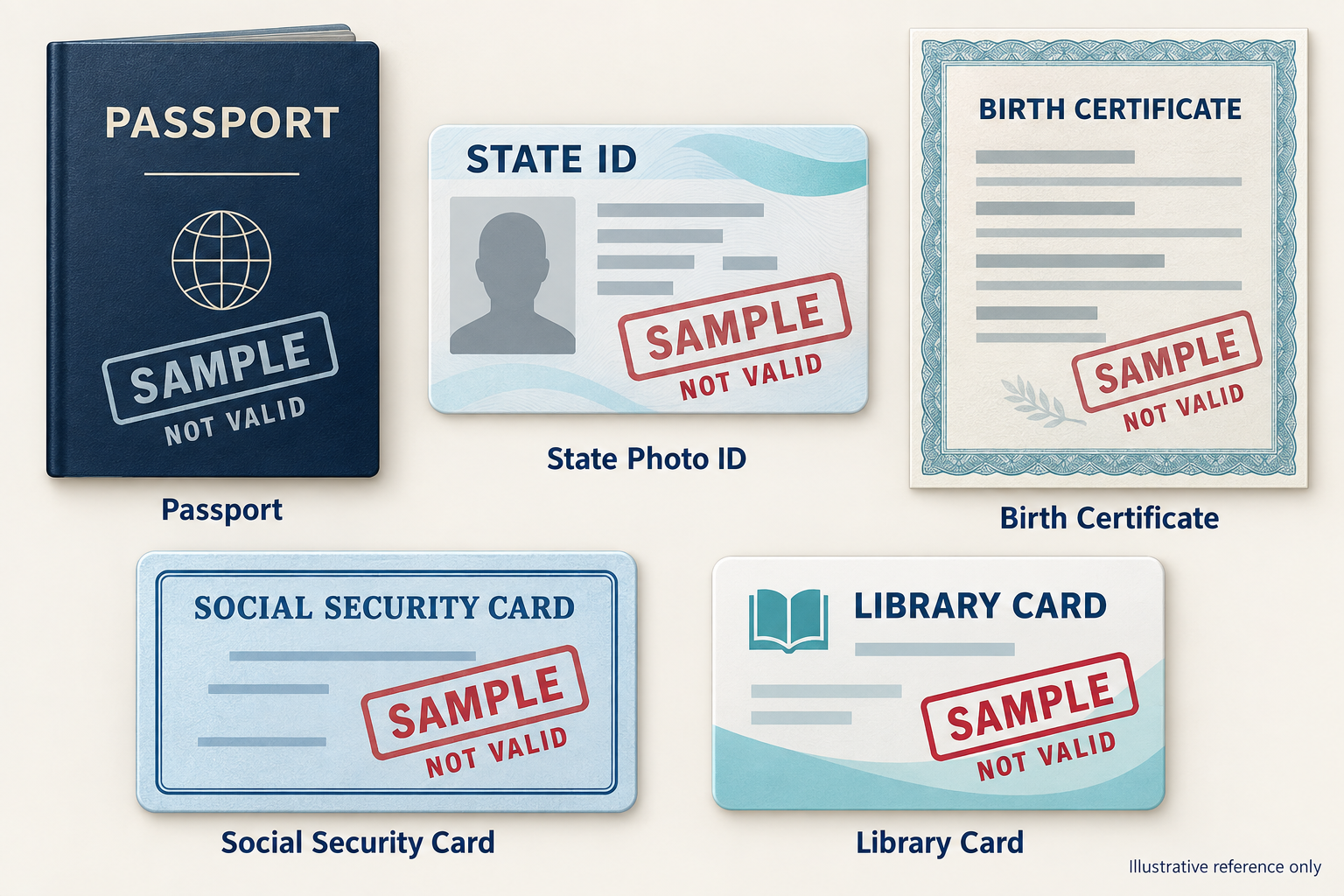
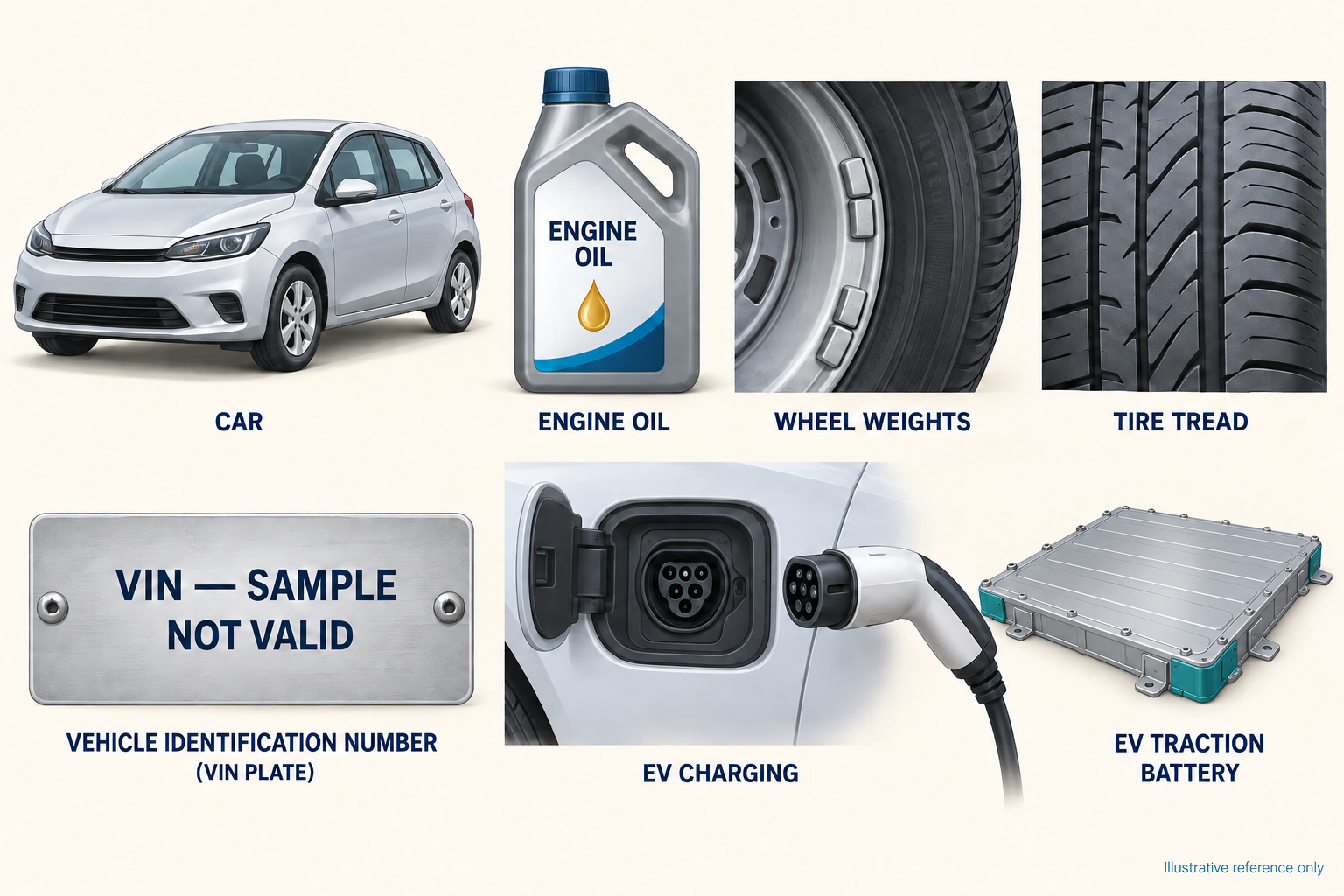
See how DMV and Post Office address rules differ →Picture guideSee labeled examples of the things you are learning about.
Words, in plain English
14 terms in Insurance · Open any word to learn more.
BeneficiaryThe person or organization named to receive money or another benefit under an account or policy.
How it works
For example, a life-insurance policy owner may name who receives a covered death benefit. This is different from an emergency contact. The owner or other authorized person follows the provider’s signing rules; some changes require additional consent. A beneficiary does not automatically control the policy or sign for the owner. Ask about primary and backup choices, minors, and any special rules.
A small example
You name Jordan as a primary beneficiary and Casey as a backup under the provider’s rules. You later marry; check the record because marriage does not automatically update every designation.
Start here, one step at a time
- Review the current beneficiary with the account or policy provider.
- Use its official change form and ask when the change becomes effective.
Try explaining this word yourself
Before looking back, explain “Beneficiary” in your own words. Which part of the example shows it?
Then compare your explanation with “The person or organization named to receive money or another benefit under an account or policy.” and the example above. If it is still unclear, use the question below with the relevant office or provider.
A question you can ask
“How do I update this designation, and when does it become effective?”
NAIC: find your state insurance department (opens a new tab)Coverage limit and exclusionA limit caps a benefit; an exclusion describes something the policy does not cover.
How it works
A low premium alone does not tell you what protection you have. Read the declarations and coverage wording, and ask about special limits.
A small example
A covered item worth $2,000 may not receive $2,000 if a smaller special limit applies.
Start here, one step at a time
- Read the policy summary and full coverage wording.
- Ask about your actual items and situations, including special limits and exclusions.
Try explaining this word yourself
Before looking back, explain “Coverage limit and exclusion” in your own words. Which part of the example shows it?
Then compare your explanation with “A limit caps a benefit; an exclusion describes something the policy does not cover.” and the example above. If it is still unclear, use the question below with the relevant office or provider.
A question you can ask
“Is this situation covered, and what limit or exclusion applies?”
NAIC: understand a home or renters policy (opens a new tab)DeductibleThe part of certain covered costs you are responsible for under your insurance policy.
How it works
For a simple property claim, the insurer may subtract the deductible from the covered payment instead of asking you to pay the insurer first. Health plans often use a yearly deductible for certain services, followed by other cost sharing; some services are covered before it. Other policies can use per-claim or percentage deductibles. Always ask which rule applies to this coverage.
A small example
For a covered $1,500 car repair with a $500 deductible and no other adjustments, the insurer’s share is $1,000 and your share is $500. This is separate from the premium you already paid.
Start here, one step at a time
- Find the deductible for the particular coverage, not just the first number on the page.
- Ask the insurer to show how it would apply to a small example claim.
Try explaining this word yourself
Before looking back, explain “Deductible” in your own words. Which part of the example shows it?
Then compare your explanation with “The part of certain covered costs you are responsible for under your insurance policy.” and the example above. If it is still unclear, use the question below with the relevant office or provider.
A question you can ask
“Which deductible applies to this exact loss?”
NAIC: understand a home or renters policy (opens a new tab)Driver’s license and license numberA state document that allows you to drive certain vehicles under its rules.
How it works
The card usually has a number labeled “DL,” “DLN,” “License No.,” or something similar. That is different from a vehicle’s VIN. Restrictions and expiration still matter.
A small example
An insurer asks for your license number to identify the driver and your VIN to identify the car.
Start here, one step at a time
- Read the front and back of your card. Look for the license-number label.
- If unclear, use your state agency’s sample card or call its official number.
- Share the number only with a verified organization that needs it.
Try explaining this word yourself
Before looking back, explain “Driver’s license and license number” in your own words. Which part of the example shows it?
Then compare your explanation with “A state document that allows you to drive certain vehicles under its rules.” and the example above. If it is still unclear, use the question below with the relevant office or provider.
A question you can ask
“Where is the license number on my state’s card, and which restrictions apply to me?”
USAGov: state motor-vehicle services (opens a new tab)See a labeled picture
Expiration and renewalExpiration is when a document or agreement stops being valid under its terms; renewal extends or replaces it.
How it works
Record deadlines and check the issuing agency’s requirements early. A reminder email is helpful but may not be guaranteed.
A small example
A renewal application may need processing time before a card expires.
Start here, one step at a time
- Check the date printed on the current record.
- Use the issuer’s renewal instructions early enough for processing and delivery.
Try explaining this word yourself
Before looking back, explain “Expiration and renewal” in your own words. Which part of the example shows it?
Then compare your explanation with “Expiration is when a document or agreement stops being valid under its terms; renewal extends or replaces it.” and the example above. If it is still unclear, use the question below with the relevant office or provider.
A question you can ask
“How early can I renew, and what proof remains valid while I wait?”
USAGov: official document replacements (opens a new tab)Government photo IDA card or document from a government that has your name and picture.
How it works
Examples include a state ID, driver’s license, or passport. The place checking your identity decides which documents it accepts. An expired card or a phone photo may not qualify.
A small example
A library may accept a school ID under its rules. An airport uses a different list.
Start here, one step at a time
- Find the office’s official list for the service you need.
- Compare your document’s name and expiration date with that list.
- Bring the required physical document; ask before relying on a phone copy.
Try explaining this word yourself
Before looking back, explain “Government photo ID” in your own words. Which part of the example shows it?
Then compare your explanation with “A card or document from a government that has your name and picture.” and the example above. If it is still unclear, use the question below with the relevant office or provider.
A question you can ask
“Which exact IDs do you accept for this service, and must they be unexpired?”
USAGov: official document replacements (opens a new tab)See a labeled picture
Health insurance: copay and coinsuranceA copay is a set dollar share for a covered service. Coinsurance is a percentage share of an allowed cost.
How it works
Deductible rules, networks, and service type affect what you pay. A monthly premium is separate from the cost you pay when receiving care. An insurer’s allowed amount can differ from the provider’s sticker price.
A small example
After a deductible is met, 20% coinsurance on an allowed $100 service would be $20, under that example plan.
Start here, one step at a time
- Read your plan’s Summary of Benefits and Coverage.
- Call the insurer using the number on your card before planned care to check coverage and network.
- Compare the explanation of benefits with any provider bill; ask about differences.
Try explaining this word yourself
Before looking back, explain “Health insurance: copay and coinsurance” in your own words. Which part of the example shows it?
Then compare your explanation with “A copay is a set dollar share for a covered service. Coinsurance is a percentage share of an allowed cost.” and the example above. If it is still unclear, use the question below with the relevant office or provider.
A question you can ask
“Does this service have a deductible, copay, or coinsurance, and is this provider in network?”
HealthCare.gov: premiums and costs when you receive care (opens a new tab)See a labeled picture

Insurance card and declarations pageAn insurance card is a short proof of coverage. A declarations page summarizes a policy’s people, property, dates, limits, and deductibles.
How it works
Neither is the complete policy. Read the full terms and check the state’s required proof format. Do not assume that a saved old card proves coverage is still active.
A small example
A registration appointment may require current insurance information matching your vehicle.
Start here, one step at a time
- Get the current documents from your insurer’s official app, website, or agent.
- Check names, VIN, dates, and coverage details.
- Use the state insurance department and motor-vehicle agency for your state’s requirements.
Try explaining this word yourself
Before looking back, explain “Insurance card and declarations page” in your own words. Which part of the example shows it?
Then compare your explanation with “An insurance card is a short proof of coverage. A declarations page summarizes a policy’s people, property, dates, limits, and deductibles.” and the example above. If it is still unclear, use the question below with the relevant office or provider.
A question you can ask
“Is my policy active, who and what is covered, and what proof format does my state accept?”
NAIC: find your state insurance department (opens a new tab)See a labeled picture
Insurance claimA request asking an insurer to cover a loss or service under your policy.
How it works
You or a provider submit details. The insurer checks coverage, dates, cause, limits, deductible, and evidence. It may approve, partially pay, ask for more information, or deny with reasons. A claim is not the regular bill that keeps your policy active—that bill is the premium.
A small example
Photos, receipts, a date, and a written description may help document a damaged item.
Start here, one step at a time
- Use the insurer’s verified claims number or official portal.
- Get a claim number, evidence list, deadlines, and contact; keep copies of what you submit.
Try explaining this word yourself
Before looking back, explain “Insurance claim” in your own words. Which part of the example shows it?
Then compare your explanation with “A request asking an insurer to cover a loss or service under your policy.” and the example above. If it is still unclear, use the question below with the relevant office or provider.
A question you can ask
“What do I submit, who handles this, and how do I track it?”
NAIC: find your state insurance department (opens a new tab)InventoryA list of what you own or have available.
How it works
Record descriptions, quantities, and useful evidence such as photos or receipts. Store sensitive details securely. Update after major changes.
A small example
A box labeled kitchen, box 2, with a short contents list is easier to find than an unmarked box.
Start here, one step at a time
- Start with one room and list or photograph what is there.
- Keep receipts for important items and store the record securely.
Try explaining this word yourself
Before looking back, explain “Inventory” in your own words. Which part of the example shows it?
Then compare your explanation with “A list of what you own or have available.” and the example above. If it is still unclear, use the question below with the relevant office or provider.
A question you can ask
“What proof should I keep for valuable items?”
NAIC: understand a home or renters policy (opens a new tab)Liability coverageCoverage for certain legal responsibilities to other people, subject to the policy.
How it works
It is different from coverage for damage to your own property. Ask which people, activities, costs, and limits are covered.
A small example
Vehicle liability coverage and coverage to repair your own car serve different purposes.
Start here, one step at a time
- Ask which people and events your policy covers.
- Compare liability protection with separate coverage for your own property.
Try explaining this word yourself
Before looking back, explain “Liability coverage” in your own words. Which part of the example shows it?
Then compare your explanation with “Coverage for certain legal responsibilities to other people, subject to the policy.” and the example above. If it is still unclear, use the question below with the relevant office or provider.
A question you can ask
“What happens if I injure someone or damage their property?”
NAIC: find your state insurance department (opens a new tab)Mortgage insurance / PMIInsurance that generally protects the lender against certain losses if the borrower fails to repay.
How it works
It is different from homeowners insurance that covers specified property risks. Requirements, cost, duration, and cancellation rules depend on the loan type and terms.
A small example
A mortgage payment can include mortgage insurance as an additional charge beyond principal and interest.
Start here, one step at a time
- Ask whether mortgage insurance is part of this offer.
- Write its price and any rules for ending it beside the other monthly costs.
Try explaining this word yourself
Before looking back, explain “Mortgage insurance / PMI” in your own words. Which part of the example shows it?
Then compare your explanation with “Insurance that generally protects the lender against certain losses if the borrower fails to repay.” and the example above. If it is still unclear, use the question below with the relevant office or provider.
A question you can ask
“Is mortgage insurance required, what does it cost, and when can it end?”
CFPB: buying a home (opens a new tab)VIN — vehicle identification numberThe identifying number for a particular vehicle, like its own serial number.
How it works
For most modern cars it has 17 characters. You can often see it through the windshield on the driver’s side of the dashboard or on a driver-door label. Registration and insurance records also list it.
A small example
Two cars of the same model have different VINs. Your driver’s license number identifies you, not the car.
Start here, one step at a time
- Park safely and look through the windshield from outside.
- Compare with the door label and registration without removing any parts.
- Use the exact characters when requesting insurance or checking recalls.
Try explaining this word yourself
Before looking back, explain “VIN — vehicle identification number” in your own words. Which part of the example shows it?
Then compare your explanation with “The identifying number for a particular vehicle, like its own serial number.” and the example above. If it is still unclear, use the question below with the relevant office or provider.
A question you can ask
“Do these VINs match on the vehicle and the paperwork?”
NHTSA: vehicle identification numbers (opens a new tab)See a labeled picture
What this means for you
Coverage determines which losses you can transfer to an insurer and which you must pay yourself.
What can make it harder
A cheaper policy can leave a larger deductible, a smaller limit, or an uncovered situation. A lapse can leave you without protection during that time.
What can help
Matching coverage to your actual situation and choosing a deductible you could handle helps avoid false confidence.
One next stepDescribe one realistic loss to the insurer and ask what would be covered, what you would pay, and what limit applies.
Understand a deductible before a loss
A simplified covered property claim: eligible loss $1,500, deductible $500, sufficient coverage limit, and no other adjustments.
Identify the eligible loss
Use the amount the policy covers for this event. That can differ from what you originally paid.
Subtract the deductible
$1,500 − $500 = $1,000 potential insurer payment in this simplified example.
Know your share
You would cover $500 here. If the eligible loss were only $300, it would be below the deductible and this simplified insurer payment would be $0, not a negative number.
Keep the premium separate
The premium keeps coverage active; it is not normally money credited toward this deductible. Read the exact policy for special limits and exceptions.
What the answer tells youA lower premium with a higher deductible can leave you needing more cash after a loss. Compare the protection and what you could pay yourself.
Keeping a useful belongings inventory
Descriptions and receipts can help explain a loss to your insurer.
What can make it harder
A general list like “electronics” may omit the details requested during review.
What can help
Keep model details, photos, and receipts securely, with a copy that is not lost with the item.
One next stepRecord one valuable item accurately and store its evidence securely.
Compare two premium schedules
Assume identical coverage: $22 monthly or $240 annually paid upfront.
- 1
Annualize monthly payments
12 × $22 = $264.
- 2
Find the difference
$264 − $240 = $24.
- 3
Compare monthly equivalents
$240 ÷ 12 = $20 monthly equivalent, but the full $240 is due upfront.
What the answer tells youCheck fees, cancellation refunds, and coverage terms before choosing a schedule.
Go a little deeper
Open a lesson when you need the full explanation. You can return to it at any time.
Which ID works—and who signs a document?A card’s purpose matters more than whether it has a picture.
1. Match the ID to the purpose
A driver’s license gives driving permission under state rules. A state ID shows identity without driving permission. A learner’s permit allows limited practice. A passport serves specified identity, citizenship, and travel uses. REAL ID is a standard available on certain state cards; it does not turn them into passports.
School, library, voter, store, and gym cards have narrower purposes. They may be valid for their own service and sometimes appear on a specific accepted list, but are not interchangeable with government photo ID. A public library may be a government service; its card still is not general-purpose photo identification. Ask the receiving office what it accepts.
2. Read each signature line
A signature is your agreement or certification for the words attached to it. Read the label: applicant, borrower, co-signer, owner, witness, or notary. Each role is different. A beneficiary receives a benefit; an emergency contact gets a call. Neither label automatically allows that person to sign your contracts.
Ask the organization who must sign and whether a guardian, other owner, spouse’s consent, or legally authorized representative is needed. Do not sign another person’s name or assume a parent can sign every adult child’s document. Keep a copy of the completed agreement.
3. Arrange a notary when one is actually required
Ask the receiving organization what notarial act it needs and whether witnesses are separate. Contact your bank, a local notary, or a participating UPS Store. Ask about total price, appointment, accepted current ID, document type, and witness availability. No store chain is always the cheapest.
FedEx Office advertises an online notarization service using your own compatible device; do not assume a notary is inside every FedEx store. Confirm remote notarization is accepted for your document and location. Bring the complete document and required people, and follow the notary’s signing instructions.
The notary verifies a specified act, not whether your deal is wise.
Ask two separate questions
First ask what evidence establishes identity for this transaction. Then ask who has authority to sign. A person can have acceptable identification without being authorized to sign for somebody else. Being a spouse, parent of an adult, emergency contact, or helpful friend does not answer every signing question.
Before an appointment, describe the actual situation to the office and request its current instructions. If an authorized representative is involved, ask what evidence of that authority is required and who must attend. Avoid filling a signature field merely because another person is unavailable.
Check the form’s sequence
Read whether a signature must be witnessed, notarized, or made in front of the receiving official. Some forms must remain unsigned until that step. Bring the correct version of the form and required identification, with questions marked on a separate sheet.
If you make a mistake, ask how to correct it rather than hiding or overwriting information. Keep a copy of the completed record when permitted. A clear signing process protects the purpose of the document and prevents a preparatory checklist from being confused with permission to act for someone else.
Check your understanding
- Explain the main idea of “Which ID works—and who signs a document?” without looking back.
- Choose one example above and identify its assumptions or requirements.
- Write the next question you would ask about your own situation.
Official sources & next places to go
USAGov: official document replacements (opens a new tab)USAGov: state motor-vehicle services (opens a new tab)TSA: accepted identification (opens a new tab)USAGov: find your public library (opens a new tab)USAGov: state voter-ID rules (opens a new tab)The UPS Store: participating notary locations (opens a new tab)FedEx Office: remote online notary service (opens a new tab)USCIS: Form I-9 instructions and document choices (PDF) (opens a new tab)Book vehicle service, renew registration, and plan EV careUse the exact vehicle and state requirements; there is no one schedule for every car.
1. Make a small vehicle information sheet
Write the year, make, model, fuel type, mileage, and manual link. Find the VIN at the driver-side windshield or door label and compare it with registration. Keep your license and current insurance details secure. Do not publish these numbers in notes or photos.
2. Book the right service
Read the manual’s maintenance schedule. Ask the shop: “For my exact model and mileage, what service is due, which oil or parts meet the specification, and what is the total price?” A dealership, independent mechanic, or quick-lube location may be an option depending on the work.
Get the scope and price before approving. Ask to be contacted before extras. A rotation, balancing, and alignment are separate services; an oil change is not a promise that every system was inspected. Keep the receipt with date and mileage. Independent maintenance does not automatically void a warranty, but damage from improper work can affect coverage.
3. Renew registration through your state
Use the official state motor-vehicle directory and choose renewal or transfer, whichever applies. Check the expiration, fees, address, insurance evidence, and any county/vehicle-specific inspection rules. A reminder is helpful, but do not rely on receiving one.
For insurance requirements, use the state insurance department and motor-vehicle office. Ask whether the proof may be electronic and when coverage must be active. Do not assume another state’s minimums or an EV emissions exemption applies to all your requirements. Save the renewal receipt and follow instructions while waiting for new documents.
4. For an EV, plan charging and maintenance
A battery-only EV does not need engine oil changes. Plug-in and ordinary hybrids still have engines. All need the care listed in their own manuals. Tires, brakes, filters, and specified fluids still matter. Leave high-voltage batteries and orange cables to qualified technicians.
Confirm the connector, charger compatibility, charging price, parking/idle fees, and how to start/stop a session. For home installation, ask the property owner and a qualified electrician about permission and electrical capacity. Use approved equipment, not improvised cords. Plan a backup charging option before a long trip.
Translate a symptom into a useful service request
Write the vehicle year, model, fuel type, mileage, symptom, and when it occurs. Distinguish a scheduled maintenance item from a new fault. “Noise when turning left at low speed” gives a shop more useful information than “car sounds bad.” Do not drive an unsafe vehicle simply to gather more observations.
Ask for the diagnostic process, charges, and approval boundary before leaving the vehicle. A written estimate should identify proposed work and any assumptions. Tell the shop to contact you before adding work beyond the agreed scope, and keep the response with the service record.
Check the handoff and next due item
At collection, compare the invoice with the authorized work and ask about anything unfamiliar. Record the date, mileage, parts or specification information provided, and any recommended follow-up. A suggestion for future service is different from work already completed.
For an EV, keep charging arrangements and high-voltage work separate from ordinary owner checks. For every vehicle, use the exact manual and current local renewal instructions. Put the next confirmed due date or mileage in your organizer and keep receipts securely for later maintenance and warranty questions.
Check your understanding
- Explain the main idea of “Book vehicle service, renew registration, and plan EV care” without looking back.
- Choose one example above and identify its assumptions or requirements.
- Write the next question you would ask about your own situation.
Official sources & next places to go
NHTSA: vehicle identification numbers (opens a new tab)FTC: understand vehicle service and estimates (opens a new tab)FTC: dealer and independent maintenance (opens a new tab)NHTSA: tire safety (opens a new tab)USAGov: state motor-vehicle services (opens a new tab)NAIC: find your state insurance department (opens a new tab)Department of Energy: electric-vehicle types (opens a new tab)Department of Energy: EV maintenance and safety (opens a new tab)Useful places to start
- Find your state insurance department (NAIC) (opens a new tab)
Choose your state to find consumer help and licensing information.
- Understand a renters or homeowners policy (NAIC) (opens a new tab)
Read the explanation, then ask your provider about your actual policy.
Ready for one small action?
Go back to your path. Each stage has instructions, questions to ask, and a checklist.
U.S. starting points · Foundation references reviewed September 17, 2026; expanded content added September 19, 2026. Examples use invented amounts unless stated otherwise. Requirements, rates, and policies vary; use the linked official sources and the terms that apply to you.
Use notes for plans and reminders. Keep passwords, account numbers, and sensitive documents in a secure storage service.