Moving Checklist resources
Plain-English explanations, worked math, and what it means for you.
You can start with the basics.
Learn the words, follow the numbers, and understand what a choice could mean for your life. Start with the first action. Open examples and explanations when you need them, then continue in the related tool.
Your first useful action
Choose the moving date, then separate what must happen before departure, during transport, and after arrival. Keep a first-night box accessible.
A worked example
Put bedding, medicine you normally use, chargers, toiletries, and simple food in one labeled box that travels with you rather than deep in the moving load.
What people often mix up
Changing a mailing address does not automatically update every account or start utilities. Movers’ estimates may change with inventory or access conditions.
What to ask when you are stuck
“What does this quote include, how do access or inventory changes affect it, and when are arrival and payment expected?”
Ask the organization or person responsible for the decision. Write down the answer, date, and any next action. If their answer uses an unfamiliar word, find it in Words explained below.
How to know this first action is finished
Your belongings, key dates, service arrangements, and first-night essentials have a clear plan.
Make a three-stage move plan
- List what needs completing before departure: access, transport, service dates and confirmed arrangements.
- Keep a first-night box and arrival details accessible during the journey.
- Plan the inspection, key return or collection and follow-ups after arrival.
Check your result: Every action has a stage and responsibility, and first-night essentials will be reachable.
If something changes
A date change can affect transport, utilities and key access. Reconfirm the linked arrangements.
Practical how-to guides
Start with one useful skill. Clear instructions and a checklist help you through it.
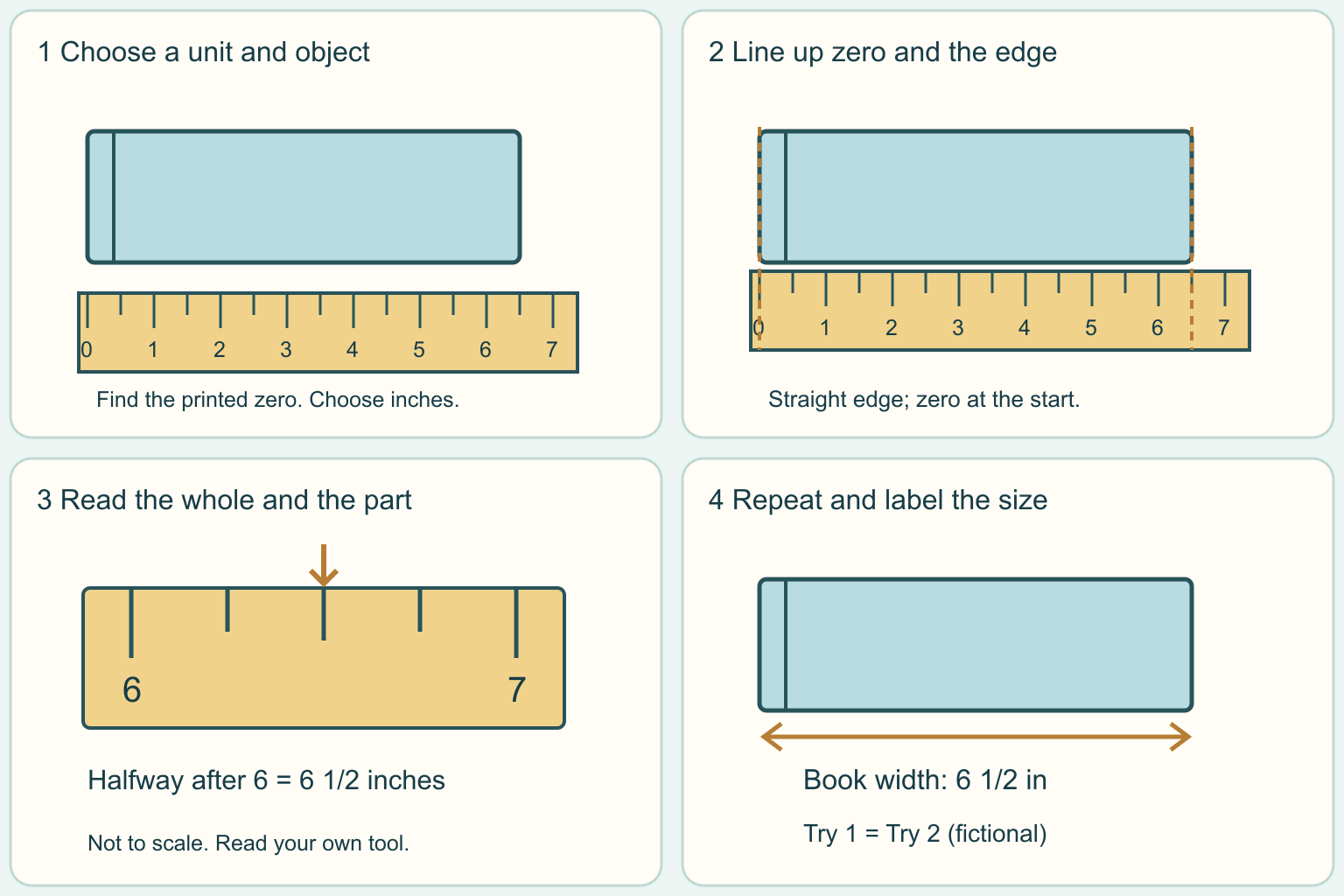
Measure a small object and write the size clearly
Practice on a book or empty box before measuring for storage or a move. Learn where to start, how to read the line, and why the unit matters.
4 clear steps · checklist & downloadPrepare a moving handover and damage record
Know what was handed over and what still needs attention.
4 clear steps · checklist & downloadFold a fitted sheet into a manageable bundle
Tuck the elastic corners together, make a rectangle, and fold it to fit your shelf.
4 clear steps · checklist & download · YouTube companion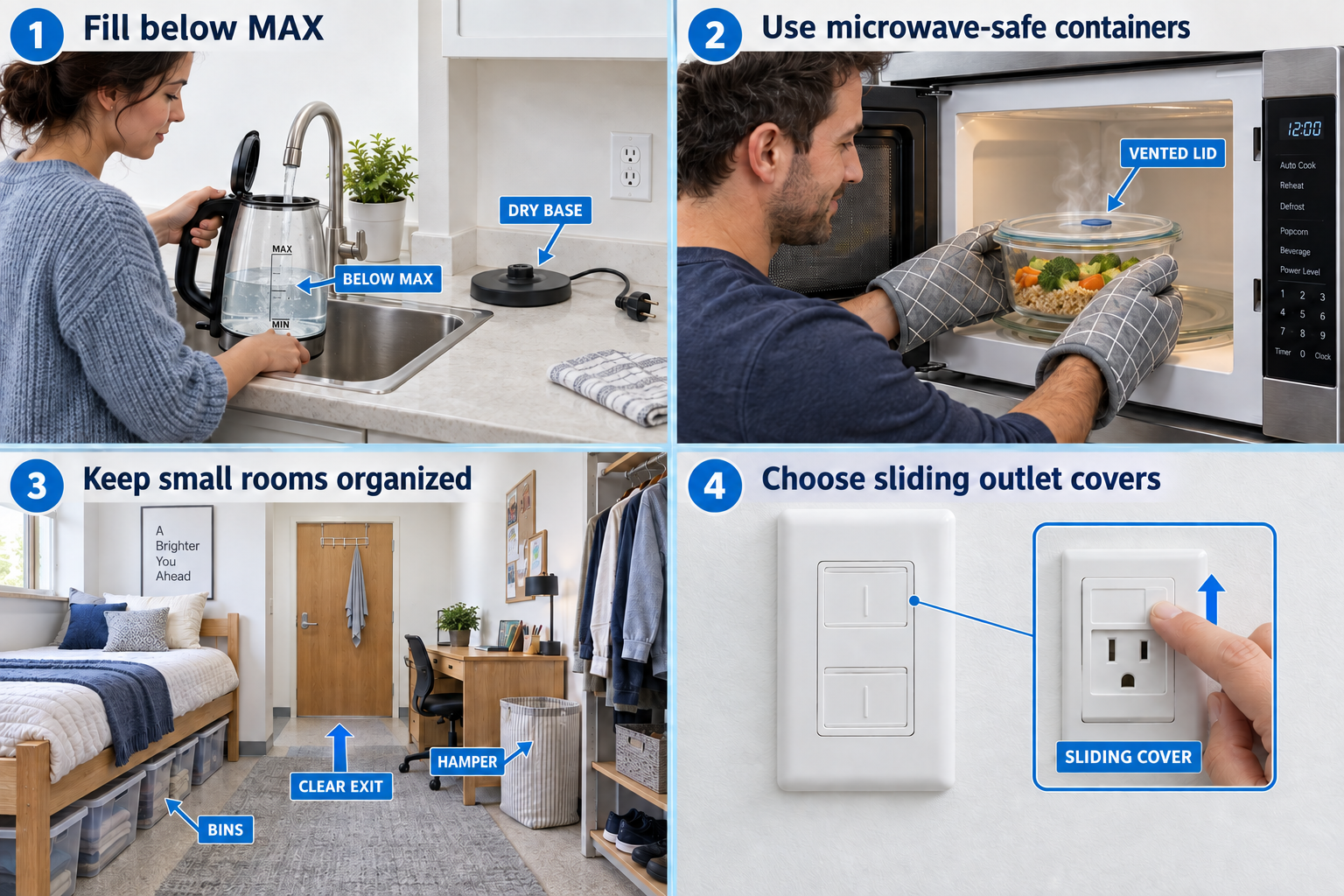
Organize a small dorm or shared bedroom
Give each kind of item a place so you can find it and keep the walking path clear.
4 clear steps · checklist & download · YouTube companionWhat to bring
Plan separate updates for mail, your license, utilities, school, insurance, and accounts. A USPS change of address does not update them all.
Prepare the items that apply to your task. For an appointment or application, confirm the receiving organization’s exact requirements. “Ready” means you have reviewed and prepared the item.
Accepted identification
Why you may need it
Shows who you are. The accepted list depends on the service.
Where to get it
Use a current document you already have, or apply through the state ID agency or other issuing office.
Check before you go
Ask for the exact ID list. A school card, membership card, expired ID, or phone photo may not count.
Proof of your home address
Why you may need it
Shows where you live. It is a separate check from identity.
Where to get it
Download an eligible bill or statement from the provider, obtain your lease, or ask about an approved residency letter.
Check before you go
Confirm document type, how recent it must be, whose name must appear, physical address, and whether a printed copy is needed.
Postal-service-specific identification
Why you may need it
Meets the identity/address rules for forwarding mail, a PO Box, or another postal service.
Where to get it
Check USPS’s exact service page and ID list; use the postal-address lesson below.
Check before you go
Do not assume a utility bill qualifies for USPS. Its PO Box list differs from a DMV list.
Application, agreement, and appointment confirmation
Why you may need it
Shows which service you requested and what was agreed.
Where to get it
Save the official form, confirmation number, written quote, and signed agreement from the provider.
Check before you go
Check the correct version and date. Leave signature fields blank when instructions require signing in front of someone.
Inventory, condition photos, and mover paperwork
Why you may need it
Records what is moved and its condition.
Where to get it
Make an item/box list; keep the estimate, order for service, and required transport documents from the mover.
Check before you go
Interstate movers have federal rules. Ask which documents and valuation choices apply before loading.
Vehicle records: VIN, registration, and title when required
Why you may need it
Identifies the vehicle and shows registration or ownership.
Where to get it
Find the VIN on the car and existing records. Request missing title or registration through your state motor-vehicle office.
Check before you go
A title, registration, and insurance card do different jobs. Bring the specific ones listed for purchase, transfer, renewal, or insurance.
Insurance card or policy details
Why you may need it
Shows coverage details and helps locate your account.
Where to get it
Get current documents from the insurer’s verified app, website, or agent.
Check before you go
Check effective dates and the correct person, address, or vehicle. Ask whether electronic proof is accepted.
0 of 7 reviewed and prepared. These ticks save in this browser only.
A question you can read aloud
“Which organizations need a separate address update, and what proof does each one accept?”
Keep actual documents in a secure place. Do not put Social Security numbers, full account or ID numbers, passwords, or document images into My Vault notes.
See how DMV and Post Office address rules differ →Picture guideSee labeled examples of the things you are learning about.
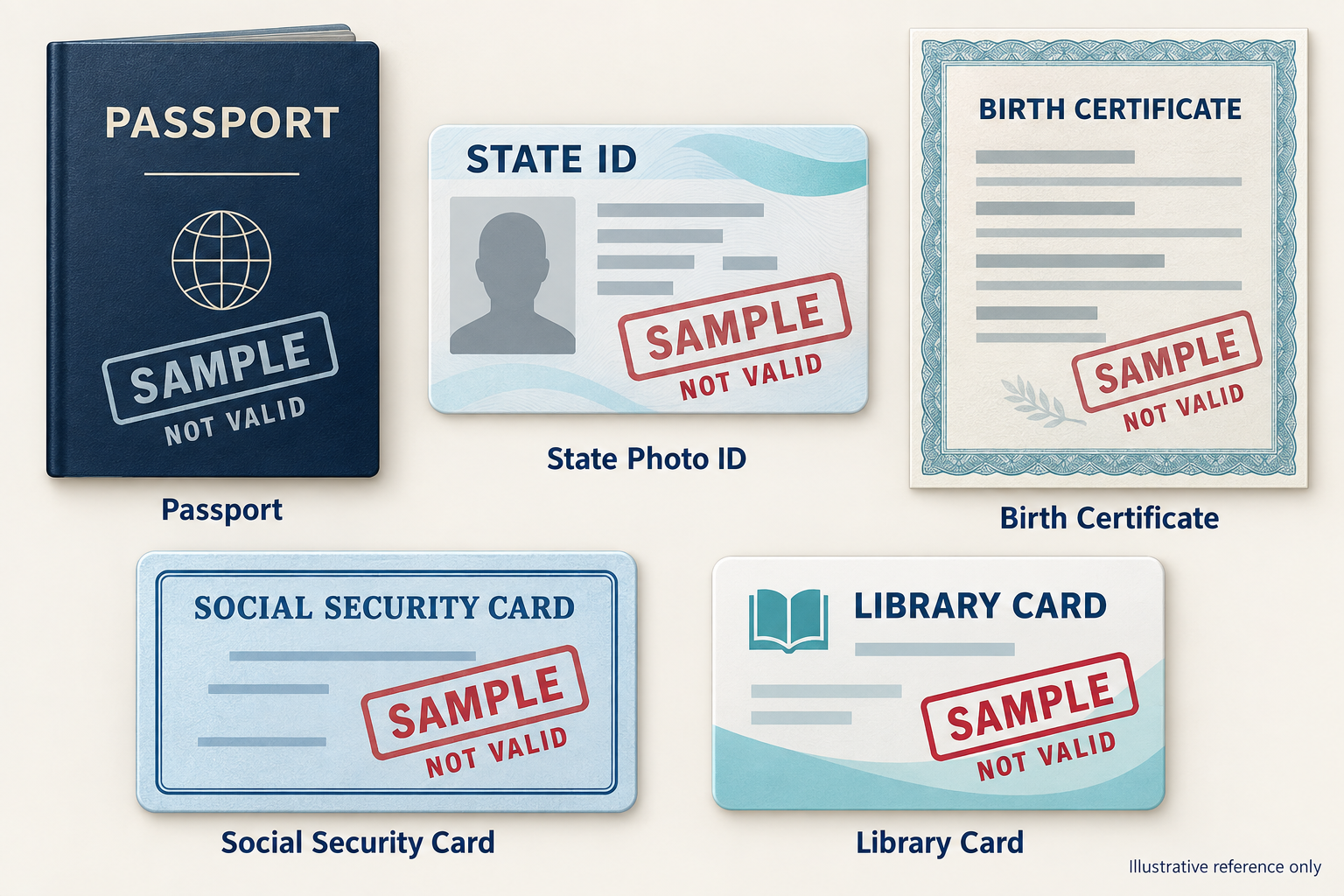
Words, in plain English
9 terms in Moving Checklist · Open any word to learn more.
Estimate and quoteA written price proposal whose commitments depend on its wording and applicable rules.
How it works
Ask what is included, what can change, and whether the price is binding. Compare the same work, quantity, and time period.
A small example
A mover’s hourly rate can apply to a whole crew or each worker; those totals differ.
Start here, one step at a time
- Ask for the same written scope from each provider.
- Clarify what can increase the price and require your approval for changes.
Try explaining this word yourself
Before looking back, explain “Estimate and quote” in your own words. Which part of the example shows it?
Then compare your explanation with “A written price proposal whose commitments depend on its wording and applicable rules.” and the example above. If it is still unclear, use the question below with the relevant office or provider.
A question you can ask
“Is this a binding price, and which situations would increase it?”
FMCSA: protect your interstate move (opens a new tab)InventoryA list of what you own or have available.
How it works
Record descriptions, quantities, and useful evidence such as photos or receipts. Store sensitive details securely. Update after major changes.
A small example
A box labeled kitchen, box 2, with a short contents list is easier to find than an unmarked box.
Start here, one step at a time
- Start with one room and list or photograph what is there.
- Keep receipts for important items and store the record securely.
Try explaining this word yourself
Before looking back, explain “Inventory” in your own words. Which part of the example shows it?
Then compare your explanation with “A list of what you own or have available.” and the example above. If it is still unclear, use the question below with the relevant office or provider.
A question you can ask
“What proof should I keep for valuable items?”
NAIC: understand a home or renters policy (opens a new tab)LeaseThe agreement that sets the rules for renting.
How it works
Read who is responsible, the start and end dates, payment rules, repairs, guests, and how to leave. Ask about anything unclear before signing; local rules matter.
A small example
A 12-month lease may create obligations even if you want to move after six months.
Start here, one step at a time
- Read one section at a time and mark unclear words.
- Ask for written answers before signing and keep your signed copy.
Try explaining this word yourself
Before looking back, explain “Lease” in your own words. Which part of the example shows it?
Then compare your explanation with “The agreement that sets the rules for renting.” and the example above. If it is still unclear, use the question below with the relevant office or provider.
A question you can ask
“What happens if I need to leave early or a roommate moves out?”
USAGov: state tenant-rights resources (opens a new tab)Passport book and passport cardA U.S. passport proves U.S. citizenship and identity for specified travel uses.
How it works
The book is used for international air travel. The card has limited land and sea uses and cannot replace the book for international flights. A passport does not replace a required visa or guarantee entry.
A small example
For a flight abroad, check passport-book and destination entry rules before buying nonrefundable travel.
Start here, one step at a time
- Open the State Department’s passport site and select your age and situation.
- Follow the correct application or renewal route, photo rules, evidence list, and fee instructions.
- Allow processing plus mailing time; check the current timeline before setting travel dates.
Try explaining this word yourself
Before looking back, explain “Passport book and passport card” in your own words. Which part of the example shows it?
Then compare your explanation with “A U.S. passport proves U.S. citizenship and identity for specified travel uses.” and the example above. If it is still unclear, use the question below with the relevant office or provider.
A question you can ask
“Which passport type and validity period does my trip require?”
U.S. State Department: passport applications (opens a new tab)See a labeled picture
Proof of address / proof of residencyEvidence that you live at the address you give an organization.
How it works
It is different from proving who you are. Accepted documents, dates, names, and formats vary by service. An envelope with your name on it is not automatically enough.
A small example
A DMV may accept a utility bill that is not on the USPS PO Box identification list.
Start here, one step at a time
- Find the specific office’s current document list.
- Match the name, physical address, date, and format requirements.
- If you live with someone else or have no fixed address, ask for its approved alternative process.
Try explaining this word yourself
Before looking back, explain “Proof of address / proof of residency” in your own words. Which part of the example shows it?
Then compare your explanation with “Evidence that you live at the address you give an organization.” and the example above. If it is still unclear, use the question below with the relevant office or provider.
A question you can ask
“Which documents count for this exact service, how recent, and how many do you need?”
USPS: ID accepted for each postal service (opens a new tab)See a labeled picture
REAL IDA standard that some state IDs and driver’s licenses meet for certain federal identification uses.
How it works
REAL ID is not a separate driving skill or proof of U.S. citizenship. Adults flying within the U.S. need a TSA-accepted ID; a passport is one alternative. A standard license can still be valid for driving.
A small example
You may choose a REAL ID state card even if you do not drive. A REAL ID is not a passport for international air travel.
Start here, one step at a time
- Check TSA’s current accepted-ID list for your trip.
- If applying for REAL ID, open your state’s REAL ID checklist.
- Gather the required identity, name-change, Social Security, and address evidence that applies to you.
Try explaining this word yourself
Before looking back, explain “REAL ID” in your own words. Which part of the example shows it?
Then compare your explanation with “A standard that some state IDs and driver’s licenses meet for certain federal identification uses.” and the example above. If it is still unclear, use the question below with the relevant office or provider.
A question you can ask
“Do I need a REAL ID for my plans, or do I already have another accepted document?”
TSA: accepted identification (opens a new tab)See a labeled picture
RentThe amount paid to use someone else’s property for an agreed time.
How it works
The advertised rent may leave out utilities, parking, pets, or other charges. Ask for the full recurring price in writing.
A small example
An $850 apartment with $120 utilities and $30 parking costs $1,000 each month before other living expenses.
Start here, one step at a time
- Ask for the rent plus every required monthly charge.
- Add utilities and travel costs before deciding the apartment fits your budget.
Try explaining this word yourself
Before looking back, explain “Rent” in your own words. Which part of the example shows it?
Then compare your explanation with “The amount paid to use someone else’s property for an agreed time.” and the example above. If it is still unclear, use the question below with the relevant office or provider.
A question you can ask
“What is included in rent, and what would I pay separately?”
USAGov: state tenant-rights resources (opens a new tab)Security depositMoney held under stated conditions, often to cover certain unpaid charges or damage.
How it works
Ask what can be deducted, how return works, and which separate fees are nonrefundable. Keep the receipt and photos of the condition at move-in.
A small example
An $850 deposit is separate from $850 first-month rent: that is $1,700 before other charges.
Start here, one step at a time
- Request a list separating refundable deposits from nonrefundable fees.
- Save payment proof and dated move-in condition photos.
Try explaining this word yourself
Before looking back, explain “Security deposit” in your own words. Which part of the example shows it?
Then compare your explanation with “Money held under stated conditions, often to cover certain unpaid charges or damage.” and the example above. If it is still unclear, use the question below with the relevant office or provider.
A question you can ask
“Which payments are refundable, under what conditions, and when?”
USAGov: state tenant-rights resources (opens a new tab)Voter registration and voter cardVoter registration adds an eligible person to the voter list. A voter card may confirm that record.
How it works
Eligibility, registration deadlines, and accepted voting IDs depend on your state. A voter card usually is not a general-purpose photo ID. Registering is not the same as voting.
A small example
After a move, check both your registration address and where or how you may vote.
Start here, one step at a time
- Use Vote.gov to reach your state’s official election instructions.
- Check eligibility and deadlines before applying or updating.
- Use the state’s status tool and voting-ID list before election day.
Try explaining this word yourself
Before looking back, explain “Voter registration and voter card” in your own words. Which part of the example shows it?
Then compare your explanation with “Voter registration adds an eligible person to the voter list. A voter card may confirm that record.” and the example above. If it is still unclear, use the question below with the relevant office or provider.
A question you can ask
“Am I eligible, is my record current, and what must I bring to vote here?”
USAGov: state voter-ID rules (opens a new tab)See a labeled picture
What this means for you
Timing, packing, and the wording of a quote affect how smoothly you get from one home to another.
What can make it harder
Unclear hourly charges, missed service dates, or missing essentials can create extra expenses and disruption.
What can help
A verified mover, written scope, labeled inventory, and a first-night bag make the transition easier to manage.
One next stepConfirm the quote’s units, what can change the price, and the actual move date before booking services.
Read an hourly moving estimate correctly
This example rate is $60 per worker per hour, with two workers for three hours. Real quotes may instead price an entire crew.
Find the crew’s hourly price
2 workers × $60 = $120 per hour for the crew.
Multiply by billed time
$120 × 3 hours = $360 labor. Confirm minimum hours and whether travel time is billed.
Add stated fixed charges
$360 labor + $100 truck charge = $460 before any additional agreed charges.
See the effect of extra time
One extra crew hour adds $120, bringing these listed costs to $580.
What the answer tells you“Per worker” and “per crew” mean different things. Ask about stairs, distance, supplies, travel time, minimums, and what can change the written estimate.
Keeping the first night usable
A small essentials bag makes the new space workable before unpacking everything.
What can make it harder
Packing medicine, chargers, and bedding deep in different boxes increases stress.
What can help
Keep appropriate essentials accessible and clearly label the first-night container.
One next stepPack the items you will need before opening the second box.
Estimate packing capacity
Suppose books need 18 small boxes and you already have 7 sound boxes.
- 1
Count the shortage
18 − 7 = 11 boxes.
- 2
Price the missing boxes
11 × $2.50 = $27.50.
- 3
Add known supplies
$27.50 + $8 tape = $35.50 before tax.
What the answer tells youUse manageable box weights and suitable materials; volume alone does not make a box safe to lift.
Go a little deeper
Open a lesson when you need the full explanation. You can return to it at any time.
Prove where you live: DMV, Post Office, and no bills in your nameA bill accepted in one place may be refused somewhere else. Start with the exact service.
1. Name the job before gathering papers
Say what you are doing: “I am applying for my first state ID,” “I want a REAL ID,” “I need a PO Box,” or “I am forwarding mail.” These are different services with different lists. Identity means who you are. Residency means where you live. A passport may prove identity without proving your current street address.
2. For a license or state ID, use your state’s list
Open the official state motor-vehicle site using the directory below. Choose the exact service and your age. Look for “documents,” “residency,” or “proof of address.” Common categories on some state lists include utility bills, leases, bank statements, and government mail. No category is accepted everywhere.
California REAL ID is one example: its checklist calls for two different residency documents and lists several categories, including certain bills and financial records. California’s rule is an example, not a rule for every state. Read the current list for names, dates, address, and printed-document requirements.
A standard ID application may have different rules.
3. At the Post Office, use the postal service’s list
For a PO Box, USPS Form 1093 calls for two acceptable current IDs: one photo identification and one qualifying non-photo address document. The non-photo examples on that form include a lease, mortgage or deed of trust, voter or vehicle registration, and home or vehicle insurance.
Utility bills are not on that PO Box form’s accepted-ID list. A Social Security card, birth certificate, or credit card is not a substitute for the listed postal IDs. For a different service, such as collecting mail or identity verification, check USPS’s service-specific rules instead of reusing the DMV list.
4. If you are moving, forwarding is only one step
Start on USPS.com, choose the real change-of-address service, and follow its identity-verification instructions. If directed to visit a Post Office, bring the barcode or instructions and the exact IDs requested. An extra address document may be needed when your primary ID does not show the required address.
Forwarding eligible mail does not update your driver’s license, bank, school, voter record, or insurance automatically. Update those organizations separately through their own official processes.
5. If no bills show your name, ask about the approved alternative
Do not put your name on someone else’s bill yourself. Ask: “I live with my parent/relative/roommate and have no bills in my name. What is your approved residency process?” A state or organization may allow a relationship record, signed residency form, school/housing letter, or other evidence. Some offer a separate route for people without fixed housing.
Acceptance is specific to that service.
Before leaving home, check: correct name, physical address, required date range, enough different documents, and the right format. Ask whether a downloaded statement must be printed, whether originals are needed, and how any name difference is handled. Save the official list with your appointment details.
Prepare for the exact office
Write the name of the receiving office and the specific transaction, such as renewing an ID or opening a PO Box. Read that office’s current list and note acceptable document types, required dates, whose name must appear, and whether a physical address is required. A mailing address and a residence address may serve different purposes.
If a bill is in someone else’s name, explain that situation before the visit and ask which alternatives the office accepts. Do not alter a bill or assume a handwritten note qualifies. Keep the official answer with the appointment information.
Check the whole packet before leaving
Compare your documents against the list one by one. Make sure names, dates, and addresses are readable and that the required originals or copies are available. If you plan to use a digital statement, confirm whether the office needs a printed version.
If a document is rejected, ask which requirement it failed and what would satisfy it. Record that explanation rather than ordering several replacements at random. This turns a frustrating return visit into a specific correction and helps avoid paying for an unnecessary certified copy.
Check your understanding
- Explain the main idea of “Prove where you live: DMV, Post Office, and no bills in your name” without looking back.
- Choose one example above and identify its assumptions or requirements.
- Write the next question you would ask about your own situation.
Official sources & next places to go
USAGov: state motor-vehicle services (opens a new tab)California DMV: example of a state document checklist (opens a new tab)USPS: PO Box application and ID list (PDF) (opens a new tab)USPS: ID accepted for each postal service (opens a new tab)USPS: mail forwarding and identity checks (opens a new tab)USPS: find a Post Office and its services (opens a new tab)Get or replace a passport, birth certificate, or Social Security cardGo to the office that issues the record. Each replacement follows its own steps.
1. Start with what is missing
Write the document name and why you need it. Ask the place requesting it whether it needs a certified copy, original, or another accepted form. Do not order every possible record. Use official government routes instead of paying an unnecessary middleman.
2. Birth certificate
For a U.S. birth, use the vital-records office for the state or territory where you were born. It explains who can order, identity evidence, fees, and delivery. The government keeps the birth record; it issues certified copies from that record. A hospital’s decorative keepsake is different.
If you do not have the usual photo ID, call the records office for its alternative evidence process. For a birth abroad, the process depends on the record: a Consular Report of Birth Abroad and a foreign birth certificate have different issuing authorities. If a copy is lost, request a replacement certified copy.
If it was stolen, ask the issuing office about any relevant reporting steps and use IdentityTheft.gov if you suspect misuse.
3. Social Security card
Go to SSA.gov and choose “Replace card.” Replacement is free. Its questions tell you whether your request can finish online or needs an office visit. Follow the current evidence instructions; do not assume photocopies or notarized copies satisfy SSA. You may not need a physical replacement if knowing your number is enough for the service you need.
A replacement does not normally give you a new number. If you suspect identity theft, follow IdentityTheft.gov’s recovery steps and consider the official credit-freeze guidance. Keep your card secure rather than carrying it for everyday shopping.
4. First passport or replacement application
On Travel.State.gov, choose your age and application situation. First-time adult applicants commonly use the in-person DS-11 route. Follow that route’s list for citizenship evidence, photo identification, required copies, a compliant photo, and separate fees. Do not sign until the instructions tell you to.
Children under 16 and ages 16–17 have additional rules about attendance and parent/guardian involvement.
As reviewed September 17, 2026, the State Department lists routine processing at 4–6 weeks and expedited processing at 2–3 weeks. Mailing time is additional; allow for time in both directions. These are published estimates, not delivery promises. Recheck the linked processing page and urgent-travel instructions before booking.
5. Lost or stolen valid passport
Use the State Department’s official reporting process promptly. Once reported lost or stolen, the passport cannot be used for international travel even if found later. Reporting and replacing are separate tasks; follow the site’s DS-11 replacement instructions and any reporting form it requests.
Abroad, contact the nearest U.S. embassy or consulate for the applicable help.
Keep application or report confirmations securely. Do not put scans, Social Security numbers, or passport numbers in Life’s Checklists notes.
Work backward from the missing record
Start with the issuing agency and the exact record you need. List what evidence you already have and what the official application requires. If one missing document is needed to obtain another, ask the agency which alternative evidence or sequence applies to your situation. Do not assume every replacement starts with the same identity papers.
Keep a simple tracker with the agency, submission date, confirmation, quoted processing range, and next follow-up date. Store sensitive copies separately in protected storage. The tracker should help you find a request without exposing the underlying identity information.
Avoid paying for the wrong service
Check whether a website is the actual issuer or a third-party service charging to forward a request. Read the official fee schedule and what that fee includes before paying. A fee for faster shipping is different from faster processing, and neither automatically guarantees arrival before an appointment.
After receiving a replacement, check the name and relevant details immediately and follow the issuer’s correction process for any error. Update your secure document locator so you know where the original is kept. Do not upload a full identity document into ordinary checklist notes.
Check your understanding
- Explain the main idea of “Get or replace a passport, birth certificate, or Social Security card” without looking back.
- Choose one example above and identify its assumptions or requirements.
- Write the next question you would ask about your own situation.
Official sources & next places to go
USAGov: get a certified birth certificate (opens a new tab)USAGov: get or replace a Social Security card (opens a new tab)Social Security Administration: free replacement card (opens a new tab)Social Security Administration: required evidence (opens a new tab)U.S. State Department: passport applications (opens a new tab)U.S. State Department: current passport times (opens a new tab)U.S. State Department: lost or stolen passports (opens a new tab)FTC: identity-theft recovery steps (opens a new tab)Useful places to start
- Check an interstate move (U.S. FMCSA) (opens a new tab)
Use its mover-search and consumer guidance when moving between states.
- Set up services at the new address (opens a new tab)
Find the right provider before booking a service start.
- Prepare your first apartment (opens a new tab)
Use the move-in condition and first-night tasks for your arrival.
Ready for one small action?
Go back to your path. Each stage has instructions, questions to ask, and a checklist.
U.S. starting points · Foundation references reviewed September 17, 2026; expanded content added September 19, 2026. Examples use invented amounts unless stated otherwise. Requirements, rates, and policies vary; use the linked official sources and the terms that apply to you.
Use notes for plans and reminders. Keep passwords, account numbers, and sensitive documents in a secure storage service.