Emergency Prep resources
Plain-English explanations, worked math, and what it means for you.
You can start with the basics.
Learn the words, follow the numbers, and understand what a choice could mean for your life. Start with the first action. Open examples and explanations when you need them, then continue in the related tool.
Your first useful action
Choose contacts and a meeting plan with the people who will use it. Start with an accessible contact card and the location of important records.
A worked example
A household plan can name one nearby meeting place, one out-of-area contact, and who assists a pet or someone with access needs. Agree on it together.
What people often mix up
An emergency binder helps you find information; it cannot guarantee communication or replace local emergency instructions.
What to ask when you are stuck
“If our normal phone or transport plan fails, how will we contact one another and where will we meet?”
Ask the organization or person responsible for the decision. Write down the answer, date, and any next action. If their answer uses an unfamiliar word, find it in Words explained below.
How to know this first action is finished
Everyone involved can find the contact plan and explain their responsibility without relying on one person’s memory.
Test one part of your household plan
- Agree on a nearby meeting place and an out-of-area contact with the people involved.
- Check how each person can reach the contact information if their usual phone or internet is unavailable.
- Include pet and access needs, then review local official instructions for your area.
Check your result: Each person can explain their part and retrieve the plan without relying on one person’s memory.
If something changes
Review when people, contact details or access needs change. A saved plan cannot guarantee communication.
Practical how-to guides
Start with one useful skill. Clear instructions and a checklist help you through it.
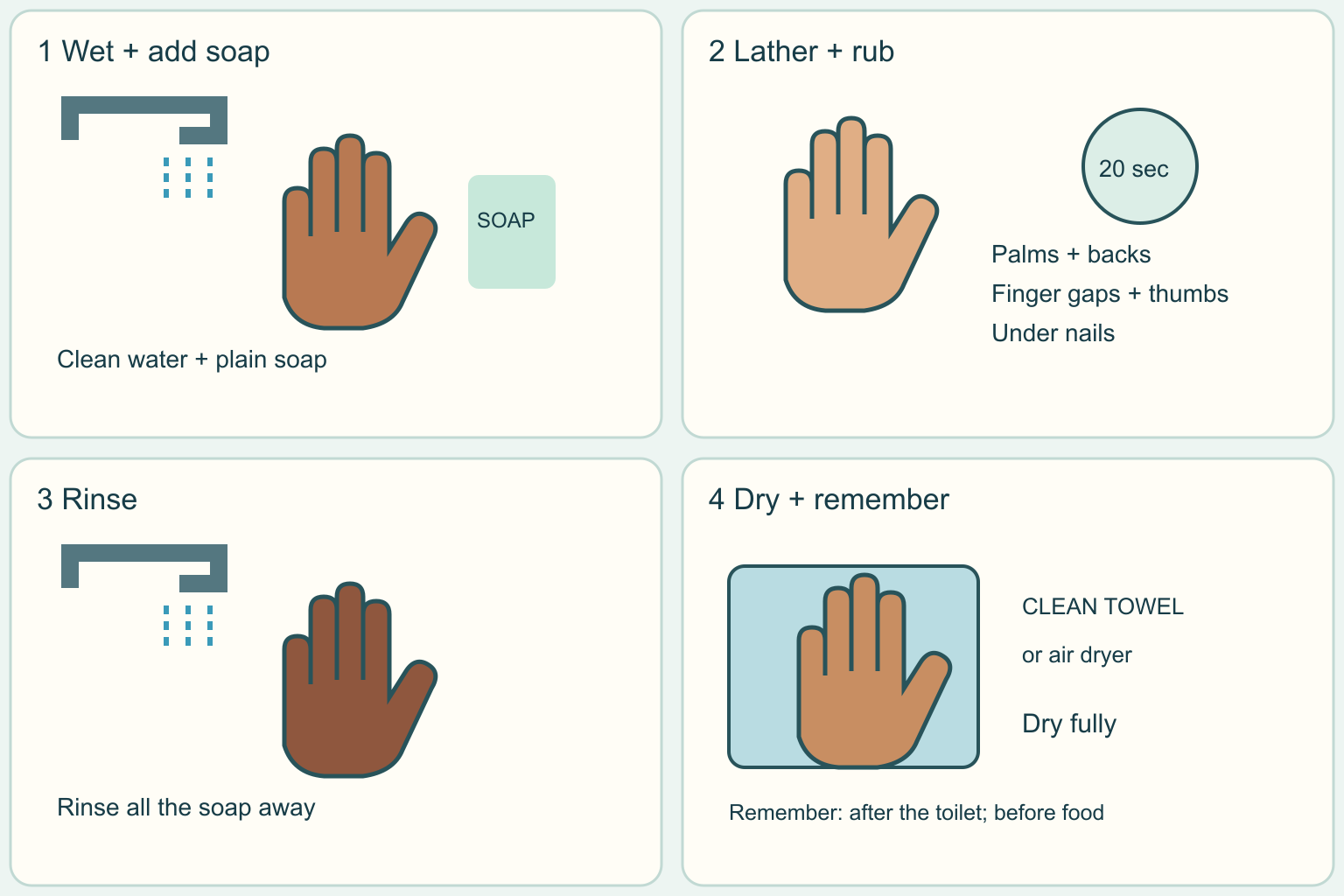
Wash your hands, one small step at a time
Learn a simple soap-and-water routine, including the places that are easy to miss.
4 clear steps · checklist & downloadOrganize household recovery administration
Keep immediate safety separate from later paperwork and follow-up.
4 clear steps · checklist & downloadBenefits & practical assistance: prepare and follow through
Find an official program, check its requirements and prepare a question for the administering office.
4 clear steps · checklist & downloadEldercare & caregiver coordination: prepare and follow through
Find local aging services and agree on the help the older adult wants, with clear contacts and follow-up.
4 clear steps · checklist & downloadWhat to bring
Prepare copies and a contact list before a problem. Do not delay evacuation or emergency treatment to collect documents.
Prepare the items that apply to your task. For an appointment or application, confirm the receiving organization’s exact requirements. “Ready” means you have reviewed and prepared the item.
Contact details and emergency contact
Why you may need it
Lets the organization reach you and, when requested, someone you trust.
Where to get it
Ask the person’s permission and confirm their current phone number and relationship to you.
Check before you go
A contact is not automatically a co-signer, medical decision-maker, or person allowed to collect your records.
Insurance card or policy details
Why you may need it
Shows coverage details and helps locate your account.
Where to get it
Get current documents from the insurer’s verified app, website, or agent.
Check before you go
Check effective dates and the correct person, address, or vehicle. Ask whether electronic proof is accepted.
Medication, allergy, and care information
Why you may need it
Helps you communicate essential needs when normal routines are disrupted.
Where to get it
Keep an updated list from your own records and care team, plus needed device/care instructions.
Check before you go
Store securely and share with trusted helpers as appropriate.
Secure copies of key IDs, household records, and pet records
Why you may need it
Helps replace documents or access services after a disruption.
Where to get it
Copy the records you actually need, such as IDs, housing documents, and pet vaccination information.
Check before you go
Protect digital copies with strong access controls; keep a safe backup separate from originals.
Local emergency plan and contact numbers
Why you may need it
Shows where to go and whom to call.
Where to get it
Use official local alerts, emergency-management pages, and your household plan.
Check before you go
Include accessible routes and communication needs. A prepared folder is useful, but people’s safety comes first.
0 of 5 reviewed and prepared. These ticks save in this browser only.
A question you can read aloud
“Which records would help our household recover, and who can reach our secure copies if we are separated?”
Keep actual documents in a secure place. Do not put Social Security numbers, full account or ID numbers, passwords, or document images into My Vault notes.
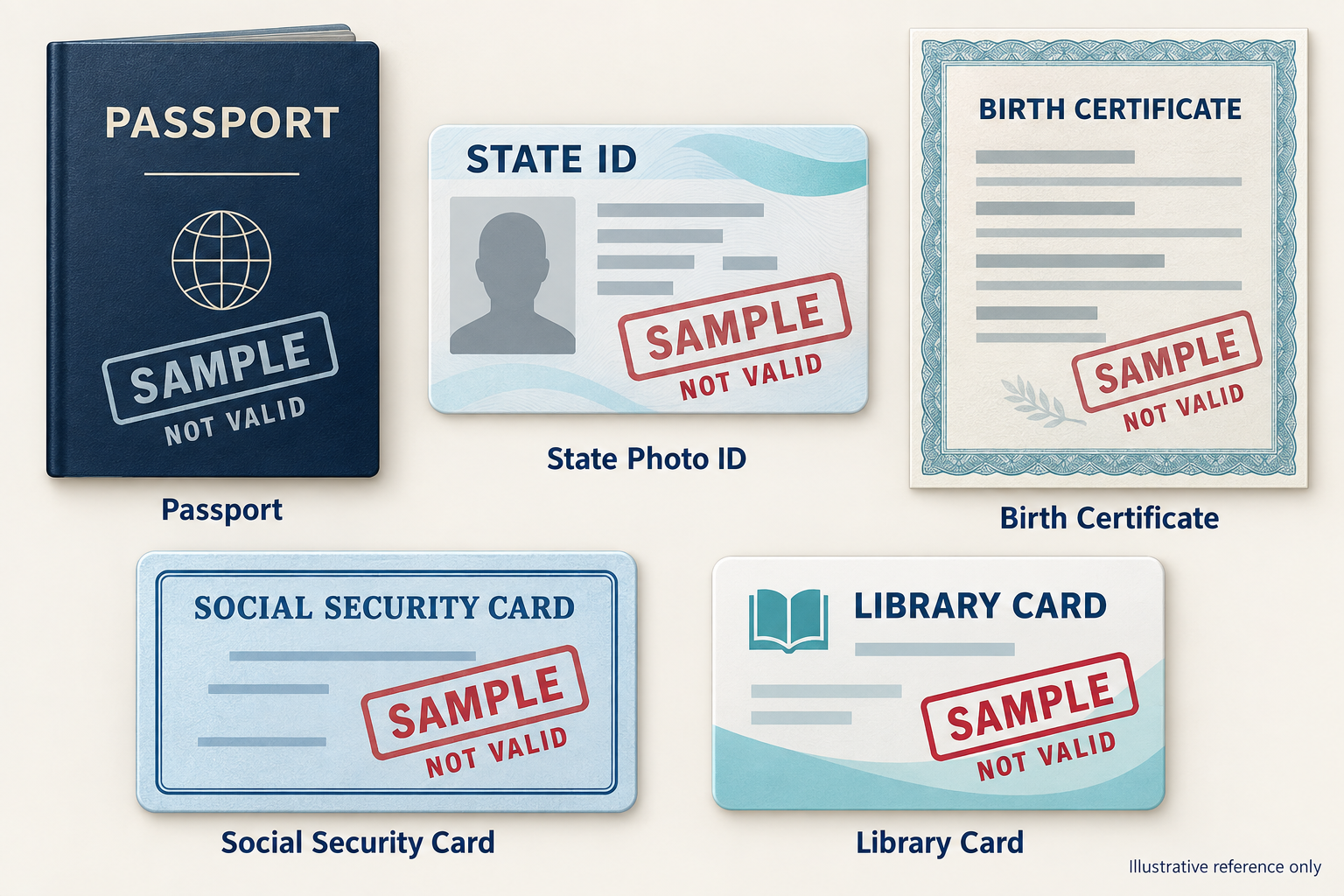
See how DMV and Post Office address rules differ →Picture guideSee labeled examples of the things you are learning about.
Words, in plain English
4 terms in Emergency Prep · Open any word to learn more.
Emergency contactA person an organization should try to reach if you need urgent help.
How it works
Choose someone who agrees to be contacted and can usually answer. Give the requested name, relationship, and phone number. Schools, employers, and clinics keep separate records. This does not by itself make the person a legal guardian, medical decision-maker, co-signer, or beneficiary.
A small example
You list your aunt at college with her permission. If the school needs to reach someone about an emergency, it can call her. That does not let her sign a loan for you.
Start here, one step at a time
- Ask someone dependable whether you may list them.
- Confirm their number, enter it separately at school and work, and update it when it changes.
Try explaining this word yourself
Before looking back, explain “Emergency contact” in your own words. Which part of the example shows it?
Then compare your explanation with “A person an organization should try to reach if you need urgent help.” and the example above. If it is still unclear, use the question below with the relevant office or provider.
A question you can ask
“Who should be contacted first, and what should they know?”
Ready.gov: household preparation (opens a new tab)Evacuation and shelter in placeEvacuation means leaving for safety; shelter in place means staying in a safer location as directed.
How it works
The right action depends on the hazard and official instructions. Know local alerts, accessible routes, household needs, and a meeting point.
A small example
A plan can include where to meet if household members are separated.
Start here, one step at a time
- Find official local emergency alerts and routes.
- Choose a household meeting place and practice a plan that includes everyone’s access needs.
Try explaining this word yourself
Before looking back, explain “Evacuation and shelter in place” in your own words. Which part of the example shows it?
Then compare your explanation with “Evacuation means leaving for safety; shelter in place means staying in a safer location as directed.” and the example above. If it is still unclear, use the question below with the relevant office or provider.
A question you can ask
“Where are our official local alerts and accessible shelter instructions?”
Ready.gov: household preparation (opens a new tab)InventoryA list of what you own or have available.
How it works
Record descriptions, quantities, and useful evidence such as photos or receipts. Store sensitive details securely. Update after major changes.
A small example
A box labeled kitchen, box 2, with a short contents list is easier to find than an unmarked box.
Start here, one step at a time
- Start with one room and list or photograph what is there.
- Keep receipts for important items and store the record securely.
Try explaining this word yourself
Before looking back, explain “Inventory” in your own words. Which part of the example shows it?
Then compare your explanation with “A list of what you own or have available.” and the example above. If it is still unclear, use the question below with the relevant office or provider.
A question you can ask
“What proof should I keep for valuable items?”
NAIC: understand a home or renters policy (opens a new tab)Shutoff and breakerControls that stop a utility supply or an electrical circuit.
How it works
Ask a qualified person to identify and label them. Knowing the location does not mean it is safe to operate every control during an emergency. Follow utility and emergency-service instructions.
A small example
You can keep the utility emergency number with a labeled photo of a shutoff location.
Start here, one step at a time
- Have the owner or qualified professional show you the controls before an emergency.
- Record safe instructions and emergency contacts; leave dangerous conditions to trained help.
Try explaining this word yourself
Before looking back, explain “Shutoff and breaker” in your own words. Which part of the example shows it?
Then compare your explanation with “Controls that stop a utility supply or an electrical circuit.” and the example above. If it is still unclear, use the question below with the relevant office or provider.
A question you can ask
“Which controls may I safely use, and when should I leave and call for help?”
Ready.gov: household preparation (opens a new tab)What this means for you
A household plan can reduce confusion when ordinary services or routines are interrupted.
What can make it harder
Missing working supplies, inaccessible routes, or outdated contacts can make it harder to respond. Different hazards require different actions.
What can help
Following local guidance and planning for each household member’s needs helps you choose practical preparations.
One next stepFind your official local alert source, confirm a meeting plan, and check one existing supply before buying more.
Count what your household already has
Use your local emergency guidance to decide appropriate supplies and duration. This is an inventory example, not a complete emergency-kit standard.
Choose an item to count
Suppose your household plan calls for four working flashlights. Use the number appropriate for your plan.
Count usable supplies
If you own three but one does not work, you have two usable flashlights.
Find the gap
4 needed − 2 working = 2 more needed. Repair or replace as appropriate.
Estimate a purchase
At an invented $8 each: 2 × $8 = $16 before tax and batteries. Check the battery type and whether batteries are included.
What the answer tells youCount working items, not just objects in a drawer. Include household accessibility, medication, pet, and communication needs when following official planning guidance.
Useful places to start
- Household preparation resources (Ready.gov) (opens a new tab)
Choose the relevant hazard or household planning topic, then compare it with local instructions.
- Organize important document locations (opens a new tab)
Know where essential records are kept without storing sensitive document numbers here.
Ready for one small action?
Go back to your path. Each stage has instructions, questions to ask, and a checklist.
U.S. starting points · Foundation references reviewed September 17, 2026; expanded content added September 19, 2026. Examples use invented amounts unless stated otherwise. Requirements, rates, and policies vary; use the linked official sources and the terms that apply to you.
Use notes for plans and reminders. Keep passwords, account numbers, and sensitive documents in a secure storage service.