Practical how-to guides
Clear instructions, useful pictures, and tools you can keep.
You can learn how.
Choose a small job, gather your supplies, and follow one step at a time. Each guide includes a checklist and a YouTube companion link for another visual.
Reviewed daily. Improved as useful changes are verified.
We schedule a daily review of definitions, how-to advice, cleaning safety, and dorm living ideas. We publish supported corrections and useful additions; a new guide is not guaranteed every day.
Latest completed content review: . See what changed
What would you like to do?
Pick a starting point, then choose one small task. You can combine it with the filters below.
Recently published illustrated guides
Latest illustrated guide · 2026-10-03
12 guides · Choose one to begin.
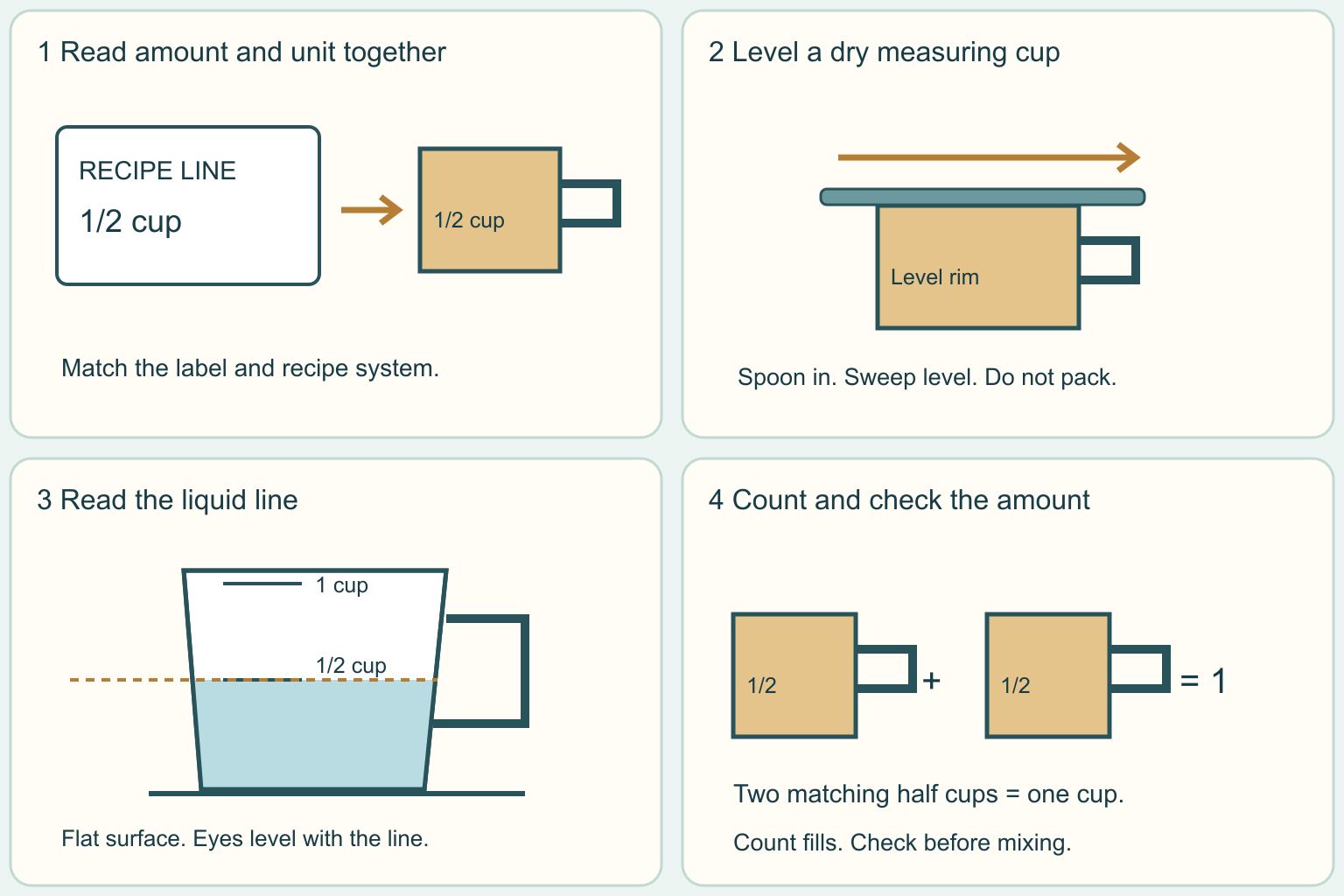
Read recipe amounts and measure dry and liquid ingredients
Learn which measuring tool to pick, what the little labels mean, and how to check an amount before mixing. Start with room-temperature water for liquid practice.
4 clear steps · checklist & download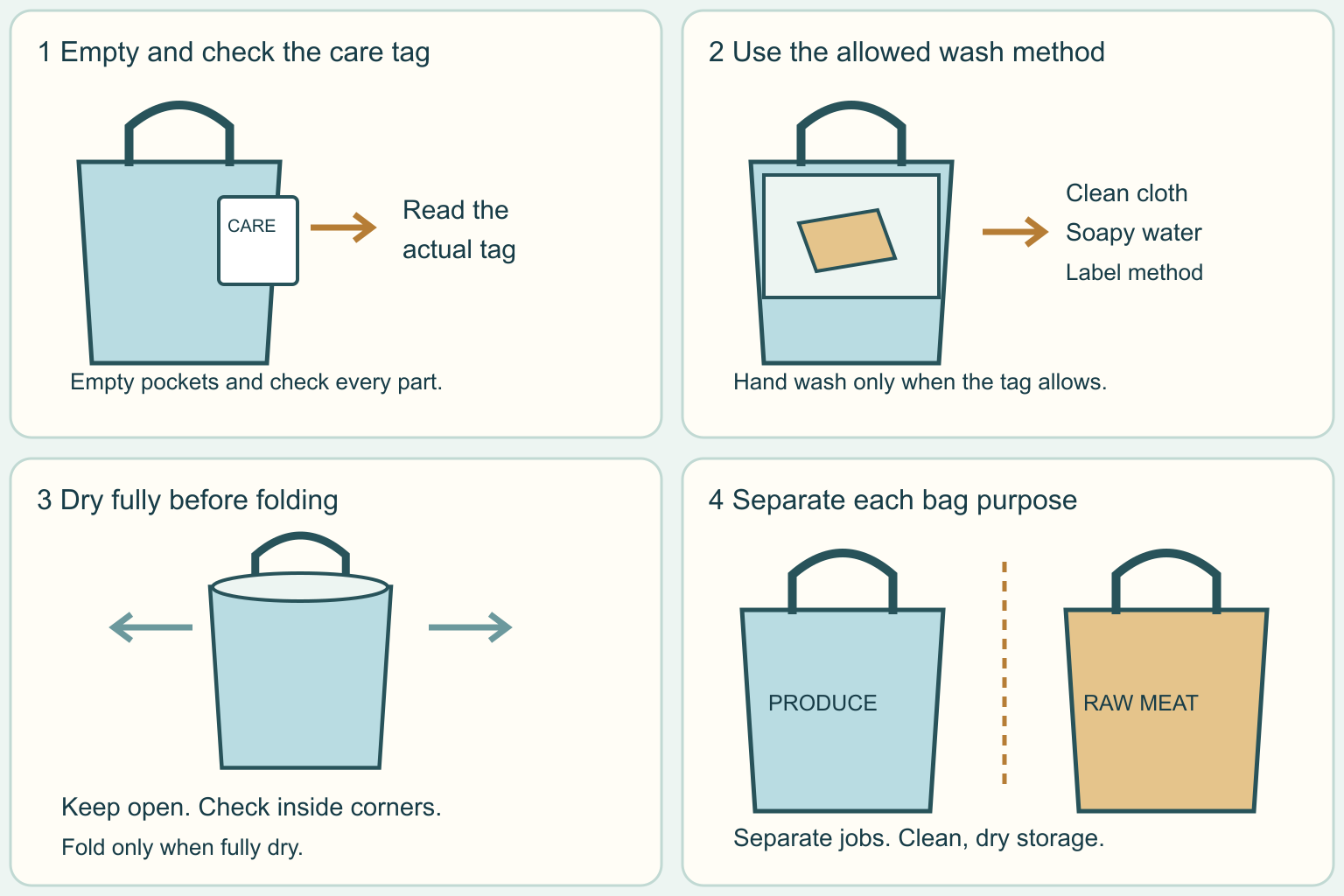
Clean, dry and sort your reusable grocery bags
Start with one ordinary reusable shopping bag. Read its care label, clean it the allowed way, and keep food bags separate from other uses.
4 clear steps · checklist & download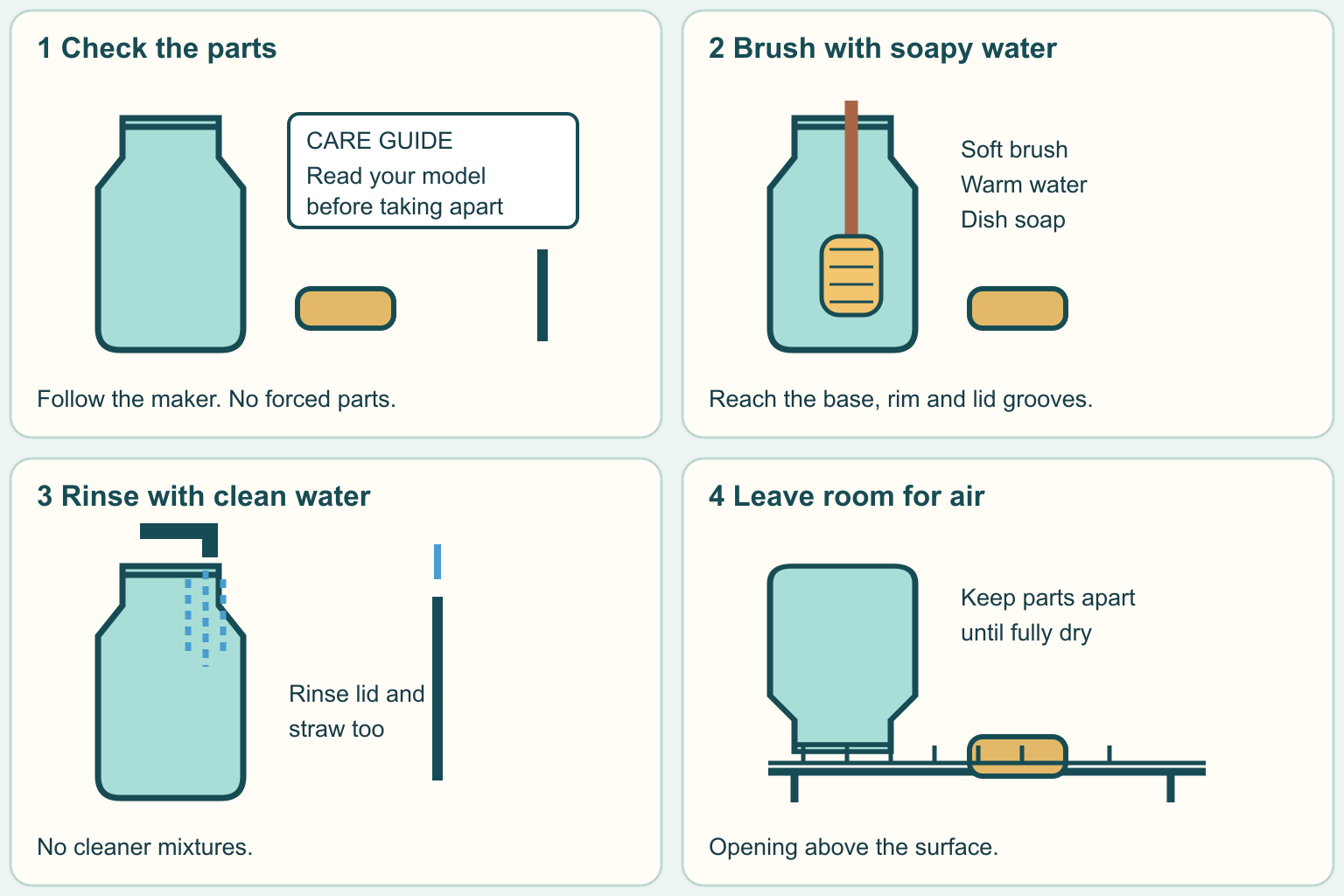
Wash and dry a reusable water bottle
Learn what to take apart, how to reach the inside, and when a bottle is ready to put away. Start with ordinary dish soap and the instructions for your own bottle.
4 clear steps · checklist & downloadChoose a meal plan for your actual equipment
Plan food you can store and prepare in the space you have.
4 clear steps · checklist & downloadBenefits & practical assistance: prepare and follow through
Find an official program, check its requirements and prepare a question for the administering office.
4 clear steps · checklist & downloadCheck cooked food with a thermometer
Find the correct target for the food, measure the thickest part, and check again when needed.
4 clear steps · checklist & download · YouTube companionCool, label, and reheat leftovers
Put cooked food away promptly, mark its date, and reheat it using a temperature check.
4 clear steps · checklist & download · YouTube companionPackage and label food for the freezer
Freeze suitable meal portions with useful labels and a clear plan for thawing.
4 clear steps · checklist & download · YouTube companionRinse fruit and vegetables before preparing them
Use running water and a clean work area, with a separate approach for prewashed produce.
4 clear steps · checklist & download · YouTube companionWash dishes by hand
Wash suitable dishes with the correct detergent, rinse them, and let them dry.
5 clear steps · checklist & download · YouTube companionClean one refrigerator shelf
Clean a removable shelf using your refrigerator’s care instructions.
5 clear steps · checklist & download · YouTube companionKeep kitchen cleaning cloths separate
Give dishwashing, surface cleaning, and floor cleaning their own suitable tools.
5 clear steps · checklist & download · YouTube companionEveryday words, explained simply
These cleaning and dorm words are also included in Find help. Examples show how to use a word, not a substitute for product or housing instructions.
Cleaning
Removing dirt and many germs with an appropriate cleaner and physical wiping or scrubbing.
Example: Wipe a compatible desk surface using its care instructions.
Source and further explanationSanitizing
Reducing germs to a level considered safe for a particular use. It is different from ordinary cleaning.
Example: Use a product labeled for the specific food-contact task; follow its rinse directions.
Source and further explanationDisinfecting
Using an approved method to kill remaining germs on a suitable surface after cleaning.
Example: Read the product’s germ claims and directions before treating a permitted hard surface.
Source and further explanationContact time
The time a disinfected surface must stay visibly wet, as stated on the product label.
Example: A label’s five-minute wet time means an immediate wipe-off is too soon.
Source and further explanationReady to use
A product supplied for use without mixing, unless its label directs otherwise.
Example: Do not add water merely to make the bottle last longer.
Source and further explanationDilution
Mixing a product with the amount of water specified in its own directions.
Example: Follow the actual label; recipes from a different bottle are not interchangeable.
Source and further explanationSurface compatibility
Whether the product and cleaning method are allowed for the material or finish.
Example: A cleaner suitable for tile may be unsuitable for a finished desk.
Source and further explanationHigh-touch surface
An area people handle often, such as a door handle or light switch.
Example: Include frequently handled areas in your regular cleaning routine.
Source and further explanationHousing rules
Your residence’s requirements for decorations, appliances, and alterations. Different buildings can have different rules.
Example: Check your own hall’s policy before using a removable wall hook.
Source and further explanationClear exit route
A way out that is not blocked by furniture, storage, or decorations.
Example: After rearranging a room, check that the door and walking route remain usable.
Source and further explanationUnder-bed storage
Containers placed in existing permitted space below a bed, without altering the bed.
Example: Measure the opening and try pulling the container out before buying more.
Source and further explanationMultipurpose storage
An item that meets more than one real need in a small room.
Example: An existing desk organizer holds stationery and charging accessories.
Source and further explanationCompatible charger
A charger supplied or recommended by the device manufacturer for that exact device and battery.
Example: Check the model information instead of assuming that a plug that fits is safe.
Source and further explanationDaisy-chain
Plugging one extension cord or power strip into another. Housing policies commonly prohibit this arrangement.
Example: Move the setup to a permitted outlet instead of connecting two strips together.
Source and further explanationBattery warning signs
Changes such as unusual heat, odor, color, shape, leaking, cracking, or odd noises that mean you should stop using the battery.
Example: Unplug only if it is safe, move away, and get emergency help for smoke or fire.
Source and further explanationUse notes for plans and reminders. Keep passwords, account numbers, and sensitive documents in a secure storage service.